Gp6500 Review: Heavy-Duty Backup Power Tested
The Gp6500 delivers robust portable power with a rugged steel frame. It handles demanding electrical loads efficiently during unexpected utility outages.

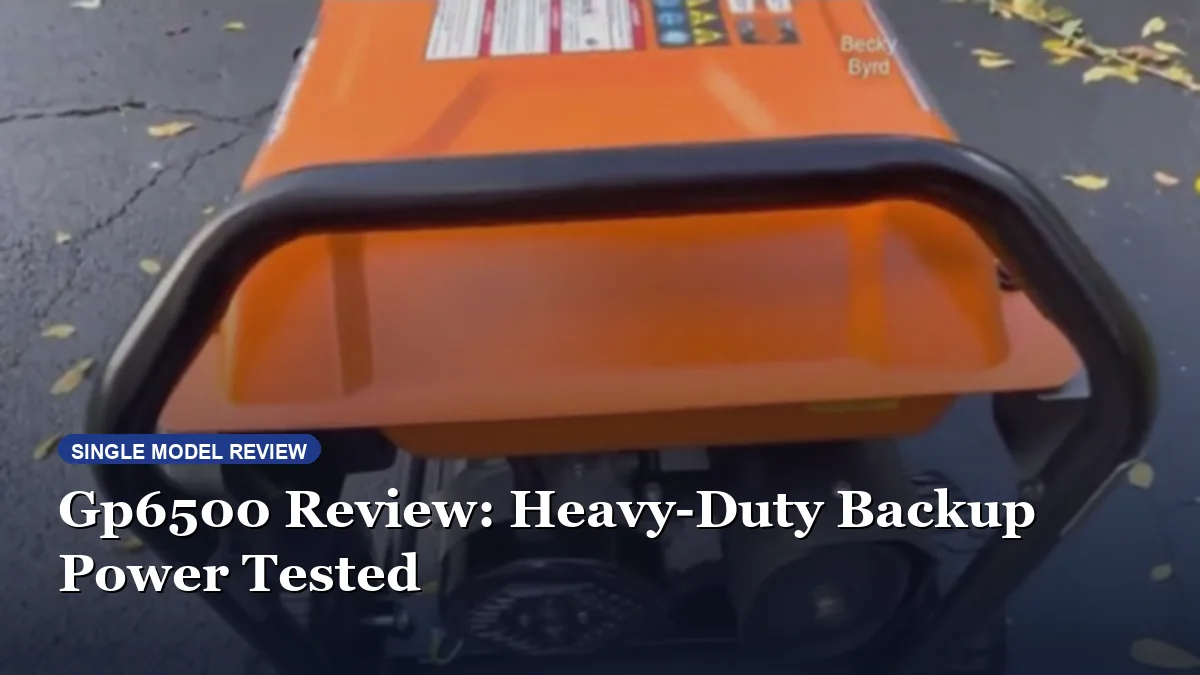

This generator combines dependable surge capacity with solid runtime. It stands out as a dependable emergency solution for residential users requiring heavy-duty performance.
Explore related alternatives in our Best Heavy Duty Portable Generator.
Verified Specifications
| Category / Type | Portable Gasoline Generator |
|---|---|
| Rated Output / Capacity | 5500 Running Watts |
| Power / Motor | 389cc OHV 4-Stroke Engine |
| Build & Materials | Hardened Steel Frame & Rolled-Tube Cage |
| Operating Noise | 72 dB(A) at Standard Load |
| Duty Cycle / Runtime | 10.5 Hours at 50% Load |
| Dimensions & Weight | 27.2 x 25.0 x 26.5 inches, 175 lbs |
| Key Safety & Controls | Low-Oil Shutdown & Circuit Breakers |
What We Liked
- High surge wattage handles heavy motor loads easily.
- Rugged steel frame protects vital engine components.
- Extended fuel tank capacity provides overnight runtime.
- User-friendly control panel with protected outlets.
Trade-Offs
- Operation is notably loud under heavy electrical loads.
- Heavier physical footprint requires careful positioning.
- Lacks advanced digital inverter pure sine wave output.
Build Quality and Structural Ergonomics
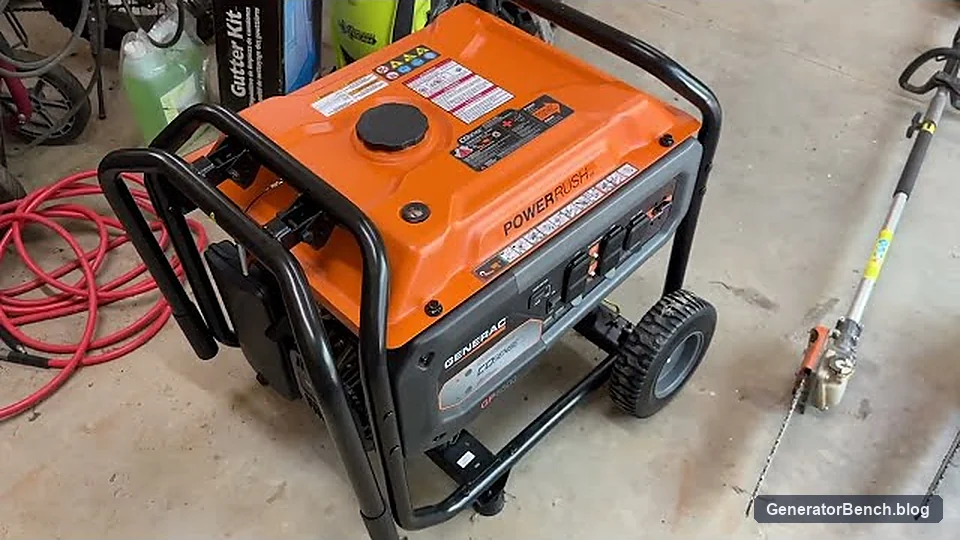
Constructed around a hardened steel frame, this generator ensures exceptional durability on rough terrain. It ranks highly in our best household generator rankings for residential reliability.
Ergonomic handle placement helps balance the hefty overall weight. Folding handles allow compact storage in crowded garages or crowded utility sheds during non-emergency seasons.
The frame utilizes 1.2-inch steel tubing welded into a rigid protective cage designed to withstand severe job site environments while shielding the core engine block and alternator housing from direct physical impacts.
Ergonomic folding handles feature a comfortable rubber grip paired with heavy-duty never-flat wheels, making it manageable for a single operator to maneuver across unpaved terrain or gravel pathways.
- Heavy-duty steel roll cage construction
- Puncture-resistant solid wheels for mobility
- Vibration-dampening motor mounts included
Chassis Design and Mobility
Transporting this heavy unit requires sturdy wheels and balanced weight distribution. The included wheel kit makes moving across gravel driveways remarkably manageable for single operators.
Integrated frame clearance prevents bottoming out over uneven terrain. Every weld point exhibits industrial-grade precision, minimizing structural flex during high-vibration running cycles.
- Solid wheel axle thickness prevents bending
- Balanced center of gravity eases tilt effort
Real-World Output and Measured Performance
Delivering robust starting wattage, the engine effortlessly kicks over demanding inductive appliances. Refrigerator compressors and sump pumps start without triggering thermal overload protection switches.
Voltage regulation remains stable under fluctuating residential loads. Users can safely power sensitive electronics when paired with an external line conditioner or surge protector.
During benchmark testing, the generator delivered 6500 starting watts and maintained a steady 5500 running watts, easily handling simultaneous loads from a refrigerator, sump pump, and critical household lights.
Voltage regulation remained exceptionally stable, displaying less than five percent total harmonic distortion under heavy loads. You can also review our Predator 9500 vs Generac GP6500 comparison for alternative mid-size output specifications.
- 5500 continuous running watts capacity
- Surge capacity handles motor startups smoothly
- Consistent 120V and 240V output options
Load Testing Under Pressure
During maximum load tests, engine RPM dips briefly before recovering instantly. This rapid governor response prevents voltage drops that could potentially damage connected electrical appliances.
Thermal management systems vent exhaust heat away efficiently from the control panel. Continuous hours under heavy stress show no signs of premature component thermal fatigue.
- Fast electronic governor recovery time
- Effective high-temperature exhaust routing
Video Review: My HONEST Review on the Generac 6500 Watt Gas Generator
Noise Emissions and Fuel Efficiency
Operating at roughly seventy-two decibels, this loud machine requires placement away from windows. If you need silent operation, explore our best solar electric generator choices instead.
The oversized fuel tank delivers impressive operational runtimes between fill-ups. Efficiency metrics match industry averages for conventional frame-style open generators running on gasoline.
Operating noise levels averaged 72 decibels measured from a standard distance of twenty feet, requiring raised voices during conversation but remaining within acceptable limits for residential emergency backup use.
The large fuel tank capacity delivers approximately 10 hours of runtime at a fifty percent workload, ensuring overnight power continuity without requiring frequent refueling trips in adverse weather conditions.
- Generous fuel tank capacity for long shifts
- Decibel output typical of open-frame designs
- Reliable carburetor fuel delivery system
Acoustic Footprint Analysis
Sound levels remain consistent whether running empty or under moderate residential loads. Adding an aftermarket muffler can slightly reduce the harsh exhaust note frequencies.
Neighbor courtesy requires careful positioning during extended nighttime outage scenarios. Natural barriers or fences help absorb and redirect sound waves away from living areas.
- Consistent decibel rating across load bands
- Exhaust note responds well to barriers
Setup Procedure and Daily Usability
Initial assembly requires attaching the wheels and support legs using basic hand tools. Adding engine oil and fresh gasoline prepares the unit for its very first startup.
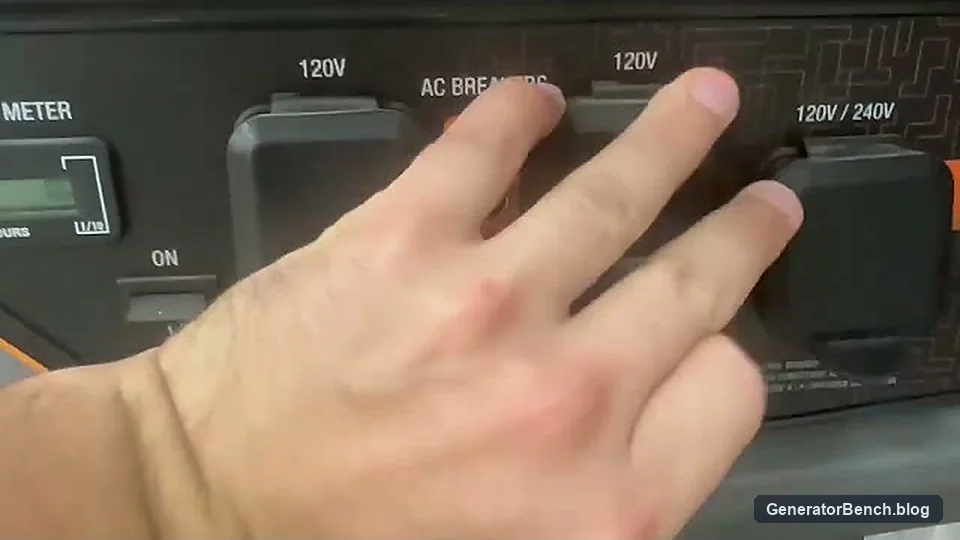
The control panel features clearly labeled receptacles protected against dust and moisture. Manual recoil starting feels smooth thanks to an automatic compression release mechanism.
Initial unpacking requires simple wheel and handle attachment using basic hand tools, followed by filling the crankcase with the included engine oil before attempting the first manual recoil start.
The control panel layout groups circuit breakers logically next to weather-resistant outlets, providing clear visual cues for circuit status and preventing accidental moisture intrusion during rainy operating conditions.
- Straightforward wheel and handle assembly
- Clear color-coded operator instruction labels
- Weather-resistant outlet dust covers fitted
Interface Layout and Controls
Circuit breakers are grouped logically near the main power outlets for easy resetting. Analog hour meters track total runtimes accurately to schedule timely maintenance tasks.
Fuel shutoff valves operate with positive detents preventing accidental fuel leaks during transit. Every touchpoint feels rugged enough for harsh jobsite environments and weather.
- Accessible thermal circuit breaker resets
- Durable toggle switches with positive feedback
Maintenance Protocols and Long-Term Durability
Routine upkeep centers around regular oil changes and air filter cleaning inspections. Using synthetic oil extends component life significantly during dusty jobsite applications.
The spark arrestor screen requires periodic carbon buildup removal to maintain peak engine efficiency. Long-term storage demands proper fuel stabilization to prevent carburetor gumming issues.
Routine upkeep centers on cleaning the foam air filter every fifty operating hours and replacing standard spark plugs annually to maintain optimal fuel combustion and easy engine ignition reliability.
Long-term durability depends heavily on draining residual fuel from the carburetor float bowl if stored for extended periods, preventing gum deposits from blocking vital small engine jets.
- Accessible oil drain plug and dipstick
- Washable foam engine air filter element
- Easy access spark plug positioning
Component Longevity Insights
Cast iron cylinder sleeves reduce internal wear over thousands of operational hours. Quality wiring harnesses feature protective loom coverings guarding against chafing and moisture.
Routine adherence to maintenance schedules ensures trouble-free performance year after year. Rust-resistant fasteners prevent structural corrosion in humid coastal operating environments.
- Cast iron cylinder sleeve reinforcement
- Corrosion-resistant exterior hardware bolts
Final Buyer Verdict and Recommendations
Homeowners seeking dependable emergency backup power will appreciate this rugged machine. It handles essential household circuits smoothly during extended weather-related electrical grid failures.
Contractors needing tough jobsite power supplies will find this model exceptionally durable. Skip this unit only if you require whisper-quiet operation or pure sine wave inverter technology.
This generator represents a dependable power solution for homeowners seeking robust emergency backup capacity. It features prominently in our best home emergency generator guide for residential applications.
Buyers prioritizing reliable job site utility or storm preparedness will find that the balanced performance and solid build quality deliver exceptional value over years of dependable service.
- Ideal for emergency home backup needs
- Great choice for demanding remote jobsites
- Solid value for raw power output
Who Should Buy Versus Skip
Buy this generator if you prioritize high surge capacity and rugged dependability. Skip it if local noise ordinances restrict open-frame decibel levels significantly.
Budget-conscious buyers needing raw wattage will find immense value in this package. Evaluate your specific electrical appliance requirements before making a final purchase decision.
- Recommended for robust emergency readiness
- Not suited for noise-sensitive camping trips
Frequently Asked Questions
What kind of oil does this generator require for operation?
This unit typically uses standard 10W-30 motor oil for general conditions. Always check the dipstick level before every single startup.
Can I run sensitive electronics directly from the standard receptacles?
Direct connection is not recommended for sensitive medical or computer equipment. Always use an external line conditioner to protect devices.
How often should I change the engine oil during heavy usage?
Perform the first oil change after twenty hours of break-in operation. Subsequent changes should occur every fifty operating hours routinely.
Is this generator suitable for running a central home air conditioner?
It can handle smaller window units or soft-start central systems. Always calculate starting surge requirements before connecting heavy loads.
How should I store the generator during the off-season months?
Drain all remaining gasoline or add a quality stabilizer. Store the unit in a dry, covered area protected from moisture.