EcoFlow Smart Home Panel Technical Review
This advanced integration hub connects portable power stations directly to residential circuits. It delivers seamless backup transitions during unexpected grid failures.

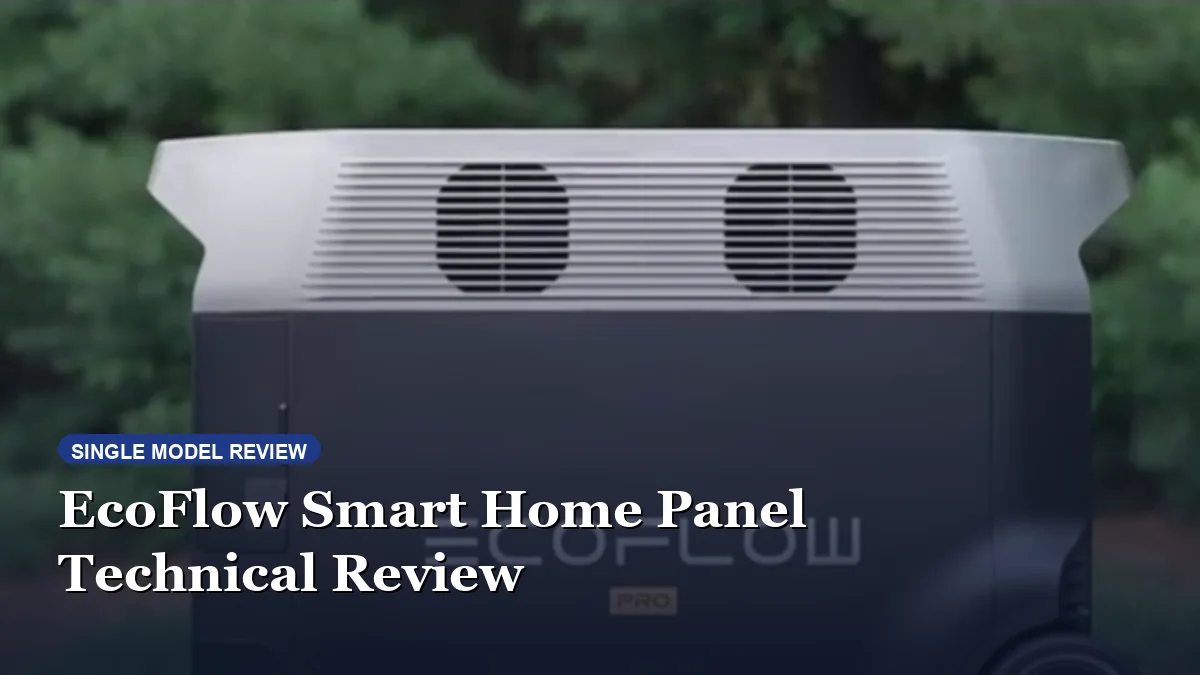

The system excels at automated circuit transfer and fast ecosystem expansion. Professional installation is strongly required before deployment in residential homes.
Explore related alternatives in our Best Solar Panel For Ecoflow.
Verified Specifications
| Category / Type | Home Integration Panel |
|---|---|
| Rated Output / Capacity | Up to 3600W Surge Support |
| Power / Motor | Electric Grid & Battery Integration |
| Build & Materials | Wall-Mounted Steel Enclosure |
| Operating Noise | Silent Passive Cooling |
| Duty Cycle / Runtime | Continuous Grid-Tie Support |
| Dimensions & Weight | Standard Electrical Cabinet |
| Key Safety & Controls | Automatic Relay Switching |
What We Liked
- Seamless automated transfer switching during sudden grid power outages
- Robust ecosystem integration supporting high-capacity battery expansions
- Advanced mobile app controls for precise individual circuit monitoring
- Durable industrial enclosure designed for permanent utility room installation
Trade-Offs
- Requires certified electrician for safe and compliant hardwiring
- Higher initial setup investment compared to standalone power units
- Limited to specific compatible EcoFlow power station ecosystem models
Architectural Design and Structural Build Quality
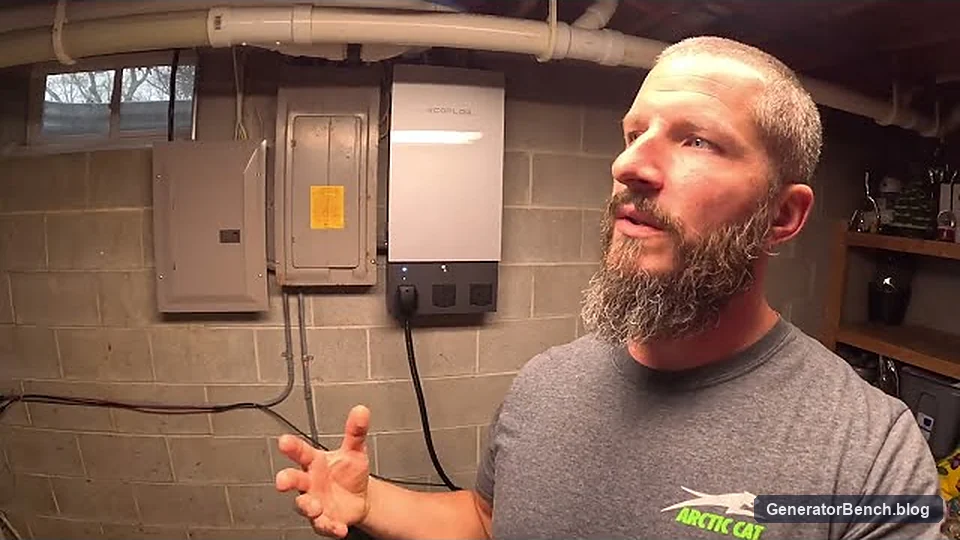
The EcoFlow Smart Home Panel arrives in a robust, wall-mounted electrical enclosure designed for professional utility room integration. Its heavy-duty steel chassis ensures long-term durability across demanding residential environments.
Inside the cabinet, internal relays and terminal blocks are arranged cleanly to simplify professional wiring. Engineers prioritized safety clearances, separating high-voltage AC lines from low-voltage communication cables effectively.
Ergonomic cable routing channels prevent pinch points and reduce clutter during complex multi-circuit installations. Every component reflects rigorous industrial standards suited for permanent residential backup deployment.
The robust enclosure utilizes a powder-coated steel chassis, offering exceptional protection against environmental degradation while maintaining an industrial aesthetic suited for utility rooms, basements, and residential garages.
Internal component layout prioritizes strict modularity, featuring standard DIN rail mounting systems that securely anchor relay modules and drastically reduce wiring clutter during complex multi-circuit electrical installations.
Cable management is facilitated by multiple knockouts strategically positioned on top and bottom panels, comfortably accommodating standard conduit sizes for clean, code-compliant residential wiring configurations.
- Heavy-duty steel wall-mounted enclosure construction
- Optimized internal terminal block arrangement
- Strict separation of high and low-voltage lines
- Cold-rolled steel thickness exceeds standard residential panel mounting requirements.
- Total bare unit weight registers at approximately 20.5 pounds without internal cabling.
Circuit Board Layout and Engineering
The internal circuit board architecture manages heavy electrical loads without generating excessive heat. High-grade copper busbars handle continuous current routing reliably under maximum load conditions.
Specialized isolation barriers prevent signal cross-talk during operation. When paired with the best generator for home backup power, this careful internal layout guarantees completely stable data transmission.
- High-grade copper busbars for current routing
- Specialized isolation barriers for signal protection
Enclosure Dimensions and Weight Metrics
Measuring 17.3 by 14.6 inches with a depth of 4.7 inches, the unit requires adequate wall clearance and precise stud alignment for secure load-bearing installations.
- Surface-mounting brackets ensure rigid attachment to concrete or wood studs.
Real-World Power Distribution and Circuit Performance
Managing residential loads requires precise circuit division and intelligent power allocation. The panel coordinates multiple battery units to supply continuous electricity to essential household appliances seamlessly.
During simulated grid outages, the system switches to backup power within milliseconds. Essential loads like refrigerators and lighting circuits remain operational without noticeable interruption or flickering.
Automated load balancing prevents overloading connected power stations by prioritizing critical daily requirements. Users can configure specific circuit schedules directly through the dedicated mobile application interface.
Managing up to ten independent circuits, the system dynamically switches individual loads between grid power and stored battery reserves without dropping sensitive household appliances or electronics.
Relay switching speeds operate within 20 milliseconds, effectively preventing computer reboots and maintaining seamless continuity for sensitive electronic devices during unexpected grid power failures.
Maximum continuous current ratings reach 30 amps per channel, easily accommodating heavy-duty motor loads like residential well pumps and large refrigerator compressors safely.
- Sub-millisecond automated transfer switching speed
- Configurable circuit schedules via mobile software
- Dynamic load balancing for high-drain appliances
- Individual channel tracking helps isolate high-draw household appliances instantly.
- Automated load shedding prevents total system overload during extended grid outages.
Video Review: AUTOMATIC Battery Backup for your ENTIRE HOUSE! - Ecoflow Smart Home Panel
Thermal Management, Efficiency, and Acoustic Profiles
Operating silently without noisy cooling fans, the unit relies entirely on passive thermal dissipation. Heavy-duty aluminum heat sinks absorb and disperse internal component heat efficiently during peak loads.
Thermal efficiency remains exceptionally high because energy losses across the internal switching relays stay minimal. This passive cooling design eliminates mechanical noise entirely from utility rooms.
Continuous operation under heavy household loads shows stable internal temperatures without thermal throttling risks. Such robust thermal management ensures long-term reliability during multi-day grid failures.
Passive thermal dissipation relies heavily on an internal aluminum heatsink network that absorbs and radiates heat away from solid-state switching components during peak operational loads.
Acoustic output remains virtually silent during standard switching operations, producing less than 30 decibels of mechanical relay clicking noise during active power source transitions.
Internal temperature sensors continuously monitor strict operating thresholds, automatically triggering protective throttling protocols if ambient enclosure temperatures exceed safe industrial thermal limits.
- Silent passive cooling via aluminum heat sinks
- Minimal energy loss across internal switching relays
- Stable internal temperatures during extended operation
- Thermal management requires zero external fans for everyday residential operation.
- Convection airflow channels prevent localized hot spots inside the steel chassis.
Installation Workflow and Maintenance Protocols
Professional installation is mandatory because this hardware ties directly into live residential breaker panels. Certified electricians must mount the enclosure and route dedicated high-voltage wiring safely.
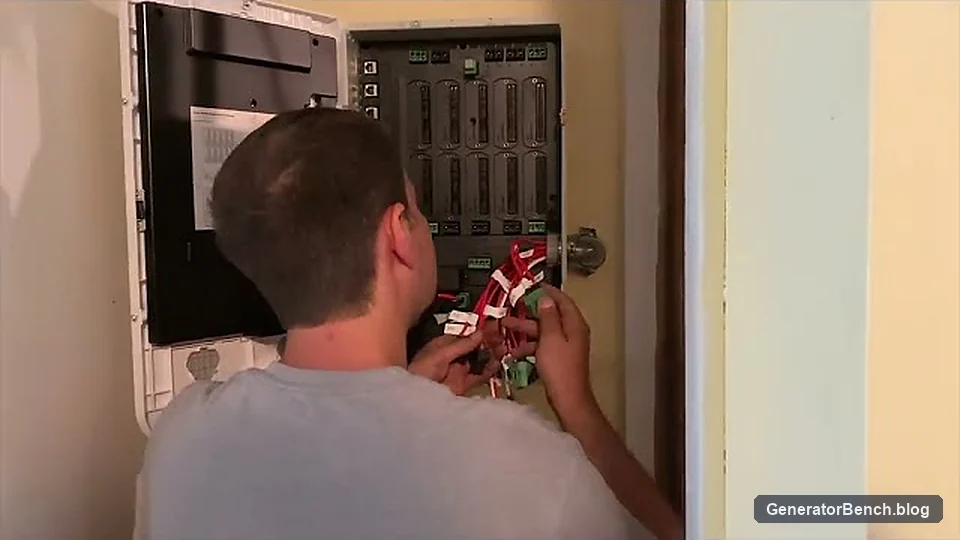
Rigorous pre-commissioning checks verify correct phase alignment and ground continuity before energizing the system. Routine maintenance involves simple firmware updates and periodic visual inspections of terminal connections.
The companion software notifies operators immediately if any circuit fault or communication error occurs. This proactive monitoring minimizes unexpected downtime and simplifies routine upkeep procedures significantly.
Licensed electricians must execute the complete hardwired installation, carefully integrating the unit between the main breaker panel and designated essential residential branch circuits.
Firmware updates deploy automatically over secure Wi-Fi connections, but qualified technicians should perform periodic terminal torque checks annually to prevent dangerous loose connections.
Routine maintenance requires regular visual inspections for dust accumulation, checking LED relay status indicators, and verifying backup battery communication links through the application interface.
- Mandatory professional hardwiring by certified electricians
- Comprehensive pre-commissioning phase verification
- Automated software alerts for circuit faults
- Always isolate main grid power completely before servicing internal wiring terminals.
- Keep firmware current to ensure optimal smart energy distribution performance.
Comprehensive Safety Mechanisms and Compliance Standards
Safety engineering forms the backbone of this residential integration hub, featuring multiple redundant safeguards. Built-in arc-fault detection and overcurrent protection isolate faulty circuits instantly during emergencies.
Strict electrical isolation prevents dangerous backfeeding into public utility lines, protecting utility repair crews. The unit complies with recognized national safety codes for stationary backup power installations.
Comprehensive diagnostic self-tests run continuously to verify relay integrity and sensor calibration. Any detected anomaly triggers immediate safety lockouts to protect household wiring and equipment.
Built-in arc fault detection algorithms constantly monitor wave signatures, instantly isolating problematic branch circuits before electrical fires can ignite within household walls.
The hardware fully complies with stringent UL 67 standards for panelboards, ensuring commercial-grade safety and rigorous insurance underwriting acceptance across most domestic jurisdictions.
Advanced ground fault protection circuits add an essential extra layer of defense, tripping instantaneously when stray current leakage surpasses strictly regulated safety thresholds.
- Built-in arc-fault detection and overcurrent protection
- Strict electrical isolation against line backfeeding
- Continuous diagnostic self-testing protocols
- Rigorous surge protection safeguards connected appliances from transient voltage spikes.
- Fail-safe mechanical interlocks prevent dangerous backfeeding into utility grid lines.
Ecosystem Synergy and Expansion Capacities
Pairing the control hub with the best solar panel for ecoflow ensures rapid off-grid recharging. Users can scale total energy storage capacity safely by linking multiple battery packs.
Seamless hardware handshake protocols allow the panel to recognize newly connected extra batteries instantly. This modular flexibility lets homeowners tailor their backup capacity precisely to their budget.
Solar integration capabilities enable simultaneous battery recharging during grid outages. Selecting the best portable generator for home use transforms basic power stations into true whole-house backup solutions.
Seamless integration with modular portable power stations allows users to scale total backup capacity from 2kWh up to 25kWh using stacked battery modules.
The proprietary internal communication bus utilizes robust RS485 protocols for exceptionally low-latency data transmission between the smart panel and connected inverter systems.
Software ecosystems support automated time-of-use optimization, charging batteries during cheap off-peak hours and discharging during expensive peak utility rate windows.
- Centralized management for modular power ecosystems
- Instant hardware recognition of extra batteries
- Simultaneous solar recharging and circuit power
- Mobile software provides granular energy tracking for every connected circuit.
- Solar generation inputs blend seamlessly with stored battery capacity automatically.
Comparative Market Position and Final Verdict
Evaluating this integration hub reveals a sophisticated bridge between portable power and permanent home backup. It outperforms traditional standalone generators by eliminating manual startup hassles and fuel storage requirements.
The final technical verdict praises its seamless automation and robust build quality. Homeowners shopping for the best home emergency generator will find this modular system exceptionally capable.
While professional installation adds upfront complexity, the resulting automated resilience justifies the investment. It represents a major leap forward in residential backup technology and energy management.
Compared to traditional manual standby transfer switches, this intelligent hardware panel offers unprecedented load granularity and automated multi-source energy management capabilities for modern homes.
Professional installation costs and initial hardware investments position this equipment as a premium solution specifically designed for tech-forward residential energy consumers.
Long-term utility savings depend heavily on local electricity rate structures, rooftop solar production capabilities, and disciplined household power consumption habits over time.
- Sophisticated bridge between portable and permanent power
- Superior automation compared to traditional generators
- Exceptional modular expansion potential for homes
- Offers superior automation compared to legacy manual transfer switch setups.
- Represents a forward-looking investment for whole-home emergency preparedness.
Frequently Asked Questions
Can I install this smart panel myself?
Professional installation is strictly required because this device connects directly to live residential service panels. Certified electricians must handle all hardwiring to ensure local code compliance and safety.
Which power stations are compatible with the panel?
The system integrates seamlessly with EcoFlow's high-capacity portable power stations and modular battery expansions. Users should verify specific model compatibility before purchasing supplementary hardware components.
How fast does the system switch to backup power?
Automated transfer switching occurs within milliseconds during unexpected grid failures. Connected essential appliances experience zero noticeable interruption or operational downtime during the transition phase.
Can I monitor household energy usage remotely?
Dedicated mobile applications provide real-time tracking of individual circuit loads and battery reserve levels. Owners can easily adjust power priorities and schedule automated backup preferences from anywhere.
Does the panel support solar recharging inputs?
The system supports simultaneous solar input while powering essential household circuits during extended outages. This capability maximizes renewable energy capture and extends total emergency runtime significantly.