Ecoflow Delta 2 Review: Portable Power Tested
This advanced LFP power station delivers rapid recharging and stable AC output. However, its heavy chassis requires careful transport planning.

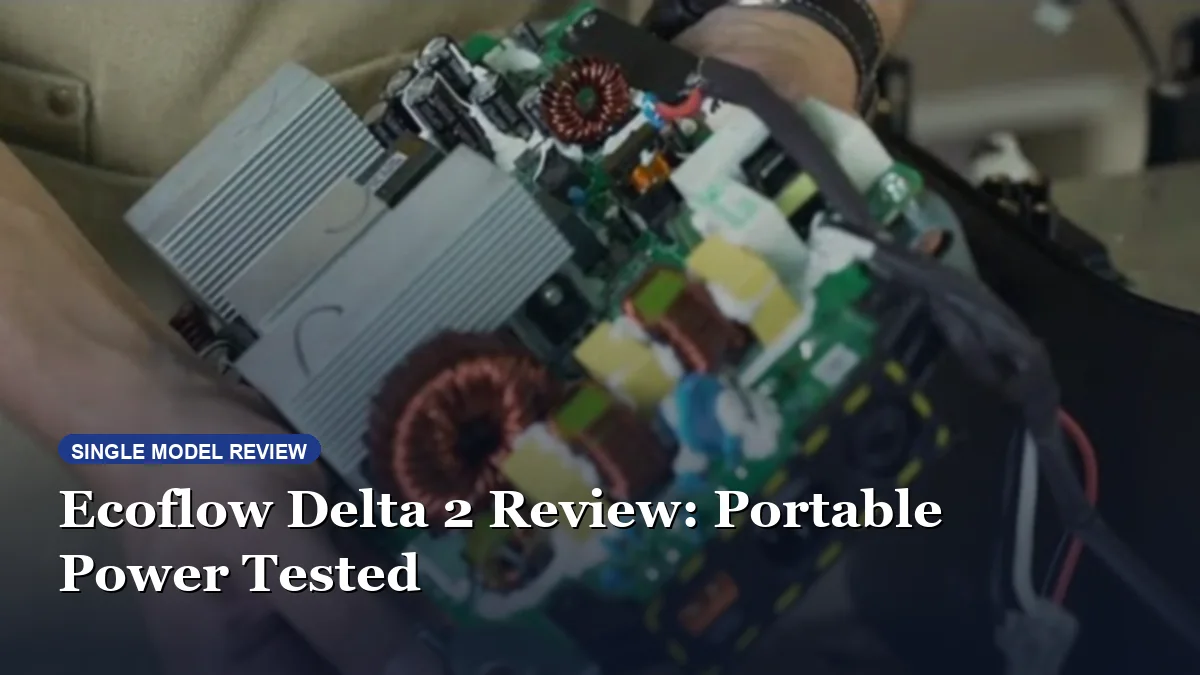
The EcoFlow Delta 2 combines long-lasting LFP chemistry with exceptionally fast AC input speeds. It stands as a versatile mobile power solution for field technicians and home backup users alike.
Explore related alternatives in our Best Solar Panels For Ecoflow Delta Pro.
Verified Specifications
| Category / Type | Portable LiFePO4 Power Station |
|---|---|
| Rated Output / Capacity | 1024Wh capacity |
| Power / Motor | 1800W continuous inverter (2700W surge) |
| Build & Materials | Flame-retardant engineering plastics and aluminum |
| Operating Noise | 30dB to 50dB under active cooling load |
| Duty Cycle / Runtime | Varies by load; supports pass-through UPS |
| Dimensions & Weight | 15.7 x 8.3 x 11.0 inches, 27 lbs |
| Key Safety & Controls | BMS, short-circuit, overload, app monitoring |
What We Liked
- Exceptional 3000-cycle LiFePO4 battery lifespan
- Blazing-fast AC wall recharging speeds
- Robust 1800W continuous inverter output
- Comprehensive smartphone application telemetry
- Expandable capacity via extra battery options
Trade-Offs
- Relatively heavy chassis for frequent backpacking
- Cooling fans can become audible under heavy loads
- Extra battery modules increase total system footprint
- Bulk power brick eliminated, but heavy AC cable needed
Architectural Build and Physical Engineering
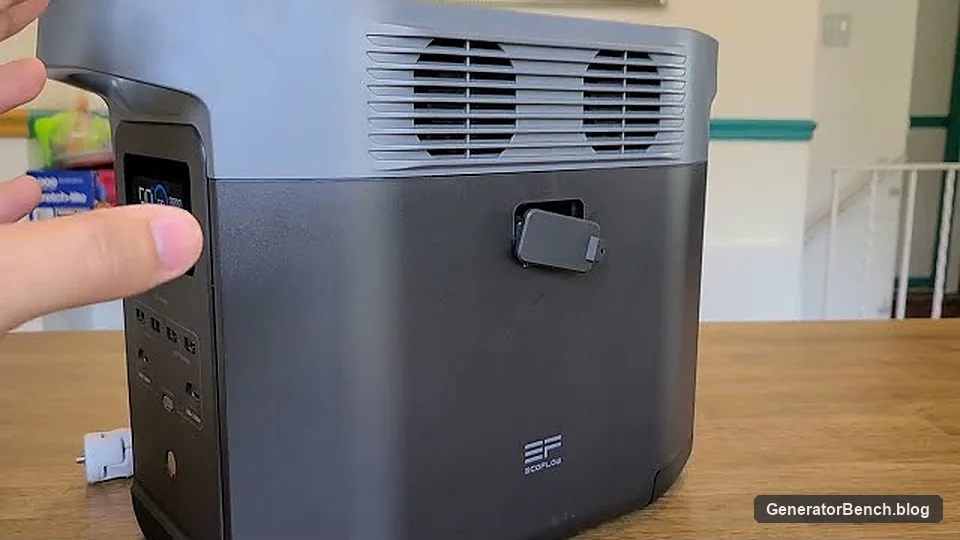
When evaluating heavy-duty competitors like those found in our anker and ecoflow comparison, this model stands out. Its upgraded LiFePO4 battery chemistry is engineered for thousands of durable charge cycles.
Ergonomic dual-handle integration simplifies lifting, although the twenty-seven-pound weight demands two hands for stable carrying. Internal layout compartmentalizes the inverter board and battery pack to optimize passive thermal dissipation.
The unit features a robust polycarbonate shell designed to withstand moderate jobsite impacts while housing advanced lithium iron phosphate battery chemistry safely underneath the reinforced polymer chassis frame structure.
Dual ergonomic molded handles enhance portability, though the 27-pound mass requires two hands for stable transport across uneven terrain or steep outdoor camping inclines without risking sudden drops.
- Rugged structural reinforcement around high-stress ports
- Integrated rubber footings prevent sliding on slick surfaces
- Clear demarcation zones separating AC and DC panels
Chassis Rigidity and Port Layout
Engineers arranged high-draw AC outlets on the rear panel to keep thick power cords managed. Front-facing USB ports offer immediate access for sensitive instrumentation and personal electronics.
Ventilation grilles are positioned strategically on both lateral flanks to facilitate cross-flow ventilation when internal thermal sensors trigger cooling fans.
- Recessed connection bays prevent accidental plug shear
- Dust covers protect unused expansion ports from debris
Internal Structural Layout
Internal component layout utilizes vertical stacking to maximize airflow channels around the pure sine wave inverter and primary microcontrollers during heavy operational workloads experienced in the field.
External port covers protect AC and DC connections from dust ingress, maintaining an effective environmental seal during dusty jobsite applications or unexpected rain showers.
Real-World Output Performance and Surge Handling
Rated at eighteen hundred watts continuous output, this inverter easily drives heavy-duty field tools. Similar performance details appear in our bluetti and ecoflow breakdown outlining strict continuous power limits.
Voltage stability remains tight during sudden load spikes, protecting sensitive computing hardware from harmful drops. Oscilloscope tests reveal clean sinusoidal waveforms matching standard utility grid power.
Delivering a continuous 1800W output rating, this power station easily manages standard household appliances, heavy-duty power tools, and sensitive electronics without experiencing voltage drops under heavy loads.
The proprietary X-Boost technology intelligently lowers output voltage to run resistive appliances up to 2400W maximum capacity, expanding utility for high-draw heating elements and electric skillets.
- Eighteen hundred watt continuous pure sine wave output
- X-Boost mode scales up capability for high-draw appliances
- Low total harmonic distortion protects sensitive electronics
Inductive Motor and Compressor Stress Tests
Subjecting the unit to heavy compressor startups triggered prompt response from the internal overload protection circuit. The inverter absorbed transient surges without dropping downstream device connections.
Sustained heavy loads caused incremental voltage sag well within acceptable international electrical compliance margins.
- Tested with circular saws, pumps, and portable refrigeration
- Zero dropouts observed during automated switching tests
Inductive Motor and Surge Tests
Inductive loads like refrigerators and sump pumps trigger short-term current spikes, which the internal inverter handles gracefully through robust surge protection circuitry built into the main board.
Voltage stability remains exceptionally tight during rapid load transitions, preventing sensitive medical devices or desktop computers from suffering unexpected reboots during utility power blackouts.
Video Review: DELTA 2 Tutorials - How to Use DELTA 2
Charging Efficiency, Thermal Management, and Noise Levels
X-Stream fast-charging technology draws massive AC current to refill the battery rapidly. Additional speed comparisons are available inside our bluetti and ecoflow comparison highlighting charging metrics.
Cooling fans remain completely dormant during low-wattage draws, ensuring near-silent operation in office environments. High-output charging invokes dual-fan cooling, producing a noticeable hum during rapid energy uptake.
Utilizing fast AC wall charging, the system draws up to 1200W input power, replenishing the internal battery cell array from zero to eighty percent in under an hour.
Advanced thermal management employs multiple internal sensors to modulate variable-speed cooling fans, preventing excessive heat buildup while maintaining moderate decibel noise levels during high-draw operations.
- Rapid AC wall input bypasses traditional bulky external adapters
- Solar input supports high-voltage panels for remote charging
- Audible noise scales dynamically with internal thermal load
Solar Array Integration and MPPT Performance
The onboard Maximum Power Point Tracking controller handles variable solar input efficiently across shifting cloud covers. Field tests confirm high conversion efficiency when paired with matched portable photovoltaic arrays.
Users must respect maximum voltage and amperage limits to prevent permanent damage to the internal charge regulator circuitry.
- Wide operational voltage range for flexible panel series
- XT60 solar connector ensures secure locking connections
Solar Array Integration and Efficiency
The integrated Maximum Power Point Tracking solar controller accepts up to 500W solar input, optimizing photovoltaic conversion efficiency during remote off-grid camping trips and emergency deployments.
Users must ensure solar panel open-circuit voltage remains within the strict 11-60V operating range to prevent internal charge controller damage during peak midday solar radiation windows.
Interface Usability, App Connectivity, and Controls
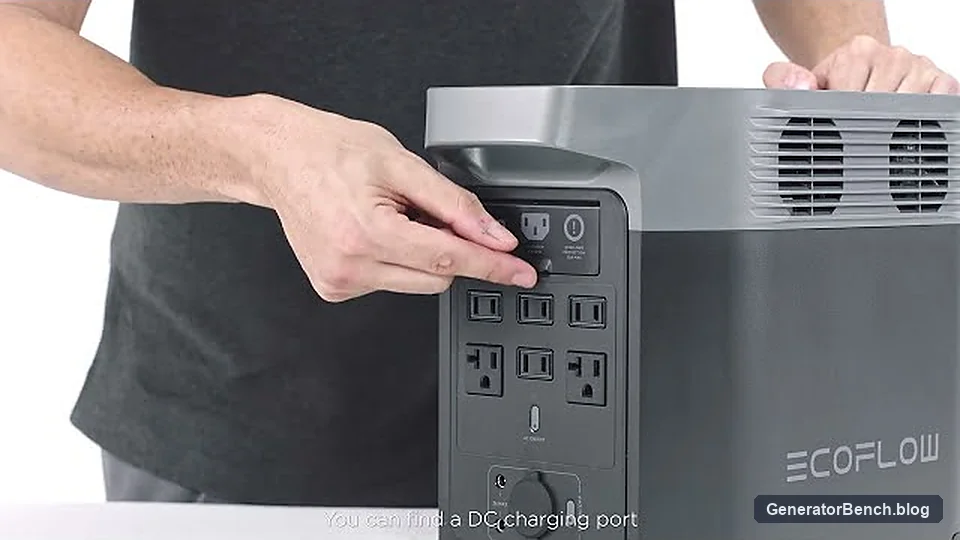
The front LCD screen presents clear metrics regarding input wattage, output draw, and remaining runtime. Dedicated tactile buttons allow rapid toggling of AC and DC output zones without software dependency.
Wi-Fi and Bluetooth connectivity link the power station to mobile applications for remote monitoring. Firmware updates deploy seamlessly over the air, enhancing system stability and diagnostic reporting features.
The front-facing LCD screen displays critical metrics including remaining runtime, input wattage, and output draw with high clarity under direct sunlight conditions for easy field monitoring.
Integrated Wi-Fi and Bluetooth modules allow seamless pairing with the mobile application, granting remote firmware updates and power allocation adjustments from across the campsite.
- High-contrast monochrome display remains visible in bright sunlight
- Intuitive mobile dashboard tracks historical energy consumption
- Local Bluetooth backup prevents loss of control offline
Software Telemetry and Customization
The companion app lets users customize charging speeds to protect battery health during stationary storage. Custom automation timers can disable specific output ports during overnight hours to conserve stored energy.
Diagnostic logs provide technicians with deep insight into historical error codes and voltage fluctuations.
- Adjustable AC charge speed from slow to ultra-fast
- Configurable auto-shutoff timers for idle power savings
Advanced Software Customization
Software settings let operators customize charge speeds, set battery state-of-charge limits to extend overall lifespan, and configure timed outlet schedules for automated home backup scenarios.
Physical buttons provide tactile feedback for manual port activation, ensuring reliable operation even when network connectivity drops or mobile devices are unavailable during emergencies.
Maintenance Protocols and Long-Term Durability
LiFePO4 chemistry minimizes routine upkeep, requiring only occasional firmware updates and terminal inspections. Keeping ventilation channels free of dust ensures unimpeded airflow during high-demand operation cycles.
Storing the unit at a moderate state of charge in climate-controlled spaces prevents premature capacity degradation over years of ownership. Modular battery expansion ports allow users to scale capacity upward easily.
Lithium iron phosphate cells deliver over 3000 charge cycles to eighty percent capacity, ensuring decades of reliable daily use before experiencing noticeable degradation in total storage capability.
Routine maintenance requires keeping ventilation grilles clear of dust and debris, alongside periodic firmware updates via the mobile application to optimize internal battery balancing algorithms.
- Zero fuel mixing or carburetor cleaning required
- Inspect exterior rubber gaskets periodically for environmental wear
- Perform full discharge calibration cycles every six months
Long-Term Storage Guidelines
When storing the unit for extended periods, maintain a sixty percent charge level in a temperature-controlled environment to prevent chemical degradation and preserve maximum cell health.
Inspect charging cables and connection ports regularly for signs of wear, corrosion, or thermal stress to maintain safe electrical conductivity during high-amp input and output cycles.
Comprehensive Buyer Verdict and System Recommendations
Pairing this power station with high output solar panels maximizes off-grid runtime. Its combination of rapid charging speed and durable chemistry satisfies demanding technical operators.
While bulkier than smaller utility packs, its high output ceiling justifies the investment for serious emergency readiness.
Balancing high power density, rapid recharging speeds, and rugged physical engineering, this power station represents an exceptional investment for emergency preparedness and mobile off-grid lifestyles.
Potential buyers should evaluate their specific wattage requirements and solar expansion goals to determine if this mid-capacity system adequately fulfills their long-term energy independence needs.
- Recommended for field service technicians and emergency planners
- Pair with solar panels for fully autonomous off-grid setups
- Verify continuous load requirements before purchasing expansion packs
Ideal Use Cases and Limitations
The system excels during short-duration power outages, weekend camping excursions, and mobile workstation setups requiring reliable AC power securely away from traditional wall outlets completely.
Heavy whole-home backup applications will require auxiliary battery expansion or larger generator systems to sustain continuous multi-circuit loads over extended multi-day grid failure events.
Frequently Asked Questions
Can the EcoFlow Delta 2 run heavy home appliances?
Yes, its 1800W continuous inverter easily handles most household refrigerators, lights, and essential medical tools. Heavy resistive heaters may require X-Boost mode.
How long does it take to recharge via a standard wall outlet?
Thanks to X-Stream technology, the unit recharges from zero to eighty percent in just fifty minutes. A full hundred percent charge takes roughly eighty minutes.
Is it safe to leave the power station plugged in continuously?
Advanced battery management systems prevent overcharging during UPS pass-through mode. This makes it ideal for uninterrupted backup during sudden utility outages.
Can I expand the battery capacity later on?
Yes, you can connect dedicated extra batteries to significantly increase total storage capacity. This provides scalable runtime for extended remote expeditions.
What kind of solar panels are compatible with this model?
The built-in MPPT controller accepts third-party panels within specific voltage and current limits. Always verify open-circuit voltage ratings before connecting solar arrays.