Why Is My Generator Surging: Technical Diagnostics
Technical breakdown of engine hunting and speed fluctuations. Diagnosing fuel delivery and governor linkages safely.

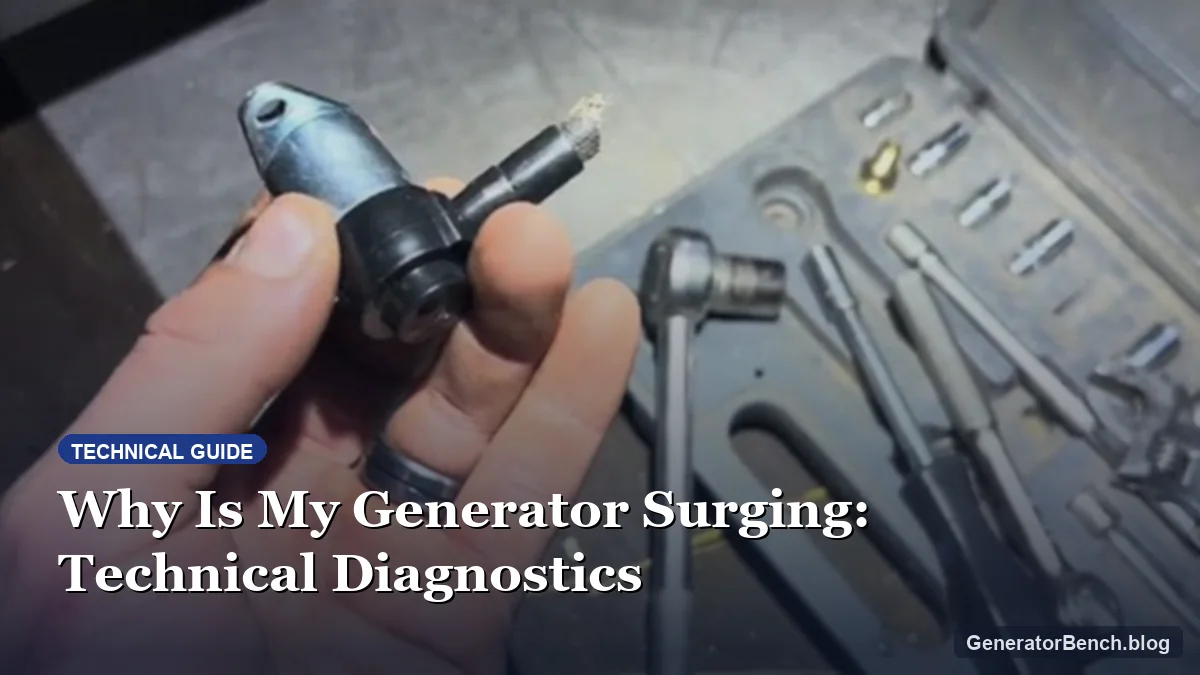
Generator surging typically stems from restricted fuel delivery or a hunting mechanical governor. Cleaning the carburetor main jet usually restores steady RPM stability immediately.
Looking for matching picks? See our Best Electric Generator.
Practical Quick-Reference Table
| Scenario / Metric | Recommended Target | Why It Matters |
|---|---|---|
| Idle Speed Range | 3600 RPM (60Hz) | Prevents frequency drop. |
| Main Jet Orifice | Clear of varnish | Ensures correct AFR. |
| Governor Spring | Correct tension | Eliminates speed hunting. |
| Fuel Tank Vent | Open position | Prevents vacuum lock. |
| Air Filter Element | Clean foam/paper | Maintains proper airflow. |
| Load Tolerance | Within rated watts | Avoids voltage sagging. |
Understanding Engine Hunting And Speed Fluctuations
Engine hunting occurs when a combustion engine cycles continuously between high and low speeds. This cyclical fluctuation indicates an air-fuel ratio imbalance requiring immediate technical intervention.
Portable power units rely on precise mechanical or electronic governors to maintain constant frequency. When this feedback loop fails, the unit begins hunting for steady operational equilibrium.
Ignoring minor speed oscillations can lead to unstable AC frequency output. Such fluctuations risk damaging sensitive downstream electronics connected to the power receptacle panel during operation.
Identifying the root cause requires methodical inspection of fuel passages, governor springs, and intake systems. Technicians should always isolate the electrical load before commencing mechanical checks.
Engine hunting manifests as cyclical rpm shifts, typically oscillating between 55 Hz and 65 Hz on unmanaged portable units, directly disrupting sensitive connected appliances and threatening electronics.
When frequency swings wildly outside standard operational thresholds, the automatic voltage regulator attempts stabilization, creating a compounding feedback loop that worsens the mechanical surge.
Technical diagnostics require attaching a quality digital multimeter or frequency counter to the AC receptacle to measure exact hertz deviations under zero load conditions.
Whether repairing traditional hardware or upgrading to the best solar electric generator, identifying root causes like fuel starvation or mechanical governor wear remains critical for effective troubleshooting.
- Monitor frequency meters for erratic 55Hz to 65Hz swings.
- Disconnect all external loads before starting diagnostic steps.
- Inspect the carburetor bowl for water or particulate debris.
- Verify throttle plate movement matches governor arm travel.
Acoustic Diagnostics And Frequency Measurement
Listening closely to the exhaust note helps differentiate between fuel starvation and governor over-correction. A rhythmic pulsing sound typically points directly to lean fuel conditions.
Using a digital multimeter with a frequency setting confirms exact output Hz variations. Steady power generation requires maintaining a strict 60Hz or 50Hz standard.
- Attach multimeter leads to hot and neutral terminals carefully.
- Record baseline hertz readings under no-load conditions.
Carburetor Jet Restrictions And Fuel Delivery Failures
Modern ethanol-blended fuels degrade rapidly when left sitting in float bowls over extended periods, creating sticky varnish deposits. Use our wattage sizing calculator alongside routine maintenance to keep engines running cleanly.
When the main jet becomes partially blocked, fuel flow drops below the engine demand threshold. The electronic or mechanical governor immediately opens the throttle to compensate for power loss.
As extra fuel floods the combustion chamber, engine speed spikes momentarily past the target RPM. The governor then reacts by closing the throttle, creating an infinite surging loop.
Resolving this specific issue demands complete carburetor disassembly and ultrasonic cleaning. Technicians must inspect every internal passage using compressed air and wire gauges.
Varnish accumulation inside the brass main jet severely restricts fuel flow, causing the air-fuel ratio to lean out momentarily before the mechanical governor overcompensates.
Removing the float bowl requires a 7mm or 8mm socket, allowing technicians to inspect the tiny orifices for microscopic debris using specialized wire cleaners.
Modern ethanol-blended gasoline aggressively attracts ambient moisture, forming gummy deposits that block carburetor emulsion tube holes and persistently trigger erratic engine surging cycles.
Upgrading to marine-grade fuel stabilizers and thoroughly draining the carburetor float bowl after every seasonal storage period prevents recurring fuel delivery restrictions entirely.
- Drain stale fuel completely from the carburetor float bowl.
- Remove the main jet and emulsion tube for inspection.
- Soak metal components in specialized carburetor cleaning solvent.
- Blow out all tiny air bleeds using regulated compressed air.
Fuel Valve And Tank Vent Restrictions
Restricted petcock screens starve the carburetor of adequate raw fuel volume under load. Checking the inline fuel filter prevents recurring fuel starvation symptoms.
A blocked fuel cap vent creates a partial vacuum inside the gas tank. This vacuum restricts natural fuel gravity feed and triggers severe engine surging.
- Ensure the fuel tank vent is open during operation.
- Inspect the inline fuel strainer for sediment buildup.
Video Walkthrough: The Truth About Generator Surging and How to Stop It
Mechanical Governor Linkages And Spring Calibration
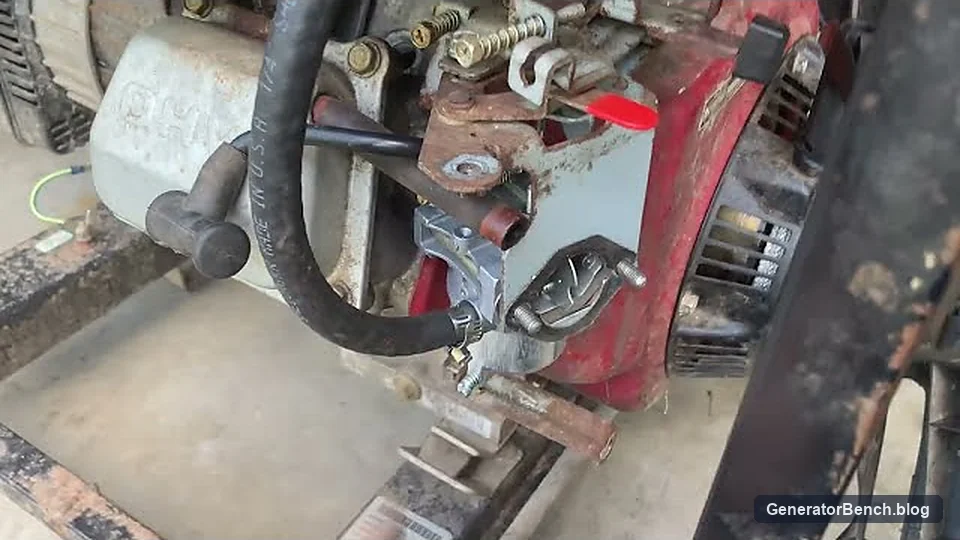
Mechanical governors use internal flyweights to sense engine speed variations dynamically. These flyweights push against a spool shaft connected to the external governor arm.
If the governor springs lose their factory tension or stretch, proper resistance disappears. The linkage begins oscillating back and forth, causing visible throttle arm fluttering.
Worn linkage bushings or bent control rods introduce excessive mechanical play into the system. This slack prevents the governor from making precise, stable throttle adjustments.
Calibrating the governor requires loosening the clamping bolt and rotating the cross shaft. Technicians must set the correct static position relative to the carburetor throttle shaft.
The mechanical governor relies on internal flyweights that push against a spool valve, shifting external metal linkages to regulate carburetor throttle plate positioning dynamically.
If the governor spring loses its strict factory tension or stretches over years of thermal cycling, it simply fails to resist the flyweight force properly.
Certified technicians must inspect linkage rods for physical binding, corrosion, or excessive play within the mounting eyelets that dampens critical rapid throttle response times.
Calibrating precise governor arm positioning requires loosening the clamp bolt and applying gentle rotational pressure toward maximum fuel delivery before retorquing all fasteners securely.
- Examine governor springs for rust, stretching, or fatigue.
- Check all linkage connection points for excessive slop.
- Perform a static governor adjustment following service manuals.
- Ensure no friction impedes free movement of control rods.
Electronic Governor And Actuator Diagnostics
Inverter generators often utilize stepper motors and control boards instead of mechanical arms. Faulty sensor signals or loose wiring harnesses will cause erratic actuator movement.
Inspecting the ECU connection plugs ensures reliable communication between the inverter module and throttle. Cleaning corrosion off terminal pins restores accurate speed regulation.
- Test actuator motor resistance with a digital multimeter.
- Verify secure connection pins on the inverter control board.
Air Induction Blockages And Intake Vacuum Leaks
Proper combustion relies on a precise balance of filtered air entering the cylinder. A clogged paper air filter restricts airflow and enriches the air-fuel mixture significantly.
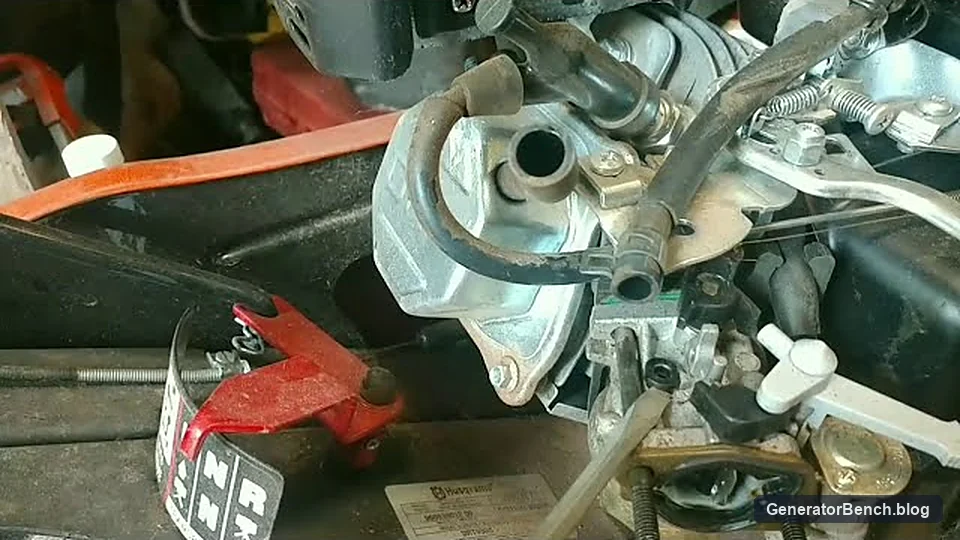
Conversely, cracked intake manifold insulators create uncontrolled vacuum leaks downstream of the carburetor. This unmetered air leans out the mixture, causing immediate speed surging behavior.
Checking gasket seals around the carburetor mounting flange prevents false air entry. Replacing hardened rubber spacers restores absolute integrity to the engine intake tract.
Routine filter maintenance stops dirt ingress from scoring cylinder walls and valve seats. Clean intake components ensure consistent volumetric efficiency across all operating hours.
A partially clogged paper air filter element restricts airflow, forcing the engine to run rich until intake vacuum drastically drops and triggers surging.
Conversely, severely cracked rubber intake manifolds or degraded carburetor gaskets allow unmetered ambient air to enter the combustion chamber during heavy high-load cycles.
Carefully spraying a small amount of starting fluid around the intake gasket while the engine idles helps reliably isolate dangerous vacuum induction leaks instantly.
Ensuring all critical mounting fasteners on the intake spacer block are torqued to exact manufacturer specifications prevents unwanted air leaks from actively forming.
- Wash foam pre-filters with warm soapy water and oil lightly.
- Replace pleated paper air elements when heavily soiled.
- Inspect rubber intake boots for dry rot and cracking.
- Torque carburetor mounting nuts to manufacturer specifications.
Crankcase Breather Valve Integrity
Faulty crankcase PCV or reed valves alter internal engine pressure dynamics. Abnormal pressure pulses can affect diaphragm-type carburetors and induce unwanted speed surging.
Verifying proper crankcase ventilation prevents oil displacement and intake contamination. Clear breathers maintain stable operating conditions across varying load profiles.
- Inspect crankcase breather tubes for kinks or blockages.
- Check reed valve sealing surfaces for carbon buildup.
Electrical Load Imbalances And Inverter Module Faults
Sometimes surging originates from fluctuating electrical loads rather than mechanical failure. Connecting cycling appliances like refrigerators can trick the engine into constant speed hunting.
Inverter generators dynamically throttle up or down based on current electrical demand. Internal inverter module faults can send conflicting signals to the throttle servo motor.
When selecting the best household generator, isolating the unit from all circuits helps verify internal operational health and prevents unexpected power surges.
Checking stator winding resistance and rotor slip rings identifies electrical component degradation. Professional testing equipment ensures accurate diagnosis of complex inverter circuit boards.
Sudden heavy electrical load shifts can trick the internal engine control unit into over-correcting engine speed, mimicking traditional mechanical fuel surging mechanical issues.
Modern portable inverter generators utilize an advanced inverter module to convert raw DC power back into stable AC current through rapid high-frequency switching.
If the sensitive internal inverter board experiences thermal overload or component degradation, it sends erratic feedback signals to the electronic linear throttle actuator motor.
Thoroughly testing stator winding resistance with a digital multimeter ensures electrical generation components remain within safe operational margins without internal hazardous electrical shorts.
- Test generator operation with a simple resistive load bank.
- Inspect rotor slip rings for oxidation and carbon dust.
- Verify inverter output voltage matches nominal specifications.
- Check circuit breakers for thermal fatigue or tripping.
Automatic Voltage Regulator Troubleshooting
Traditional brushless generators rely on an Automatic Voltage Regulator to stabilize power. A failing AVR can cause voltage spikes that destabilize the entire generating system.
Adjusting the AVR potentiometer carefully can eliminate minor voltage hunting loops. Technicians must monitor frequency meters closely while making minute calibration adjustments.
- Locate the AVR module behind the generator end cover.
- Measure excitation winding resistance using a multimeter.
Preventive Maintenance Protocols For Long-Term Stability
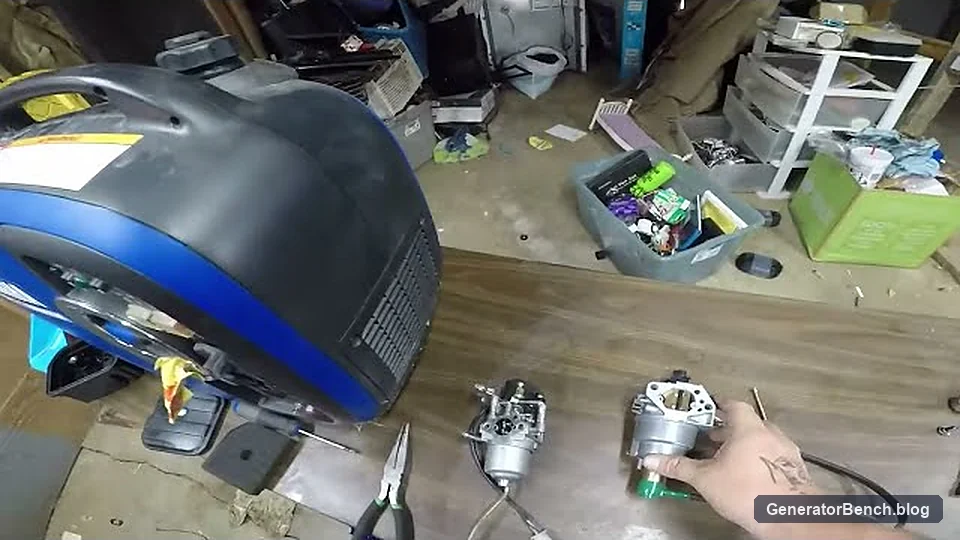
Establishing rigorous maintenance schedules prevents fuel system varnish and governor wear. Draining fuel bowls before storage protects against internal jet blockages entirely.
Using fuel stabilizers in stored gasoline prevents chemical breakdown and phase separation. Fresh fuel guarantees reliable starts and smooth, surge-free engine operation.
Inspecting governor linkages during every oil change catches wear early. Applying light lubricant to pivot points ensures frictionless movement and precise speed control.
Keeping cooling fins clear of debris prevents overheating and thermal distortion. A cool-running engine maintains optimal internal clearances for consistent governor performance.
Proactively establishing a strict maintenance schedule safeguards critical mechanical components from premature wear and eliminates the primary root mechanical causes of engine surging.
Changing the engine oil every 100 hours of operational run time minimizes friction on governor gears and prevents sludge buildup inside engine crankcases.
Properly storing equipment with treated fuel or running the carburetor dry prevents stale fuel varnishing internal jets during extended long-term seasonal periods of inactivity.
Selecting the best home emergency generator guarantees dependable power output when critical outages strike, provided you routinely inspect spark plugs, air filters, and fuel lines annually.
- Add stabilizer to fresh fuel cans before seasonal storage.
- Change engine oil every one hundred operating hours.
- Inspect spark plug electrode gap and condition regularly.
- Clean external cooling fins of dust and grass clippings.
Seasonal Storage Preparation Guidelines
Preparing equipment for long storage eliminates carburetor gumming issues entirely. Running the engine dry consumes all fuel trapped inside the float bowl chamber.
Fogging the cylinder with specialized oil protects internal walls from corrosion. Proper storage practices guarantee trouble-free operation when power is needed during emergencies.
- Turn off the fuel petcock and run engine until it stalls.
- Remove spark plug and inject storage fogging oil.
Frequently Asked Questions
Why does my generator surge only when I plug in appliances?
Load-dependent surging usually indicates a worn governor spring or dirty main jet. Cleaning the carburetor and adjusting spring tension restores stable throttle response.
Can old gasoline cause a portable generator to hunt for speed?
Yes, degraded fuel leaves varnish deposits that restrict carburetor jets. This restriction causes an lean-rich cycle known as engine surging.
How do I adjust a mechanical governor on a small engine?
Loosen the governor arm bolt, rotate the shaft fully in the correct direction, and tighten. This resets the baseline relationship with the carburetor throttle plate.
What role does the air filter play in engine speed stability?
A clogged filter restricts airflow, altering the air-fuel ratio and causing erratic operation. Regular cleaning ensures proper volumetric efficiency and steady RPM delivery.
Are inverter generators prone to surging like traditional models?
Inverters can surge due to stepper motor faults, dirty carburetors, or sensor errors. Electronic control boards manage throttle response based on real-time electrical feedback.