Propane Generator Will Not Start Diagnostic Manual
When a gaseous fuel engine fails to fire, systematic diagnosis prevents frustrating delays. Proper meter checks quickly isolate fuel delivery faults.

Always verify tank valve opening speed and primary regulator pressure before inspecting internal ignition components to prevent false engine teardowns.
Looking for matching picks? See our Best Electric Start Generator.
Practical Quick-Reference Table
| Scenario / Metric | Recommended Target | Why It Matters |
|---|---|---|
| Tank Pressure | Minimum 50 PSI | Ensures adequate liquid-to-vapor conversion. |
| Regulator Output | 11 Inches W.C. | Prevents carburetor flooding or starvation. |
| Battery Voltage | 12.6V DC Resting | Cranks starter motor at required RPM. |
| Spark Gap | 0.028-0.031 Inches | Delivers reliable high-energy ignition arc. |
| Oil Level | Full on Dipstick | Triggers low-oil shutdown safety switch. |
| Choke Position | Fully Closed (Cold) | Enriches air-fuel ratio for starting. |
Fuel Supply and Tank Pressure Dynamics
Liquid propane systems rely on precise vapor pressure inside the storage vessel. Opening the tank valve too quickly can trip the excess flow valve, choking supply.
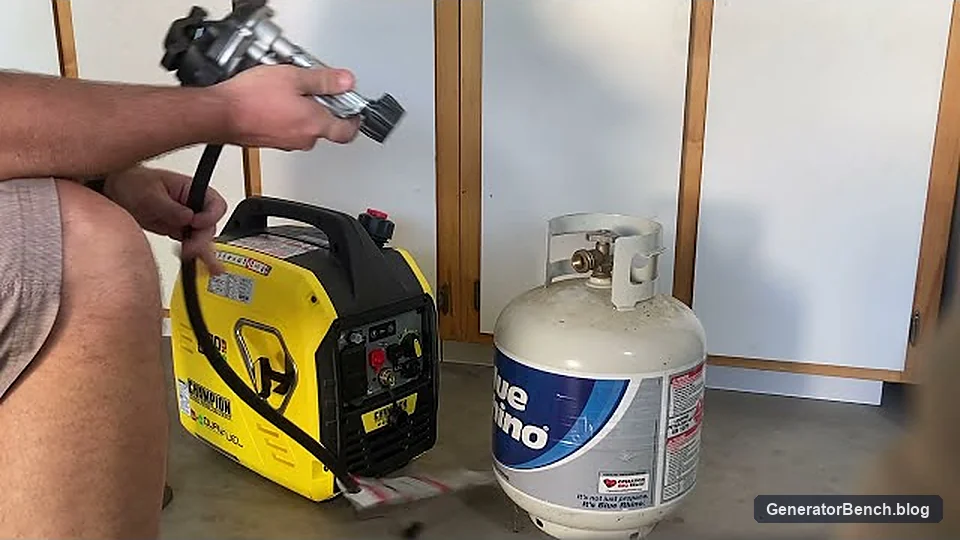
Ambient temperatures directly impact internal cylinder pressure during cold weather operations. Below freezing, propane vaporizes slowly, reducing the available volume for combustion engines.
When troubleshooting a vapor withdrawal system using our best propane gas generator recommendations, verify the tank is not empty and check ambient vapor pressure. A full cylinder exerts roughly 100 PSI at 70°F.
Internal tank overfill prevention devices can stick closed if the valve is opened too quickly. Close the main cylinder valve completely, wait sixty full seconds to equalize pressure, and reopen the valve slowly.
- Inspect external tank gauge for remaining liquid volume.
- Slowly crack cylinder valve to prevent safety lockout.
- Verify hose fittings are completely free of oil residue.
- Ensure tank sits on stable, level ground surface.
Excess Flow Valve Reset Procedure
If the internal safety check-ball seats prematurely, fuel delivery drops to zero. Closing the main tank valve fully allows this spring-loaded ball to reset.
Wait at least sixty seconds before reopening the cylinder valve extremely slowly. This allows downstream lines to pressurize without triggering the safety mechanism again.
- Close tank valve entirely.
- Wait sixty seconds.
- Open valve very slowly.
Low-Pressure Regulator and Hose Inspection
The secondary regulator drops tank pressure down to safe operating levels. A failed diaphragm inside this unit will block gas flow completely.
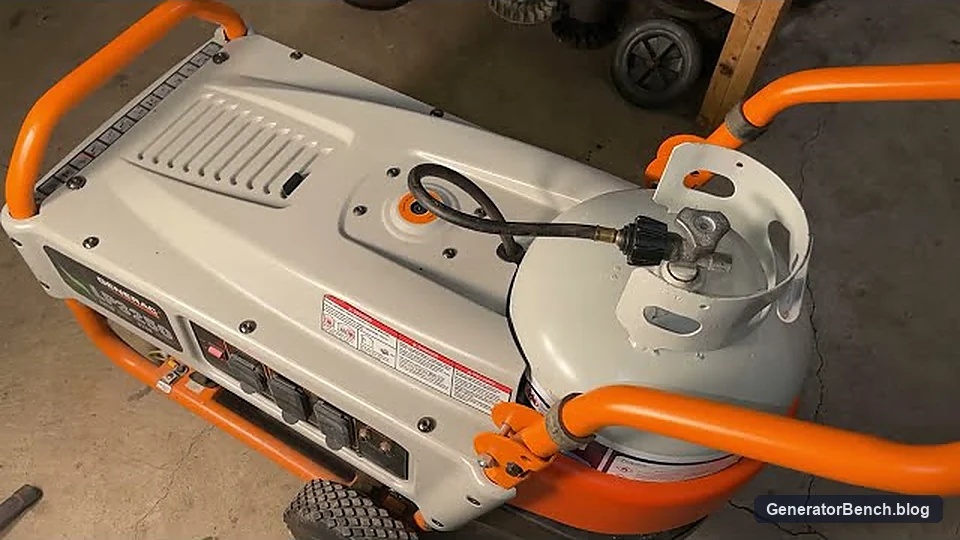
Inspect the rubber supply hose for visible kinks, abrasions, or structural cracking. Damaged lines restrict volume and drop operating pressure below required thresholds.
Inspect the secondary low-pressure regulator for diaphragm ruptures or blocked vent caps. The output pressure should measure 11 inches of water column, which equals roughly 0.4 PSI, required for proper fuel delivery.
Check supply hoses for internal delamination or oil contamination from previous fills. Apply soapy water to all threaded brass fittings to detect microscopic gas leaks that starve the combustion chamber of necessary fuel.
- Test regulator outlet pressure using a dedicated manometer.
- Listen for faint hissing indicating internal diaphragm tears.
- Replace hardened or weathered flexible rubber supply hoses.
- Check brass fittings for thread wear and leaks.
Manometer Pressure Testing Steps
Connect a water column manometer directly to the generator inlet port, a diagnostic step highlighted in our quietest propane generator reviews. The static pressure reading must remain steady during cranking cycles.
Fluctuating numbers indicate a failing regulator or blocked supply line that requires immediate component replacement before further engine testing.
- Attach manometer port securely.
- Observe static pressure baseline.
- Crank engine and watch drop.
Video Walkthrough: Propane Generator Will Not Start | Troubleshooting \u0026 Fix
Carburetor Demand Valve and Actuation Mechanics
Propane generators use a negative pressure demand regulator instead of a standard float bowl carburetor. Engine vacuum pulls open the internal diaphragm to release gas.
If this delicate rubber diaphragm becomes stiff or coated in oily residue, it will not actuate. Consequently, fuel never reaches the combustion chamber during cranking.
Propane carburetors rely on a negative-pressure demand regulator to release gas only when the engine cranks. A stiff internal rubber diaphragm prevents the internal plunger from opening, completely halting propane flow to the intake.
Manually depress the rubber primer button on the demand regulator while cranking to bypass a stuck valve. If fuel floods the throat, the sealing needle is stuck open or improperly seated.
- Check demand valve linkage for smooth mechanical movement.
- Clean sticky deposits using approved solvent sprays carefully.
- Verify vacuum port tubing is tightly secured in place.
- Inspect solenoid lock-off valve for electrical continuity.
Solenoid Lock-Off Valve Testing
The electric lock-off valve opens only when the starter engages. Use a multimeter to verify 12 volts DC reaches the solenoid terminals during cranking.
A clicking sound confirms the internal plunger is retracting. Absence of this noise points toward blown fuses or faulty control board relays.
- Set meter to DC volts.
- Probe solenoid harness pins.
- Listen for audible click.
Ignition Spark and Battery Voltage Verification
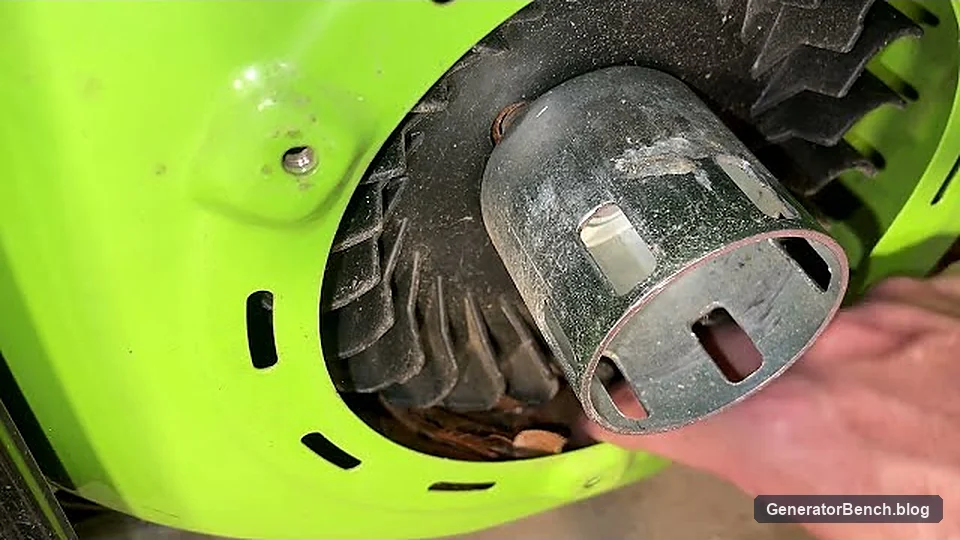
Electric start generators require strong battery power to spin the flywheel fast enough. Weak batteries reduce cranking speed, preventing the ignition module from generating spark.
Remove the spark plug and ground its threaded body against the cylinder head. A crisp blue spark during cranking indicates proper ignition system health.
Electronic ignition systems require robust cranking speeds to generate a healthy spark. Measure the starting battery resting voltage, ensuring it sits above 12.4 volts DC, and check that terminal connections remain totally corrosion-free.
Remove the spark plug and ground its threaded body against the engine block while cranking. Look for a bright blue snap across the gap, indicating the ignition coil and CDI module function correctly.
- Charge or replace sulfated starting batteries immediately.
- Clean corroded battery terminals with wire brush tools.
- Check spark plug gap with a wire feeler gauge.
- Inspect ignition coil wiring harness for loose connections.
Flywheel Magneto Air Gap Inspection
The ignition coil relies on precise distance from passing flywheel magnets. An incorrect air gap produces weak voltage spikes and intermittent engine misfires.
Adjust the coil mounting bolts using non-magnetic feeler gauges to achieve factory specified clearances. Tighten fasteners securely to prevent shifting during operation.
- Loosen ignition coil bolts.
- Insert non-magnetic feeler gauge.
- Torque fasteners to spec.
Air Intake Blockages and Ventilation Constraints
Gaseous fuel engines require precise air-fuel mixing ratios to achieve ignition. Clogged air filters choke oxygen supply, resulting in a flooded or unignited cylinder.
Rodents frequently nest inside generator enclosures during storage periods. Inspect the air box and exhaust ports for physical blockages before attempting startup sequences.
Internal combustion engines require unobstructed airflow to achieve correct stoichiometry. Inspect the paper air filter element for dust saturation, rodent nests, or oil contamination that severely restricts volumetric efficiency during initial engine cranking.
Ensure the generator enclosure louvers and internal ducting pathways remain completely clear of debris. Inadequate ventilation creates a localized vacuum that distorts air-fuel ratios, preventing the combustion cycle from catching reliably.
- Wash foam air filters in warm soapy water.
- Replace heavily soiled paper pleated air elements.
- Clear debris from external louvered intake vents.
- Verify choke plate moves freely within carburetor throat.
Choke Plate Linkage Verification
Manual or automatic chokes restrict incoming air to richen the mixture during cold starts. A disconnected control rod leaves the choke wide open permanently.
Manually manipulate the choke lever while watching the internal plate inside the throat. Ensure it seats completely when the control is engaged.
- Inspect linkage retaining clips.
- Verify full travel movement.
- Lubricate pivot points lightly.
Video Walkthrough: Propane Generator Fail
Cold Weather Vaporization and Freeze Mitigation
Propane changes from liquid to gas by absorbing heat from surrounding air, a limitation explored in our propane generator vs gas generator comparison. Extreme cold drops tank output, causing the engine to sputter.
Storing propane cylinders in unheated areas during blizzards leads to pressure starvation. Utilizing larger capacity tanks prevents rapid cooling and pressure loss during use.
Propane changes from liquid to gas inside the tank via ambient heat absorption. When temperatures drop below minus 44 degrees Fahrenheit, vaporization ceases entirely, leaving the generator completely starved of usable fuel vapor.
Prevent tank freeze-up by utilizing larger vertical cylinders that offer greater surface area for heat transfer. Never apply open flames to warm tanks; instead, use approved thermal wraps designed specifically for gas cylinders.
- Upgrade to larger propane cylinders for high draw.
- Keep backup tanks stored at warmer ambient temperatures.
- Shield regulators from direct freezing rain and snow.
- Check for frozen moisture inside low-pressure fuel lines.
De-icing Frozen Regulator Diaphragms
Moisture trapped inside the gas line can freeze solid over the regulator orifice. Pouring warm water over the metal housing thaws internal ice blockages quickly.
Never use open flames or high-heat industrial torches to warm propane vessels. Thermal expansion risks catastrophic tank failure and severe personnel injury.
- Pour warm water over body.
- Dry exterior surfaces completely.
- Test gas flow afterwards.
Comprehensive Diagnostic Workflow Protocol
Following a structured troubleshooting sequence saves time and eliminates guesswork. Begin with external fuel validation before disassembling carburetors or electrical control boxes.
Document every measurement taken during your testing phases. Keeping accurate records helps isolate intermittent faults that only appear under specific thermal conditions.
Begin systematic troubleshooting by verifying tank pressure and opening the manual shut-off valve completely. Next, test battery voltage and inspect the low-pressure regulator output to confirm proper downstream pressure delivery before examining internal components.
Finish your diagnostic sequence by testing for spark, cleaning the carburetor demand valve, and checking air filters. Following this logical troubleshooting path prevents unnecessary part replacements and quickly restores reliable generator operation.
- Verify fuel tank volume and valve position.
- Test low-pressure regulator output with manometer.
- Confirm 12V power reaches carburetor lock-off.
- Inspect spark plug condition and gap width.
Final Operational Safety Checks
Once the engine successfully starts, check all fittings with soapy water leak detectors. Detecting gas bubbles ensures zero fugitive emissions before unattended running.
Allow the generator to warm up for three minutes under zero electrical load before plugging in heavy appliances, which you can estimate using our generator wattage sizing calculator.
- Apply soapy water to joints.
- Listen for smooth idle speed.
- Gradually apply electrical loads.
Frequently Asked Questions
Why does my propane generator crank but refuse to fire up?
This failure mode usually indicates a closed tank valve or a tripped excess flow safety device within the high-pressure delivery hose. Always check fuel delivery pressure with a proper manometer before inspecting internal ignition spark components to ensure accurate diagnostics.
Verifying these initial external variables prevents unnecessary carburetor disassembly and saves valuable workshop time during emergency power outages.
Can old propane fuel prevent a generator from starting properly?
Propane fuel does not degrade like gasoline over time inside standard steel storage cylinders. However, heavy end hydrocarbons can accumulate inside supply lines during prolonged humid storage periods.
Purging the fuel lines thoroughly and checking tank pressure usually restores normal startup performance without requiring extensive mechanical overhauls or costly replacement parts.
How do I know if my propane demand regulator is faulty?
A failed demand regulator will not open when engine vacuum is applied during cranking attempts. Inspect the internal rubber diaphragm for stiffness, cracking, or oily residue blockages.
Replacing damaged soft goods restores proper negative pressure actuation and allows gaseous fuel to enter the combustion chamber freely during every startup sequence. Regular maintenance prevents these issues.
What pressure should my low-pressure propane regulator output?
Most portable generators require 11 inches of water column pressure for stable operation under full load. Use a dedicated manometer to verify correct secondary pressure levels during static and cranking cycles.
Fluctuating pressure readings strongly indicate a failing regulator or restricted supply line that demands immediate technical attention before running the engine.
Is it safe to use a hair dryer to thaw a frozen propane regulator?
Using gentle external heat sources like warm water immersion or a hair dryer on low is completely acceptable. Never use open flames or high-heat industrial torches near pressurized gas containers under any circumstances.
Proper winterization practices ensure reliable performance when freezing temperatures arrive unexpectedly in your region. Taking these precautions prevents dangerous accidents and keeps your backup power system running smoothly.