How to Synchronize Generator Frequency
Maintaining stable electrical cycles prevents catastrophic phase collisions. Proper frequency alignment ensures seamless parallel generator integration.

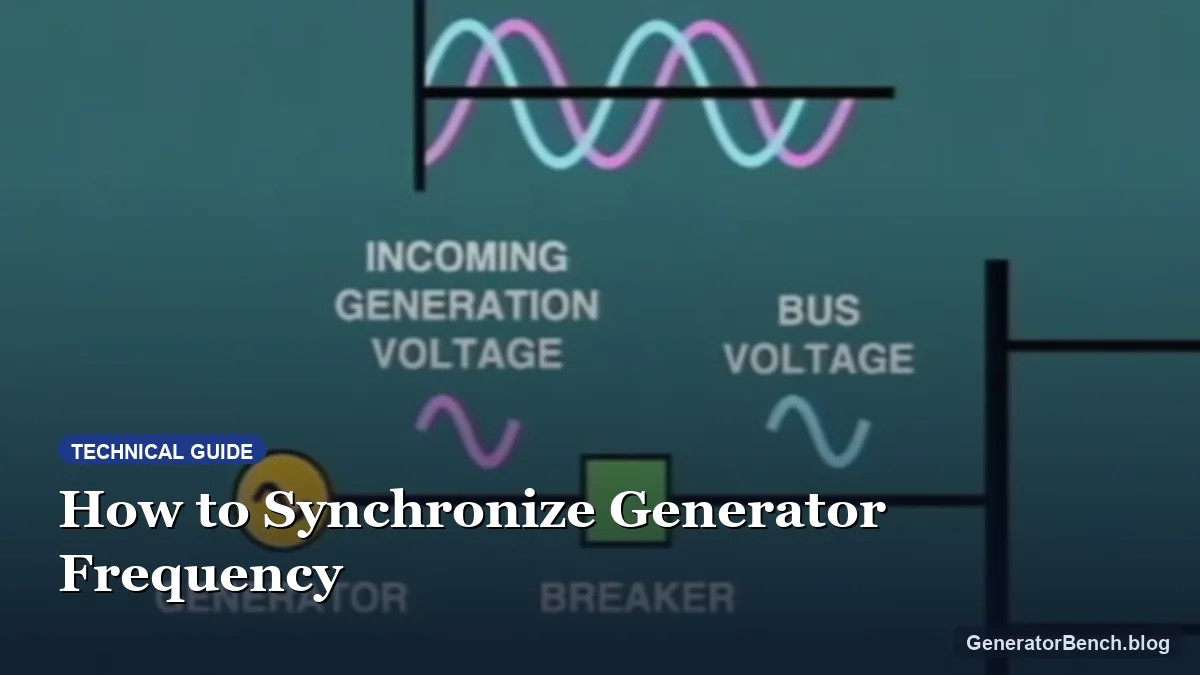
Precise frequency matching requires adjusting engine governor speeds until the phase angle differential reaches zero degrees before closing the synchronizing breaker.
Looking for matching picks? See our Best Electric Generator.
Practical Quick-Reference Table
| Scenario / Metric | Recommended Target | Why It Matters |
|---|---|---|
| Target Frequency | 60 Hz (North America) | Ensures compatible AC operation |
| Phase Angle Diff | 0 Degrees | Prevents severe short circuits |
| Voltage Mismatch | Under 2 Percent | Minimizes reactive power flow |
| Synchroscope Speed | Zero RPM Pointer | Indicates perfect frequency match |
| Engine Droop | 3 to 5 Percent | Stabilizes shared load distribution |
| THD Inverter Output | Below 3 Percent | Protects sensitive electronics safely |
Fundamental Principles of Alternating Current Frequency
Alternating current generators produce electricity through rotational magnetic fields. The output frequency directly depends on the rotor rotation speed and the number of magnetic poles inside the alternator housing.
Standard utility grids in North America operate at exactly sixty hertz. Matching this exact cycle rate is mandatory when interconnecting multiple power sources to prevent damaging electrical surges and equipment failure.
Even minor deviations in rotational velocity cause noticeable frequency drift. Operators must understand how mechanical RPM translates directly into electrical hertz before attempting any synchronizing procedures in the field.
- Pole count configuration dictates baseline alternator RPM.
- Hertz measurement requires calibrated digital frequency meters.
- Rotor inertia affects immediate engine speed response times.
- Thermal expansion alters internal mechanical tolerances over time.
Understanding Rotor Pole Dynamics
The relationship between mechanical speed and electrical frequency remains fixed by design. Alternators with more poles require lower rotational speeds to achieve the identical hertz output.
Recognizing this fundamental formula helps technicians diagnose speed regulation errors quickly during routine maintenance tasks. Choosing the best home emergency generator ensures reliable backup power when grid failures occur.
- Multiply RPM by pole pairs to find frequency.
- Maintain constant prime mover velocity.
Engine Governor Mechanics and Speed Control
Controlling the prime mover speed is the primary method for adjusting output frequency. Electronic governors provide superior droop characteristics compared to older mechanical linkages during parallel generator operation scenarios.
Adjusting the fuel supply alters the mechanical torque applied to the alternator shaft. Increasing fuel delivery raises engine RPM, which immediately increases the generated electrical frequency output levels.
Operators must make incremental adjustments to avoid overshooting the target frequency. Fine-tuning the governor actuator ensures stable synchronization without inducing unwanted hunting or electrical oscillation across the busbar.
- Electronic actuators offer precise frequency resolution.
- Mechanical governors experience thermal sensitivity shifts.
- Droop settings prevent load sharing imbalances.
- Linkage wear introduces undesirable control hysteresis.
Fine-Tuning Electronic Actuators
Calibrating electronic governors requires adjusting proportional and integral gain parameters. Proper tuning prevents the engine from hunting for the exact target speed under variable electrical loads.
Stable governor response minimizes frequency variance and protects connected equipment from disruptive power fluctuations.
- Set gain values gradually during testing.
- Monitor real-time frequency feedback closely.
Video Walkthrough: Generator Synchronization - Theory and Simulation
Utilizing Synchronizing Lights and Phasing Meters
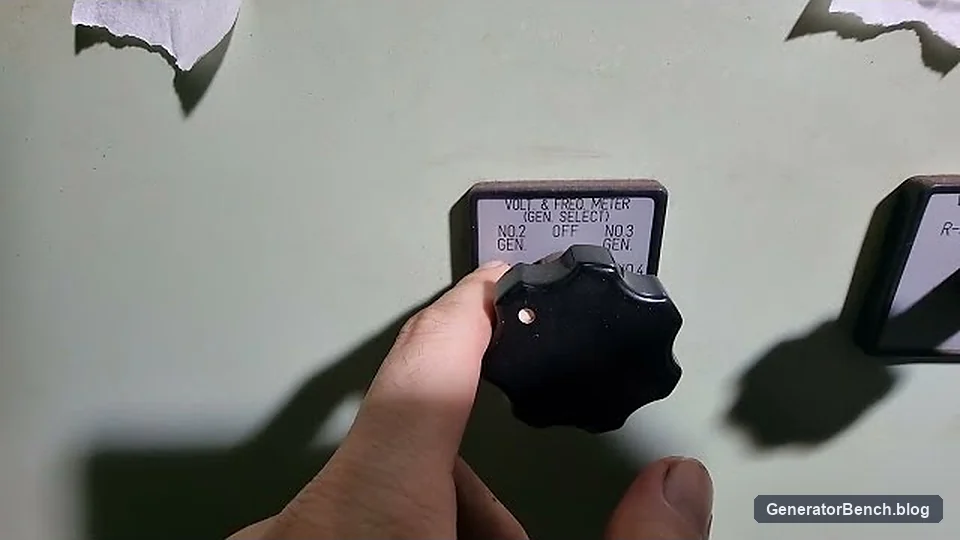
Visual indicators help technicians determine the exact moment generators achieve phase alignment. The traditional dark lamp method connects incandescent bulbs across open breaker terminals to indicate phase equality.
When generator frequencies match completely, the synchronizing lights remain unlit. Modern facilities upgrading the best household generator replace simple bulbs with automated synchroscopes that visually display phase angle differences.
Observing the synchroscope pointer rotation direction reveals whether the incoming generator is running too fast or too slow. Technicians adjust engine speed until the rotating needle stops at the twelve o'clock position.
- Synchroscope pointers rotate clockwise for high speed.
- Counterclockwise rotation indicates low generator frequency.
- Dark lamp setups require correct voltage ratings.
- Phase rotation meters verify correct terminal wiring.
Interpreting Synchroscope Behavior
The synchroscope acts as a differential voltmeter comparing two distinct alternating waveforms. A stationary pointer indicates identical frequency and phase angles between the sources.
A rapidly spinning pointer signifies a large frequency disparity that must be corrected before attempting to close the synchronization breaker.
- Watch pointer speed for frequency gaps.
- Close breaker only at absolute standstill.
Parallel Operation and Paralleling Panels

Paralleling multiple generators increases total power capacity for large commercial applications. Advanced paralleling panels automatically manage frequency, voltage, and phase angle before closing the heavy-duty tie breakers.
Manual paralleling demands extreme precision from trained electrical operators. Closing the breaker prematurely while out of phase creates a severe short circuit condition that can instantly destroy alternator windings.
Load sharing controllers balance active power output across all synchronized units. Pairing conventional backups with the best solar electric generator prevents any single unit from absorbing excessive mechanical stress during shared operation cycles.
- Automatic synchronizers eliminate human timing errors.
- Busbar tie breakers require robust arc suppression.
- Current transformers monitor circulating reactive power.
- Interlock relays prevent unsafe manual closures.
Electronic Inverter Frequency Locking Techniques
Modern inverter generators produce raw alternating current and convert it to direct current. A computer-controlled inverter stage then synthesizes a clean sine wave at the precise target frequency.
Because the inverter dictates the final output waveform, physical engine speed no longer dictates frequency. This allows the engine to throttle down while maintaining a stable sixty hertz output.
Parallel-capable inverter generators use dedicated communication cables to share clock signals. This digital synchronization ensures both units lock onto identical frequency and phase parameters effortlessly.
- Pulse-width modulation shapes the final sine wave.
- Digital communication links synchronize multiple inverter modules.
- Variable engine speeds improve overall fuel efficiency.
- Total harmonic distortion remains exceptionally low.
Video Walkthrough: Introduction
Phase Angle Matching and Voltage Regulation
Frequency synchronization is only one requirement for successfully tying power sources together. The voltage magnitude and phase angle must also match hermetically to prevent destructive circulating currents.
Automatic voltage regulators control the excitation current supplied to the rotor windings. Adjusting field excitation ensures the electrical potential matches the existing busbar voltage before breaker closure.
A significant voltage mismatch causes reactive power to flow between machines. Technicians must monitor both frequency meters and voltmeters simultaneously during manual synchronization procedures.
- Excitation systems regulate terminal voltage levels.
- Reactive power flow overheats generator stator windings.
- Phase angle meters confirm zero-degree alignment.
- Voltage differentials must stay below permitted thresholds.
Comprehensive Safety Protocols During Paralleling
Working with high-voltage alternating current systems demands strict safety adherence. Using our wattage sizing calculator alongside appropriate arc flash protection ensures technicians maintain compliance during all live electrical interventions.

Verifying correct phase rotation prevents catastrophic motor reversals and equipment damage. Always use a calibrated phase rotation meter before energizing any newly installed paralleling system busbars.
Emergency shutdown procedures must remain accessible during complex synchronization tasks. Establishing a clear communication protocol among crew members prevents misunderstandings during critical breaker closing operations.
- Lockout tagout procedures protect maintenance personnel.
- Arc flash boundaries dictate required PPE ratings.
- Grounding protocols prevent dangerous chassis voltage potentials.
- Insulated safety mats isolate operators from earth.
Diagnostic Troubleshooting for Frequency Drift
Frequency drift during operation typically points to fuel delivery or governor issues. Inspecting the fuel filters and carburetor linkages resolves most mechanical speed instability problems in portable units.
Electronic governor controllers may experience sensor faults or wiring degradation over time. Testing speed pickup sensors with a multimeter helps identify intermittent signal loss causing erratic frequency readings.
Overloading the generator beyond its rated capacity inevitably causes engine RPM to drop. Reducing the electrical load restores the engine to its proper operating speed and frequency range.
- Fuel system clogs starve engines of power.
- Magnetic pickup sensors require proper air gap.
- Electrical overloads drag down engine speed.
- Worn governor springs cause speed droop.
Frequently Asked Questions
What happens if generators are synchronized out of phase?
Closing breakers while out of phase creates a massive short circuit condition. This event can instantly shatter alternator shafts and warp windings.
Can non-inverter generators be easily paralleled manually?
Manual paralleling requires specialized synchroscope equipment and extensive training. Operators must carefully match speed, voltage, and phase angles before closing tie breakers.
Why does engine speed affect alternating current frequency?
Alternator frequency depends directly on rotational velocity and pole count. Changes in engine RPM alter the magnetic field rotation rate.
How do inverter generators handle frequency synchronization?
Inverters convert raw AC to DC before synthesizing a clean AC output. Internal computer controllers easily lock onto exact frequency targets digitally.
What tool is best for checking phase rotation order?
A digital phase rotation meter verifies proper line sequence before installation. This prevents motors from running backward and damaging equipment.