How To Store A Gas Powered Generator Safely: Technical Guide
Proper storage procedures protect your gas powered generator from internal component degradation and ensure reliable backup power whenever emergencies strike.


Always drain or stabilize fuel systems, replace engine oil, disconnect batteries, and store equipment in a dry, elevated indoor environment.
Looking for matching picks? See our Best Gas Powered Generator.
Practical Quick-Reference Table
| Scenario / Metric | Recommended Target | Why It Matters |
|---|---|---|
| Fuel Storage | Treated or Drained | Prevents carburetor varnish |
| Crankcase Oil | Fresh Oil Fill | Stops internal acid wear |
| Storage Humidity | Below 50 Percent | Eliminates metal corrosion |
| Battery Voltage | Above 12.6 Volts | Prevents permanent sulfation |
| Floor Clearance | Elevated on Pallets | Blocks capillary moisture |
| Cover Material | Breathable Canvas | Prevents condensation traps |
Fuel System Preparation and Carburetor Protection
Proper fuel stabilization prevents varnish buildup in the carburetor float bowl during extended periods of non-operation. Add a fresh stabilizer to the fuel tank immediately before shutdown.
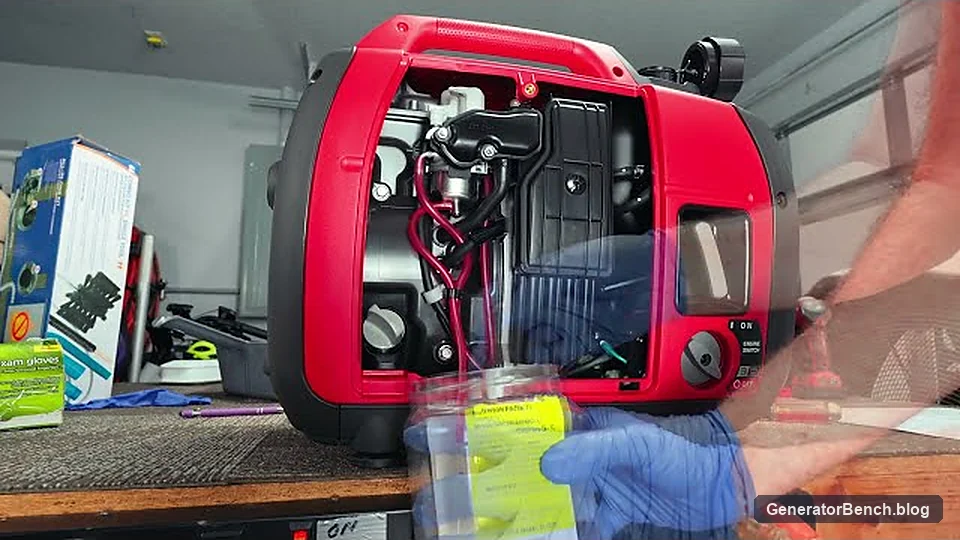
Run the engine for ten minutes to circulate treated gasoline through the entire fuel system after calculating loads with our generator wattage sizing calculator. This prevents stubborn blockages.
Alternatively, drain the fuel tank completely by disconnecting the fuel line or using a manual siphon pump. Always perform this drainage procedure in a well-ventilated outdoor area.
Finally, open the carburetor drain screw to empty any remaining liquid gasoline into an approved container. Tighten the screw securely once the float bowl is completely dry.
Untreated gasoline degrades within thirty days, gumming up tiny jets inside the carburetor bowl. Drain the fuel tank completely using an approved siphon pump before adding fresh stabilizer fluid.
Run the engine for ten minutes after adding the treated fuel to coat the internal fuel lines, needle valves, and float chambers with protective additives that prevent varnish buildup.
Locate the carburetor float bowl drain screw at the bottom of the assembly. Loosen this brass fitting with a stubby screwdriver and capture residual fuel in a sealed metal disposal container.
Tighten the float bowl drain securely once all liquid stops dripping to prevent air leaks during the next startup sequence, ensuring your seals remain flexible and properly seated all winter.
- Add stabilizer to fresh fuel before running the engine.
- Run the generator for ten minutes to clear lines.
- Drain remaining gasoline using an approved siphon pump.
- Empty the carburetor float bowl via the drain screw.
Managing Fuel Valve Shutoff Procedures
Turn the fuel valve to the closed position while the engine is still running to consume remaining fuel. This starves the carburetor and prevents stale deposits.
Wait until the motor sputters and dies naturally to ensure zero fuel remains in the internal passages. This protects precision brass jets from corrosion.
- Close fuel valve during active engine operation.
- Allow engine to consume trapped carburetor fuel.
Engine Oil Draining and Internal Cylinder Protection
Fresh engine oil degradation occurs over months of static storage, forming acidic compounds that etch metal components. Always drain old oil while the engine remains slightly warm.
Remove the oil dipstick and open the drain plug to empty the crankcase completely into a catch pan. Tilt the unit slightly if necessary to extract all fluid.
Replace the drain plug securely and refill the crankcase with fresh manufacturer-recommended oil. Proper lubrication prevents internal corrosion on vital piston rings and cylinder walls.
For long-term storage exceeding six months, perform a cylinder fogging procedure. Remove the spark plug and spray specialized fogging oil directly into the combustion chamber.
Warm the engine slightly to lower oil viscosity, then remove the drain plug located near the base of the crankcase. Tilt the unit slightly to drain every drop of used lubricant.
Refill the crankcase with clean oil matching the manufacturer weight specifications, usually 10W-30 synthetic, up to the upper fill mark on the dipstick to protect internal metal components.
Remove the spark plug using a deep socket wrench and pour one tablespoon of clean engine oil directly into the open cylinder chamber to stop corrosion on the piston rings.
Pull the recoil starter rope slowly for five cycles to distribute the protective oil evenly across the cylinder walls, then thread the spark plug back in hand-tight without the boot.
- Drain old crankcase oil while engine is warm.
- Refill with fresh oil to protect internal components.
- Remove spark plug for direct cylinder fogging.
- Pull recoil rope gently to distribute fogging oil.
Spark Plug Maintenance During Storage
Inspect the removed spark plug for heavy carbon fouling, electrode erosion, or ceramic cracking. Clean the tip with a wire brush or install a replacement component.
Apply a tiny dab of anti-seize compound to the plug threads before reinstalling it loosely into the cylinder head. This prevents thread seizing during extended inactivity.
- Check spark plug electrode gap and cleanliness.
- Apply anti-seize compound to plug threads.
Video Walkthrough: How to Store a Generator
Environmental Controls and Humidity Management
Environmental humidity control is critical to prevent destructive rust formation on exterior frames and alternator windings. Choose an indoor storage location that remains dry and temperature-controlled.
When selecting units like our top gas powered generator picks, never store them inside attached residential garages where volatile fumes might migrate. Keep the equipment away from open flames.
Elevate portable generators off concrete basement floors using wooden pallets or thick rubber blocks. Direct contact with masonry draws moisture upward through capillary action.
Place reusable moisture-absorbing desiccant canisters near the alternator head and control panel to absorb ambient humidity. Inspect these desiccants monthly and recharge them when saturated.
Store your generator in a dry, well-ventilated structure such as a shed or detached garage, keeping it elevated off concrete floors on pressure-treated wood blocks to prevent moisture absorption.
Relative humidity levels exceeding sixty percent accelerate rust formation on bare steel frames and electrical windings, so deploy rechargeable silica gel canisters directly inside the generator storage enclosure.
Never wrap your machine in tight plastic sheeting that traps ambient condensation against the metal housing; instead, utilize breathable canvas covers designed specifically for outdoor power equipment.
Maintain a minimum clearance of three feet around all sides of the stored unit to ensure adequate air circulation and prevent accidental impacts from stored seasonal yard equipment nearby.
- Select a dry, well-ventilated indoor storage area.
- Elevate equipment off concrete floors using pallets.
- Keep units away from active ignition sources.
- Monitor ambient humidity levels using digital hygrometers.
Battery Maintenance and Electrical Disconnection
Electric start generators require careful battery maintenance to prevent permanent cell sulfation during prolonged storage periods. Disconnect the negative battery terminal to eliminate parasitic current draws.
Remove the 12-volt starting battery entirely and place it on a dedicated smart maintenance charger in a temperate room. Maintain a float voltage above twelve point six volts.
Clean corrosion from battery terminals using a wire brush and a baking soda solution. Apply dielectric grease to the terminals to prevent future oxidation buildup.
Inspect all exposed electrical wiring harnesses and circuit breakers for signs of rodent damage or abrasion. Secure loose wires with zip ties to prevent mechanical wear.
Disconnect the negative battery terminal first, followed by the positive terminal, to eliminate parasitic electrical draws and prevent accidental short circuits against the steel frame during long-term storage.
Clean terminal posts with a wire brush and apply a thin coating of dielectric grease to prevent oxidation and ensure reliable conductivity when spring commissioning procedures finally begin.
Remove lead-acid starter batteries and relocate them to a temperature-controlled workbench where freezing temperatures cannot crack the plastic casing or ruin internal lead plates.
Connect the battery to an automatic smart maintainer delivering a steady float charge of 13.2 volts, preventing sulfation and ensuring immediate cranking capability when emergency power is needed.
- Disconnect negative battery terminal to prevent drain.
- Store removable batteries on a smart maintainer.
- Clean terminal posts with baking soda solution.
- Apply dielectric grease to prevent oxidation.
Exterior Cleaning and Protective Cover Selection
Thorough exterior cleaning removes abrasive dust, road salt, and oily residues that attract moisture and accelerate paint corrosion. Wash the metal frame using mild automotive detergent.
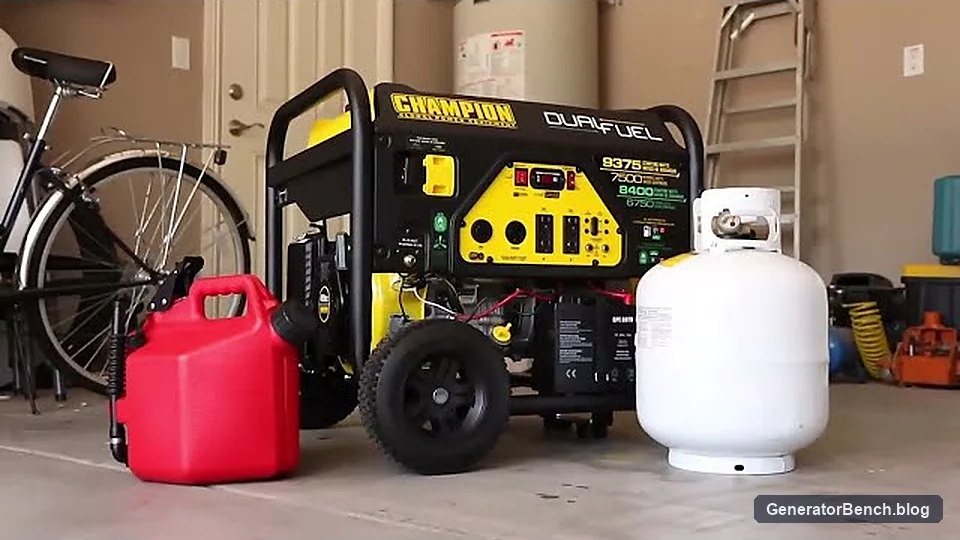
Before securing models featured in our quietest gas powered generator guide, allow the equipment to dry completely. Trapped surface moisture beneath a tight cover causes rapid rust.
Choose a breathable canvas or heavy-duty polyester cover designed specifically for outdoor equipment. Avoid cheap plastic tarps that trap condensation against the painted metal surfaces.
Ensure the protective cover allows adequate ventilation around the exhaust muffler and control panel areas. Secure the hem tightly with integrated drawstrings or heavy-duty elastic bands.
Wash away accumulated road salt, mud, and grass clippings using a mild detergent solution and a soft-bristle brush, avoiding direct high-pressure water streams aimed at electrical control panels.
Dry the entire frame thoroughly with a microfiber towel and compressed air to eliminate trapped water droplets hiding within crevices, fastener threads, and cooling fin assemblies.
Apply a light coat of silicone-based spray protectant to all exterior metal surfaces, control linkages, and exposed fastener heads to create an effective barrier against ambient moisture.
Install a heavy-duty, weather-resistant polyester cover featuring UV-blocking coatings and elastic hem cords to secure a snug fit that keeps out dust, insects, and windblown debris.
- Wash exterior frame with mild automotive detergent.
- Dry unit thoroughly before covering it up.
- Use breathable fabric covers instead of plastic tarps.
- Secure cover securely with integrated drawstrings.
Video Walkthrough: Long term generator (or any small engine) storage
Pre-Startup Inspection and Commissioning Protocol
Proper pre-startup inspection ensures safe operation when reactivating units like the Predator 4375-watt portable generator after months of idle storage. Always check fluid levels before attempting ignition.
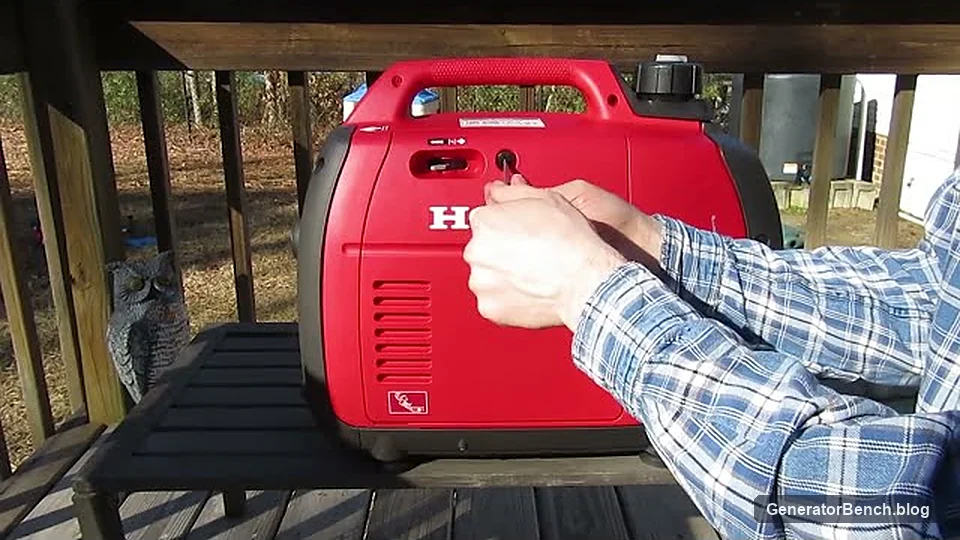
Verify that the engine oil, coolant, and fresh gasoline meet manufacturer specifications. Inspect the air filter element for insect nests, dust accumulation, or physical deterioration.
Reconnect the battery terminals and ensure all circuit breakers remain in the open position during initial cranking. This prevents electrical loads from shocking the alternator.
Start the engine and let it idle for five minutes without any connected load to stabilize operating temperatures. Listen closely for unusual mechanical noises or vibration.
Inspect the fuel lines, fuel filter, and carburetor gaskets for signs of dry rotting, cracking, or softening caused by old fuel exposure before filling the tank with fresh gasoline.
Check the engine oil dipstick level and verify that the air filter element is clean, dry, and properly oiled if using a foam-style pre-cleaner element for optimal airflow.
Reconnect the spark plug wire securely, install a fully charged starting battery, and verify that all circuit breakers are switched to the off position before cranking the engine.
Start the generator outside in a well-ventilated area, let it idle for five minutes without load to reach operating temperature, and test output voltage using a digital multimeter.
- Inspect all fluid levels before engine startup.
- Verify air filter cleanliness and integrity.
- Reconnect battery and keep breakers open.
- Idle engine for five minutes before loading.
Frequently Asked Questions
Can I store my generator with gasoline in the fuel tank?
Leaving untreated gasoline in the fuel tank causes stubborn varnish deposits that easily clog delicate carburetor jets during extended periods of non-use.
Always add a fresh fuel stabilizer and run the engine for ten minutes, or drain the system completely to protect your motor.
How should I maintain electric start batteries during storage?
Electric start generators feature 12-volt starting batteries that suffer from gradual self-discharge and permanent chemical sulfation during cold storage.
Disconnect the negative terminal immediately and store the removable battery on a smart maintenance charger inside a temperate room to maintain optimal cell health.
Why is it important to elevate generators off concrete floors?
Storing your portable generator directly on a bare concrete basement floor allows moisture to travel upward through porous masonry via capillary action.
Elevate the metal frame securely using wooden pallets or thick rubber blocks to ensure proper airflow underneath the equipment.
What is cylinder fogging and when is it necessary?
Cylinder fogging oil coats the internal piston rings, cylinder walls, and valve guides with a protective film to prevent destructive rust formation.
Remove the spark plug and spray a small burst of fogging oil directly into the combustion chamber before cranking the engine gently by hand.
Are plastic tarps suitable for covering a portable generator?
Avoid using cheap plastic tarps because they trap ambient condensation tightly against painted metal surfaces and accelerate corrosion.
Select a breathable canvas cover specifically engineered for outdoor machinery to protect your generator from dust while allowing trapped moisture to evaporate safely.