How To Quiet Down A Loud Generator
Reducing portable generator noise requires understanding decibel scales and mechanical vibrations. Implementing these professional acoustic strategies protects your hearing and maintains neighborhood harmony.


Always prioritize exhaust modification and distance over heavy enclosures to prevent dangerous carbon monoxide buildup. Combining rubber isolation feet with a directional exhaust baffle delivers optimal noise reduction safely.
Looking for matching picks? See our Best Quiet Generator.
Practical Quick-Reference Table
| Scenario / Metric | Recommended Target | Why It Matters |
|---|---|---|
| Decibel Level | Under 65 dB at 23 feet | Prevents hearing fatigue |
| Exhaust Direction | Away from living areas | Reduces direct pressure waves |
| Pad Density | High-density rubber mats | Absorbs low-frequency vibrations |
| Enclosure Clearance | Minimum 36 inches | Ensures adequate cooling airflow |
| Baffle Design | Labyrinth air paths | Traps high-frequency sound waves |
| Load Testing | Run at 50 percent | Establishes baseline noise output |
Understanding Acoustic Mechanics and Decibel Ratings
Generator noise stems primarily from mechanical engine combustion, cooling fan rotation, and exhaust gas velocity. Measuring sound pressure levels using weighted decibel scales helps technicians isolate specific frequency bands requiring attenuation.

Every three decibel increase doubles acoustic energy intensity in open environments. Understanding this logarithmic scale helps campers evaluate choices listed in our best quiet generator for camping roundup before buying.
High-RPM engines generate harsh whining frequencies that easily penetrate single-wall metal housing panels. Inverter units operate at variable speeds, producing significantly lower decibel readings during partial electrical load conditions.
Acoustical engineers map sound footprints to determine exact pressure nodes around operating equipment. Evaluating your machine under normal load conditions establishes a reliable baseline before implementing structural noise reduction modifications.
Sound measurement relies on the decibel scale, which operates logarithmically rather than linearly. A mere three-decibel increase actually doubles the sound intensity experienced by human ears near running equipment.
Acoustic output consists of mechanical engine noise, structural vibration, and exhaust pulses. Identifying your unit's exact frequency signature helps determine whether low-pitched rumbles or high-pitched whines require targeted dampening solutions.
Standard portable models often register around seventy decibels at twenty feet, comparable to heavy traffic. Inverter generators leverage digital throttles to reduce baseline engine speeds under partial electrical loads.
Sound pressure drops significantly over distance according to the inverse square law. Doubling the physical separation between your generator and living spaces yields a noticeable six-decibel reduction in ambient noise.
- Identify primary noise sources using directional sound level meters.
- Note that low-frequency vibrations travel further through dense earth.
- Calculate distance attenuation using standard inverse square laws.
- Document baseline decibels at standard twenty-three foot intervals.
Analyzing Frequency Spectra
Low-frequency exhaust pulses require massive physical mass to effectively block or absorb sound energy. High-frequency mechanical valve clatter responds well to porous foam absorption materials placed nearby.
Isolating these distinct frequency ranges allows technicians to apply targeted acoustic treatments rather than guessing. Proper identification saves time and prevents unnecessary alterations to factory exhaust components.
- Use spectrum analyzers to pinpoint annoying tonal spikes.
- Target high-frequency noise with open-cell acoustic foam.
Strategic Placement and Ground Surface Isolation
Placing your portable generator far away from inhabited structures remains a simple mitigation tactic. Travelers often consult our best quiet generator for rv guide to find naturally muffled campsite power sources.
Hard concrete patios reflect acoustic waves upward, amplifying overall sound dispersion across yards. Positioning units on soft soil, grass, or rubber mats dampens ground-borne structural vibrations significantly.
Directing the hot exhaust away from windows and neighboring properties prevents sound wave channeling. Physical obstacles like solid masonry walls create effective acoustic shadows that shield nearby seating areas.
Never place operating units inside enclosed sheds or garages without professional ventilation engineering. Carbon monoxide poisoning risks vastly outweigh any short-term acoustic benefits gained from tight spaces.
Hard concrete patios and wooden decks act as acoustic amplifiers, reflecting sound waves upward and outward. Placing your running unit on soft earth immediately absorbs high-frequency ground-borne mechanical vibrations.
Deploying heavy-duty anti-vibration mats beneath the steel frame isolates the chassis from resonant flooring materials. Rubber interlocking gym tiles provide an affordable and weather-resistant decoupling foundation for portable units.
Orientation matters when choosing an outdoor operating spot. Pointing the hot exhaust muffler away from neighbor windows prevents direct line-of-sight sound transmission while maintaining safe exhaust clearance margins.
Avoid placing portable generators inside confined alcoves or tight corners. Confined spaces cause acoustic wave bouncing, compounding decibel levels and creating severe hazards related to toxic carbon monoxide accumulation.
- Position units at least twenty feet from windows.
- Mount generators on vibration-absorbing rubber pads.
- Avoid hard reflective surfaces like concrete slabs.
- Use natural terrain features to block sound lines.
Evaluating Ground Coupling Effects
Unsecured metal frames vibrate against hard ground, creating irritating structural resonance. Inserting heavy-duty rubber isolators breaks this direct mechanical coupling and limits sound transmission.
Testing different pad durometers ensures optimal weight distribution without excessive frame sagging. Proper clearance under the unit also preserves essential crankcase cooling airflow paths.
- Select neoprene or natural rubber isolation mounts.
- Check frame stability to prevent excessive engine rocking.
Video Walkthrough: 8 BEST Ways To Make a Noisy Generator QUIETER!
Upgrading and Modifying Exhaust Muffler Systems
Factory mufflers prioritize cost and compact sizing over maximum sound attenuation. Before modifying exhaust systems, use our generator wattage sizing calculator to ensure your power unit matches total electrical loads properly.
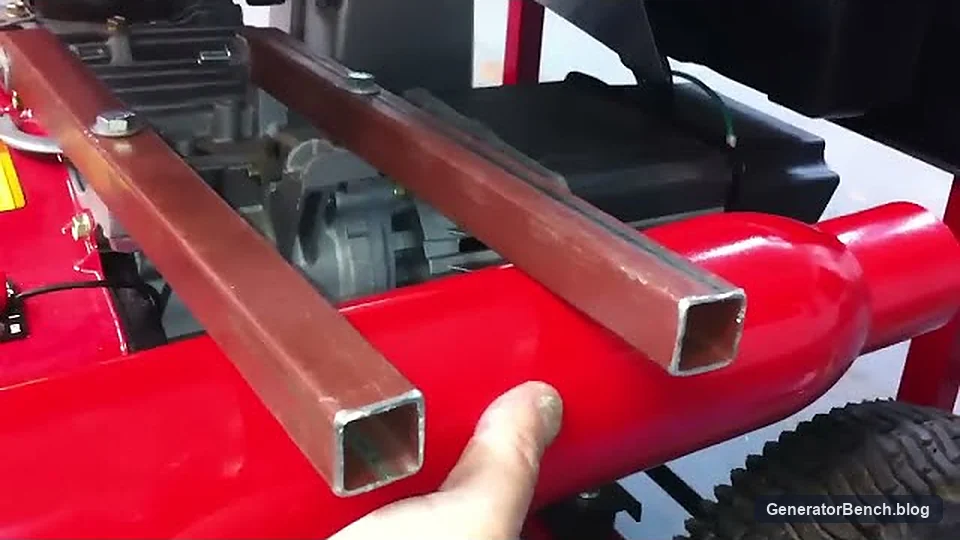
Exhaust gas velocity creates turbulent pressure waves that generate high decibel levels at the tailpipe. Expanding the expansion chamber volume allows hot gases to cool and decelerate more gradually.
Custom exhaust routing requires careful pipe sizing to maintain proper engine backpressure ratios. Excessive restriction reduces power output and increases operating temperatures, leading to premature valve failure.
High-temperature fiberglass packing inside custom mufflers absorbs high-frequency exhaust hiss effectively. Inspecting this packing material annually ensures long-term acoustic performance remains consistent under heavy electrical loads.
Factory exhaust systems prioritize basic emission control over quiet operation. Installing a secondary automotive-grade glasspack muffler drastically reduces the sharp pop of single-cylinder four-stroke engines.
When fabricating custom exhaust extensions, maintain correct pipe diameter dimensions to prevent dangerous backpressure spikes. Excessive backpressure robs engine horsepower, increases operating temperatures, and causes premature valve failure.
Secure all threaded exhaust fittings using high-temperature thread sealant and lock washers. Loose manifolds create rattling metallic sounds and dangerous leaks of hot toxic exhaust gases near the user.
Ensure any exterior exhaust modifications route fumes safely beyond acoustic enclosures. Directing hot gases against wooden walls or flammable soundproofing materials introduces severe fire safety risks requiring immediate remediation.
- Match aftermarket muffler inner diameters to factory piping.
- Use high-temperature thread sealant on all manifold bolts.
- Route exhaust extensions safely away from fuel tanks.
- Monitor cylinder head temperatures after exhaust modifications.
Constructing Custom Exhaust Baffles
Secondary slip-on automotive resonators can be adapted to portable generator exhaust outlets. These secondary chambers force exhaust gases through tortuous paths, further dampening pressure spikes.
Ensure any added weight is fully supported by rigid bracketry attached to the frame. Allowing a heavy muffler to hang unsupported will crack exhaust manifolds during operation.
- Fabricate sturdy steel support brackets for heavy mufflers.
- Test exhaust backpressure using a specialized manometer.
Constructing Custom Baffle Boxes and Enclosures
Building a dedicated wooden or composite baffle box requires strict adherence to thermodynamics. Inadequate ventilation causes severe engine overheating, oil breakdown, and catastrophic generator component failure.
Lined interior walls using mineral wool insulation absorb airborne sound waves effectively. Never use standard residential fiberglass batting, as it melts and packs down from intense heat.
Offset intake and exhaust vent labyrinths prevent direct sound paths from escaping the enclosure. Air must twist through insulated channels that trap noise while allowing powerful cooling fans to work.
Install active thermostatically controlled exhaust fans if passive airflow proves insufficient for cooling. Monitoring internal ambient temperatures prevents thermal runaway during extended multi-hour runtime operations.
Building an external baffle box requires precise engineering to maintain proper airflow dynamics. Internal partition walls force sound waves to deflect multiple times while allowing cooling air to circulate.
Line the enclosure interior with high-density mineral wool or acoustic foam panels. These porous materials trap high-frequency noise energy, converting airborne sound waves into harmless thermal energy through friction.
Incorporate large intake and exhaust ventilation ducts equipped with 90-degree internal bends. These labyrinth channels block direct sound propagation while facilitating required forced air cooling for the engine.
Never enclose an operating generator in a completely sealed container. Doing so guarantees catastrophic engine overheating, oil breakdown, and permanent mechanical damage caused by restricted thermal dissipation.
- Leave at least twelve inches of clearance around units.
- Line internal walls with fire-rated mineral wool panels.
- Design offset baffle vents for intake and exhaust.
- Monitor internal enclosure air temperatures continuously.
Designing Labyrinth Air Channels
Labyrinth vents force air to turn multiple sharp corners before exiting the enclosure. Sound waves dissipate energy upon striking each solid insulated surface along the air path.
Sizing these vent openings correctly prevents air starvation and maintains proper carburetor stoichiometry. Always calculate total square inch area requirements based on engine displacement.
- Build internal baffles using fireproof cement board.
- Ensure vent cross-sectional area exceeds factory requirements.
Managing Vibration Dampening and Frame Resonance
Engine vibrations travel through tubular steel frames and radiate outward as structural noise. Installing elastomeric mounts between the engine block and base frame cuts structural resonance.
Checking all frame bolts, alternator housings, and fuel tank mounts eliminates annoying metallic rattles. Loose sheet metal panels amplify minor engine vibrations into loud buzzing frequencies.
Applying damping mats to large flat steel panels deadens panel vibration effectively. These constrained-layer damping materials convert mechanical vibration energy into negligible amounts of heat.
Flexible fuel lines and electrical wiring harnesses prevent vibration transfer to external accessories. Securing loose cords stops annoying slapping noises against vibrating metal surfaces.
Structural frame resonance often produces annoying buzzing sounds separate from engine exhaust noise. Replacing hardened factory mounting bolts with rubber isolation mounts breaks rigid metallic vibration paths.
Inspect sheet metal panels, fuel tanks, and control consoles for loose fasteners. Applying thread-locking fluid to exterior screws stops annoying harmonic rattles triggered by single-cylinder engine pulses.
Adding mass to vibrating sheet metal panels lowers their natural resonant frequency. Placing dampening adhesive sheets on the underside of metal housing parts reduces high-pitched structural pinging noises.
Check engine mount torque specifications regularly during routine equipment servicing. Loose engine mounts allow excessive block movement, destroying drive belts and aggravating overall mechanical vibration transfer.
- Tighten all engine mounting fasteners to torque specs.
- Apply butyl rubber damping mats to flat panels.
- Replace worn engine cradle rubber mounts promptly.
- Isolate fuel tanks with rubber grommets at mounting points.
Isolating Alternator Housing Resonance
Alternator stators and rotors produce electromagnetic hums that resonate through cooling shrouds. Ensuring proper air gap tolerances reduces electrical humming noises during peak loads.
Insulating plastic cooling shrouds with foam strips stops buzzing against metal crankcases. Small adjustments yield noticeable improvements in overall perceived sound quality.
- Check stator bolt torques during routine maintenance.
- Install foam dampening strips under plastic shrouds.
Acoustic Barrier Placement and Sound Deflection
Temporary outdoor sound screens deflect directional noise away from sensitive living spaces. Constructing portable plywood or mass-loaded vinyl barriers creates an effective line-of-sight acoustic shadow.
Angle sound barriers away from reflective surfaces like brick walls or metal sheds. Directing sound toward open fields prevents echo bounce and multiple wave reinforcement phenomena.
Hanging mass-loaded vinyl curtains from outdoor frames provides flexible noise mitigation. This dense material blocks mid-to-high frequency sounds without requiring permanent structural construction.
Always maintain safe clearance distances between hot engine components and acoustic curtains. Preventing fire hazards takes precedence over achieving maximum noise reduction targets.
Erecting temporary outdoor acoustic fences creates an effective sound shadow for nearby neighbors. Solid vinyl fencing materials act as superior sound deflection barriers compared to chain-link or slatted wood.
Position freestanding sound blankets at least three feet away from the hot engine housing. Hanging heavy mass-loaded vinyl sheets from a sturdy frame absorbs escaping mid-frequency airborne noise waves.
Never block the natural wind direction when setting up external deflection walls. Proper cross-ventilation ensures that hot exhaust air dissipates quickly without creating dangerous thermal pooling zones.
Strategic placement of dense shrubbery and garden landscaping offers modest natural sound attenuation. While bushes cannot replace solid acoustic barriers, they help break up direct sound wave trajectories.
- Deploy mass-loaded vinyl curtains for flexible shielding.
- Angle outdoor screens to deflect sound upward.
- Keep barriers at least three feet from hot exhausts.
- Anchor temporary screens securely against strong winds.
Deploying Mass-Loaded Vinyl
Mass-loaded vinyl offers high surface density in a flexible, hangable sheet format. Suspending this material on outdoor frames creates an efficient limp-mass acoustic barrier.
Overlap all seam edges by at least two inches to prevent sound leaks. Sealing joints with heavy-duty acoustic tape maintains barrier integrity across the entire surface.
- Support heavy vinyl sheets with reinforced grommets.
- Overlap and tape all vertical seam junctions.
Regular Engine Maintenance for Noise Reduction
Worn valve trains and loose internal components generate excessive mechanical clatter over time. Performing regular valve lash adjustments keeps engine mechanical noise down to factory specifications.
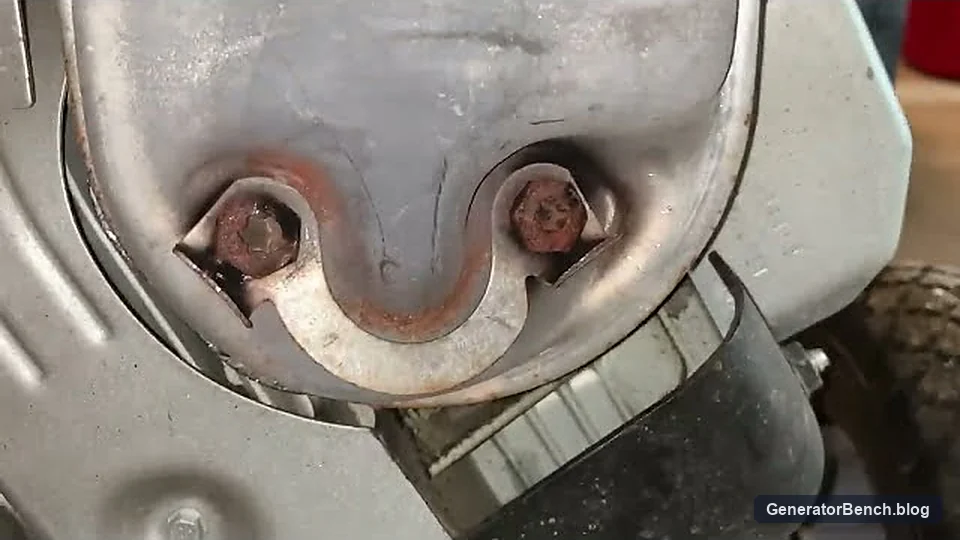
Dirty air filters alter combustion dynamics and increase rough idling noise levels. Replacing clogged air elements restores smooth engine operation and lowers overall operating decibels.
Stale fuel causes erratic combustion and loud knocking sounds within the cylinder head. Using fresh fuel combined with proper stabilization additives maintains quiet, efficient power strokes.
Fresh synthetic engine oil reduces friction across critical journal bearings and piston skirts. Proper lubrication minimizes mechanical whine and protects internal components from premature wear.
Neglected small engines grow noticeably louder as internal components wear down. Performing scheduled oil changes with high-grade synthetic lubricants reduces mechanical friction and quiets valvetrain operating noise levels.
Dirty air filters force the carburetor to run rich, causing rough idling and increased exhaust popping. Cleaning or replacing your paper air element restores smooth combustion and minimizes harsh engine sounds.
Adjusting loose valve clearances eliminates loud ticking noises coming from the cylinder head. Maintaining precise manufacturer specifications ensures optimal valve seating and prevents excessive mechanical valvetrain clatter.
Inspect spark plugs periodically for carbon fouling and correct gap spacing. A healthy ignition spark guarantees complete fuel combustion, smoothing out power strokes and reducing erratic engine combustion noise.
- Adjust valve clearances every one hundred operating hours.
- Replace clogged paper air filters immediately.
- Use high-quality synthetic oils for better lubrication.
- Drain stale fuel before long-term storage periods.
Carburetor Tuning and Combustion Noise
Lean fuel mixtures cause surging, popping, and increased mechanical harshness. Cleaning clogged carburetor jets restores proper air-fuel ratios and smooths out engine sound.
Synchronizing dual-cylinder engines eliminates rough power pulses that rattle frames. Balanced cylinders produce steady acoustic profiles during heavy electrical draws.
- Clean varnish from main carburetor jets thoroughly.
- Check spark plug color to verify correct fuel mixture.
Safety Protocols When Modifying Generator Acoustics
Safety must always override aesthetic or acoustic goals during generator modifications. Trapping exhaust gases or restricting cooling airflow creates extreme fire and carbon monoxide hazards.
Always install certified carbon monoxide detectors near living spaces when running generators. When selecting equipment, many homeowners research options featured in our best quiet generator guide before attempting custom acoustic modifications.
Keep flammable liquids, dry brush, and paper debris away from hot exhaust pipes. High-temperature surfaces can easily ignite surrounding materials during extended runtime cycles.
Consult manufacturer guidelines before altering exhaust systems to avoid voiding warranties. Prioritizing operational safety ensures reliable backup power without risking equipment damage.
Safety must remain paramount when implementing custom acoustic modifications on fuel-burning equipment. Always maintain unobstructed ventilation clearance zones to prevent carbon monoxide poisoning and lethal fire hazards.
Never use flammable acoustic materials like standard upholstery foam inside generator enclosures. Utilize fire-rated mineral wool and certified heat-resistant insulation blankets to withstand extreme exhaust surface temperatures.
Monitor engine operating temperatures carefully after installing any custom soundproofing enclosure. Use an infrared thermometer to verify that cylinder head temperatures remain within safe factory thermal limits.
Keep a fully charged chemical fire extinguisher nearby during all generator operation periods. Prioritize safe operational practices over maximum quietness to protect your family and property from accidental combustion disasters.
- Install functional carbon monoxide detectors nearby.
- Never block cooling airflow to save space.
- Keep dry vegetation cleared from around operating units.
- Inspect electrical wiring for chafing or heat damage.
Preventing Thermal Runaway and Fires
Enclosed generators trap immense amounts of heat around sensitive alternator windings. Monitoring internal temperatures with infrared thermometers prevents insulation breakdown and electrical shorts.
Ensure emergency shut-off switches remain easily accessible outside any custom enclosure. Quick access allows immediate engine shutdown if overheating or fuel leaks occur.
- Keep a rated fire extinguisher within arm's reach.
- Test emergency engine shut-off switches monthly.
Frequently Asked Questions
Will building a wooden box around my generator damage the engine?
Enclosures will cause severe engine overheating if adequate ventilation is neglected. Always ensure your design includes forced cooling airflow and thermal monitoring.
How many decibels can I realistically drop a portable generator's noise level?
Proper placement combined with rubber isolation feet typically yields a noticeable reduction. Expect a drop of five to ten decibels through careful acoustic modifications.
Can I use standard home fiberglass insulation inside a generator enclosure?
Standard residential fiberglass melts and packs down from intense heat exposure. Always use fire-rated mineral wool insulation for safe acoustic absorption.
Does running a generator in Eco-mode reduce operating noise?
Inverter generators lower engine RPMs during partial loads, reducing noise. Utilizing Eco-mode settings significantly quiets down operations during light electrical draws.
Are aftermarket automotive mufflers safe for portable generators?
Automotive mufflers work well if matched properly to engine displacement. Ensure correct backpressure ratios to prevent overheating and lost power.