Caterpillar Diesel Generator Fuel Consumption Chart In Litres
Technical operators need precise diesel burn metrics to maintain jobsite efficiency. This guide details how to read consumption charts accurately.


Always evaluate fuel burn at 75 percent load for standard operational planning. Match your specific model serial number against factory data to maintain proper runtime reserves.
Looking for matching picks? See our Best Diesel Generator.
Practical Quick-Reference Table
| Scenario / Metric | Recommended Target | Why It Matters |
|---|---|---|
| Idle Load | 10 to 15 percent | Minimizes wet stacking risks |
| Quarter Load | 25 percent capacity | Establishes baseline low usage |
| Half Load | 50 percent capacity | Balanced thermal efficiency point |
| Three-Quarter Load | 75 percent capacity | Optimal continuous operating zone |
| Full Load | 100 percent capacity | Maximum rated mechanical output |
| Specific Fuel Burn | Liters per kilowatt-hour | Direct efficiency measurement |
Understanding Caterpillar Diesel Generator Fuel Consumption Metrics
Caterpillar diesel generators require precise fuel monitoring to ensure uninterrupted field performance. Operators must understand metric fuel rates presented in liters per hour for accurate site budgeting.
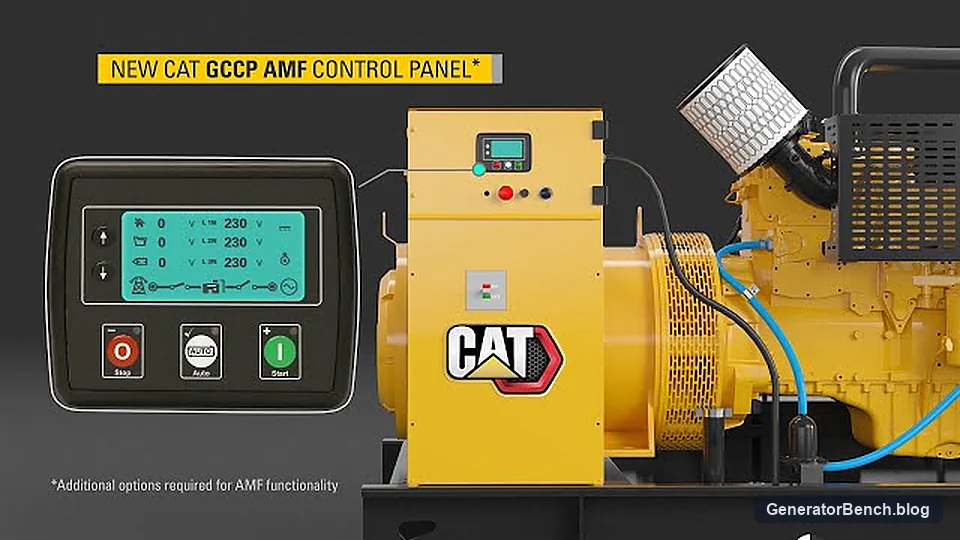
Factory performance datasheets outline specific burn quantities across various operational loads. Reviewing our propane vs gas generator fuel consumption guide helps technical teams anticipate daily diesel requirements before deploying heavy equipment.
Standard metric conversions translate US gallons into liters for international engineering standards. Using correct multipliers ensures your fuel storage infrastructure matches expected generator runtime demands precisely.
Engine displacement and turbocharger tuning directly dictate overall fuel consumption efficiency. Larger displacement blocks inherently burn more diesel even when operating at **reduced electrical loads}.
Fuel rack adjustments and electronic governor calibrations also influence instantaneous burn rates significantly. Technicians must review control panel diagnostics to verify that actual fuel usage aligns with factory performance curves.
Caterpillar diesel generators rely on precise volumetric metrics, typically measured in litres per hour, to quantify fuel burn under specified operational parameters and fluctuating electrical loads during standard commercial deployment.
Engineers reference specific fuel consumption curves provided in official technical datasheets to calculate exact diesel requirements before commissioning generator sets on critical backup or primary power job sites.
Standard international metric measurements account for diesel density variations, usually standardized at 0.85 kg per litre, ensuring thermal energy calculations remain accurate across diverse ambient temperature ranges.
Fuel supply systems feature heavy-duty supply and return lines, utilizing JIC 37-degree flared fittings to maintain secure, leak-free fluid dynamics under high pressure and continuous engine vibration.
Adhering to NFPA 30 standards ensures that onsite fuel storage tanks, piping configurations, and day tank capacities meet rigorous safety margins required for uninterrupted diesel generator operations.
- Always reference official Caterpillar technical data sheets.
- Convert US gallons to liters using 3.785 multiplier.
- Account for parasitic loads from auxiliary cooling systems.
- Record ambient temperature during baseline fuel testing.
Reading Manufacturer Technical Data Sheets
Technical datasheets provide comprehensive fuel consumption curves for specific engine models. Cross-referencing your generator serial number guarantees you access exact performance specifications for your unit.
Look closely at the temperature correction factors printed beneath the main charts. Ignoring these environmental adjustments can lead to severe fuel calculation errors during extreme weather operations.
- Verify engine serial number before reading charts.
- Check ambient temperature correction footnotes carefully.
Interpreting Litre-Based Fuel Consumption Data Tables
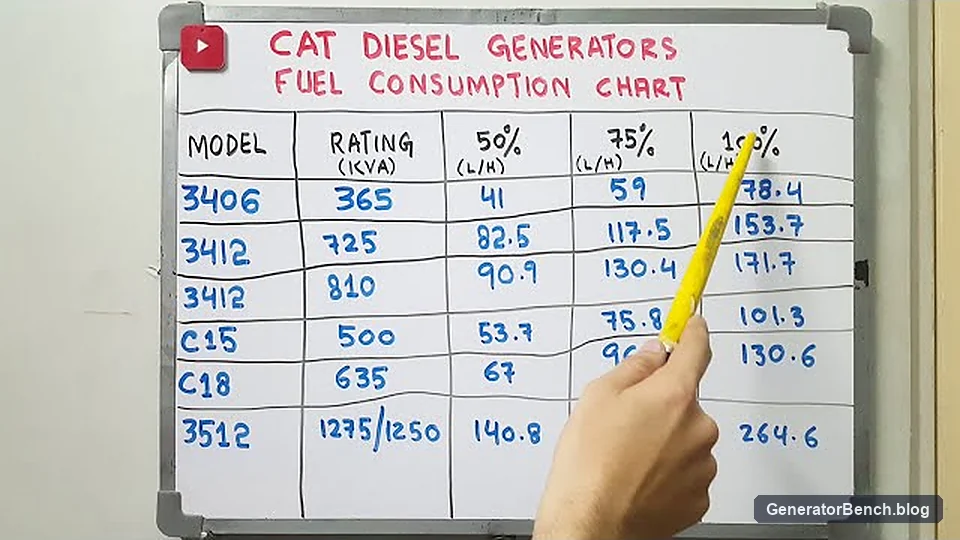
Litre-based consumption tables break down fuel usage across distinct percentage thresholds. Technicians analyze these structured grids to project exact hourly diesel burn without complex mathematical conversions.
Most standard charts display consumption figures at twenty-five, fifty, seventy-five, and one hundred percent loads. Identifying your typical operating load isolates the most accurate litre value for your project.
Standby ratings differ significantly from prime power ratings on standard Caterpillar documentation. You must select the correct operational category to avoid undervaluing real fuel consumption during extended outages.
Fuel density variations across different fuel grades can slightly alter volumetric consumption rates. Utilizing clean diesel meeting local standards ensures consistent engine performance matches tabular expectations.
Advanced control panels display real-time fuel burn statistics that operators can cross-check against tables. Comparing live data spots anomalies before they develop into costly mechanical engine failures.
Technical data sheets outline fuel consumption at distinct load intervals, usually detailing metrics for 25, 50, 75, and 100 percent operational capacities to help facility managers project runtime accurately.
When reviewing these liters-per-hour tables, operators must cross-reference prime power ratings against standby power ratings because standby configurations push engines harder, increasing hourly diesel consumption.
Interpolating data between standard percentage intervals requires careful mathematical adjustment, accounting for the non-linear efficiency curves inherent in heavy-duty turbocharged diesel combustion engines.
Calibration of fuel flow meters using differential pressure transmitters verifies that actual consumption matches manufacturer charts during routine load bank testing procedures.
Technicians should inspect fuel return manifold valves and secondary filtration pressure drops regularly to prevent corrupted data readings caused by restricted fuel flow or bypassed injectors.
- Identify whether ratings are standby or prime power.
- Locate the exact percentage load matching your facility.
- Note litres per hour values across all columns.
- Account for fuel supply pump temperature swings.
Analyzing Standby Versus Prime Power Metrics
Standby power ratings permit higher fuel injection rates for emergency short-term demands. Operating continuously at standby levels will accelerate wear and increase hourly litre consumption.
Prime power ratings establish sustainable continuous output limits for multi-day deployments. These configurations prioritize long-term durability and optimize fuel burn efficiency over extended run cycles.
- Never run prime generators at standby overload limits.
- Track operating hours to schedule timely maintenance.
Video Walkthrough: Caterpillar Fuel Consumption Chart . CAT Generator Fuel Consumption in Urdu Hindi
Load Factor Impact on Diesel Burn Rates
Electrical load directly dictates the volume of diesel injected into combustion chambers. Running generators below thirty percent capacity creates incomplete combustion and promotes wet stacking.
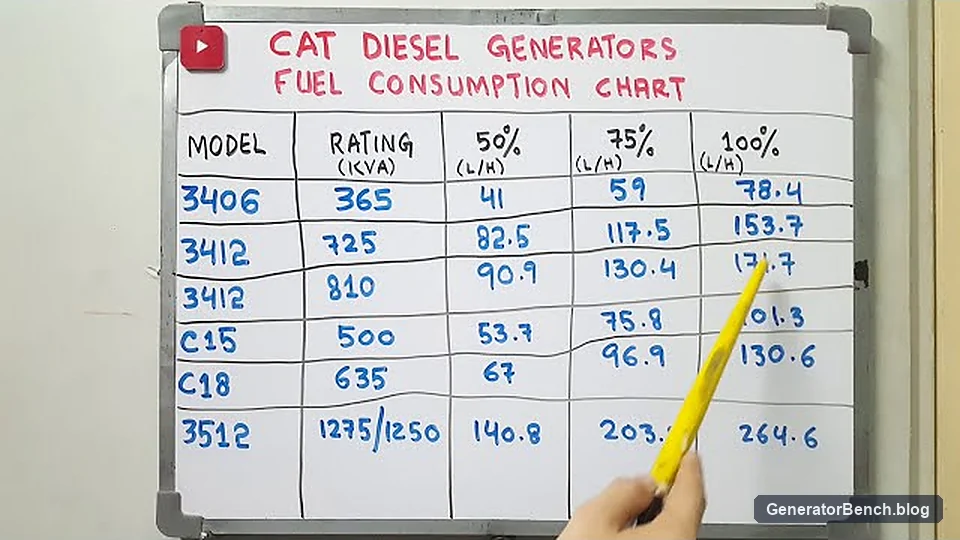
Fuel consumption increases non-linearly as electrical demand approaches maximum generator capacity. Consulting our best tri fuel generator roundup prevents unexpected fuel shortages during peak industrial operational hours.
Inductive loads from heavy motor starts temporarily spike instantaneous fuel injection demands. Technicians must factor in these transient surges when calculating total daily fuel storage.
Maintaining an average load factor between sixty and eighty percent optimizes mechanical efficiency. This operating sweet spot minimizes fuel waste and protects internal engine component integrity.
Dynamic loading conditions require constant oversight of governing systems to maintain stable frequency. Proper governor response prevents erratic fuel delivery and preserves overall mechanical fuel economy.
Operating a Caterpillar diesel generator below a thirty percent load threshold invites wet stacking, an unburned fuel accumulation condition that degrades thermal efficiency and clogs exhaust systems.
Conversely, maintaining a steady seventy-five percent load factor optimizes mechanical efficiency, ensuring complete combustion and predictable litre-per-hour fuel consumption over extended operational cycles.
Transient load steps, such as heavy motor startups, cause momentary fuel enrichment cycles that temporarily elevate instantaneous fuel burn beyond baseline steady-state consumption values.
Facility engineers mitigate fluctuating demand impacts by installing automatic transfer switches equipped with programmed load shedding protocols to protect prime power generator assets.
Monitoring exhaust gas temperatures provides immediate feedback on combustion efficiency, helping technicians confirm that fuel injection timing matches current operational load demands.
- Avoid prolonged running below thirty percent load.
- Calculate inductive motor start current surges properly.
- Target sixty to eighty percent operational loading.
- Monitor exhaust temperatures for wet stacking signs.
Managing Low Load Operations Safely
Lightly loaded diesel engines suffer from carbon buildup inside exhaust manifolds and turbochargers. Implementing regular load bank testing burns off deposits and restores proper engine thermal efficiency.
When low loads are unavoidable, consult manufacturer guidelines regarding auxiliary heating loops. Maintaining proper block temperature prevents unnecessary fuel dilution from incomplete combustion cycles.
- Schedule periodic resistive load bank testing sessions.
- Monitor exhaust backpressure and cylinder head temps.
Site Operating Conditions and Environmental Variables
Ambient temperature and barometric pressure significantly alter diesel engine volumetric efficiency. High altitudes reduce oxygen density, requiring electronic control modules to adjust fuel injection parameters.
Extreme cold weather increases fuel viscosity and forces engine block heaters to consume power. Accounting for these environmental factors prevents unexpected drops in available site fuel reserves.
Relative humidity levels can also impact combustion chamber thermodynamics and overall fuel burn. Technicians operating in humid tropical environments must apply standard environmental correction factors.
Enclosure ventilation restrictions create intake vacuum drops that degrade engine breathing efficiency. Ensuring proper louver clearance maintains optimal airflow and prevents excessive fuel consumption spikes.
Dusty or particulate-laden environments clog air intake filters much faster than clean locations. Restricted airflow chokes the engine and causes dramatic increases in specific fuel consumption rates.
Ambient temperature and barometric pressure directly alter air density, forcing the engine control module to adjust fuel mass injection to maintain stoichiometric combustion ratios.
High-altitude installations above 1,500 meters elevation experience reduced oxygen levels. Using our generator wattage sizing calculator helps manage generator derating and anticipated hourly fuel consumption figures.
High ambient humidity introduces moisture into the intake air charge, slightly altering thermal dynamics and impacting the overall thermal efficiency of the diesel power plant.
Installing heavy-duty engine air pre-cleaners prevents particulate contamination from plugging filter media, ensuring unrestricted airflow and stable fuel-air mixing ratios in dusty environments.
Fuel temperature also influences volumetric expansion; warm diesel has lower density, requiring corrections to maintain precise mass-based energy delivery inside the combustion chambers.
- Apply altitude derate multipliers for high mountain sites.
- Use winter-grade diesel to prevent fuel gelling issues.
- Keep enclosure louvers clear of external obstructions.
- Monitor intake air filter restriction gauges daily.
Altitude and Temperature Derating Calculations
Operating above sea level requires strict adherence to manufacturer derating formulas. Failing to account for thin air causes incomplete combustion and increased fuel waste per kilowatt generated.
High ambient temperatures reduce cooling fan efficiency and charge air cooler effectiveness. Compensating for thermal stress protects your engine and maintains predictable diesel consumption rates.
- Calculate altitude derate percentages before deployment.
- Monitor charge air temperature gauges closely.
Practical Field Calculations for Continuous Generator Runtimes
Field operators must calculate total fuel runtime to schedule refueling logistics effectively. Dividing available tank capacity by hourly litre burn yields exact operational hours remaining.
Always maintain a safety reserve of at least ten percent in your calculations. This buffer protects your facility against unexpected delays in fuel delivery truck schedules.
Sub-base fuel tanks require careful level verification using calibrated dipsticks or electronic sensors. Accurate measurements prevent catastrophic generator shutdowns caused by unexpected fuel starvation incidents.
Multi-generator setups require centralized fuel management and interconnected supply piping networks. Monitoring individual flow meters ensures balanced consumption across all active power generation units.
Emergency backup applications demand rigorous record-keeping of every fuel drop. Maintaining accurate historical logs improves future fuel consumption forecasting accuracy significantly.
Calculating dependable runtime requires dividing usable tank capacity in litres by the hourly fuel consumption rate corresponding to the expected operational load percentage.
Operators must subtract the mandatory ten percent unusable reserve volume from total tank capacity to prevent air ingestion and fuel system priming failures.
Integrating automated fuel replenishment systems with magnetic float switches ensures continuous day tank levels without requiring manual intervention during prolonged grid outages.
Using heavy-walled Schedule 40 black iron piping for fuel transfer runs protects against mechanical damage while safely handling continuous fuel delivery pressures.
Field safety protocols mandate regular testing of emergency fuel shutoff valves to ensure immediate system isolation during accidental spills or catastrophic line ruptures.
- Keep a ten percent emergency fuel safety buffer.
- Calibrate fuel tank level sensors on schedule.
- Inspect fuel transfer pumps for reliable operation.
- Track total daily fuel consumption logs meticulously.
Establishing Reliable Refueling Schedules
Coordinate bulk fuel deliveries before tank levels drop below thirty percent capacity. Proactive scheduling prevents sludge ingestion and ensures continuous uninterruptible power plant operation.
Keep detailed daily logs comparing actual fuel burn against manufacturer charts. Documenting variances helps technicians identify early signs of mechanical wear or fuel system leaks.
- Trigger fuel orders at thirty percent tank capacity.
- Compare actual daily burn with chart baselines.
Video Walkthrough: Diesel Generator Fuel Consumption | Diesel Consumption of DG | Diesel Generator Consumption Chart
Preventive Maintenance to Optimize Fuel Efficiency
Routine preventive maintenance preserves Caterpillar fuel efficiency. Studying our diesel generator vs gas generator analysis proves neglecting basic filter replacements forces engines to work harder and burn more fuel.
Clogged fuel filters restrict flow and cause injection pressure drops that degrade combustion. Replacing primary and secondary elements on schedule restores optimal litre per kilowatt performance.
Injector cleanliness dictates spray pattern quality and overall thermal efficiency inside cylinders. Professional calibration and cleaning prevent fuel dribbling and reduce unnecessary diesel waste.
Turbocharger actuator inspections ensure boost pressure matches electronic control module expectations. Proper turbo performance prevents smoky exhaust and maintains ideal fuel consumption metrics.
Valve clearance adjustments ensure proper cylinder breathing during every combustion cycle. Correct mechanical tuning prevents energy losses and protects long-term generator fuel economy.
Routine replacement of fuel filter elements prevents particulate restrictions that force injection pumps to work harder, thereby burning excess diesel fuel inefficiently.
Inspecting fuel injector spray patterns during scheduled overhauls ensures optimal atomization, which directly minimizes unburned hydrocarbon emissions and lowers total consumption.
Maintaining proper valve lash clearances supports correct cylinder compression pressures, preserving the critical thermal dynamics required for optimal diesel combustion efficiency.
Regular testing of fuel quality using hydrocarbon refractometers detects water contamination and microbial growth before they damage expensive high-pressure fuel rails.
Implementing comprehensive maintenance logs helps track subtle upward trends in fuel consumption, signaling early mechanical wear before it causes catastrophic engine failure.
- Replace fuel filters at recommended operating intervals.
- Inspect fuel injectors for proper spray patterns.
- Test turbocharger boost pressure during routine services.
- Clean air intake paths to maintain airflow balance.
Fuel Quality Control and Filtration Best Practices
Contaminated diesel fuel rapidly ruins high-pressure common rail injection system components. Utilizing primary water separator filters protects your generator against costly fuel system failures.
Store bulk fuel in clean tanks treated with biocide additives to prevent microbial growth. Proper fuel conditioning safeguards your equipment and maintains factory fuel consumption standards.
- Drain water separator bowls before every shift.
- Treat bulk fuel storage tanks with biocide.
Frequently Asked Questions
How do I read a Caterpillar diesel generator fuel consumption chart?
Locate your specific engine model and cross-reference the percentage load column with the corresponding litres per hour value. Always adjust your final calculation for local ambient temperature and altitude variables.
What load percentage offers the best fuel efficiency for Caterpillar generators?
Operating between seventy and eighty percent load provides the ideal balance of mechanical efficiency and fuel consumption. Avoid running generators below thirty percent capacity to prevent severe wet stacking issues.
How do I convert US gallons per hour to litres per hour?
Multiply the US gallon figure by 3.785 liters per gallon to get the exact metric equivalent. This simple conversion ensures your fuel storage planning matches manufacturer specifications accurately.
Why does altitude affect diesel generator fuel consumption?
Lower air density at high elevations reduces oxygen volume inside combustion chambers, forcing engines to derate power output. Technicians must apply altitude correction factors to prevent fuel calculation errors.
What causes sudden spikes in diesel generator fuel burn rates?
Sudden increases typically stem from heavy inductive motor starts, degraded air filters, or hidden fuel system leaks. Inspect your equipment immediately if fuel consumption exceeds manufacturer chart baselines.