Yamaha Ef2200Is vs. Honda Eu2200I: Which Fits Your Setup Better?
Two legendary inverter generators go head-to-head in core output, engine efficiency, and jobsite portability. We analyze raw engineering data to help you select the ideal power source.

Choose the Yamaha Ef2200Is for higher surge headroom and heavy motor starting, or select the Honda Eu2200I for unmatched resale value and lighter overall physical chassis weight.
Compare all top models in our Best Home Emergency Generator.
Side-by-Side Breakdown
| Criteria | Yamaha Ef2200Is | Honda Eu2200I | Edge |
|---|---|---|---|
| Peak Performance & Output | 2200W Surge / 1800W Rated | 2200W Surge / 1800W Rated | Yamaha Ef2200Is |
| Duty Cycle & Consistency | Stable inverter sine wave | Ultra-stable inverter sine wave | Honda Eu2200I |
| Operating Noise & Vibration | 51-61 dBA sound rating | 48-57 dBA sound rating | Honda Eu2200I |
| Portability & Footprint | 55.0 lbs dry weight | 47.4 lbs dry weight | Honda Eu2200I |
| Maintenance & Service Life | Easy access side panels | Robust commercial pedigree | Honda Eu2200I |
| Power Requirements | Smart throttle control | Eco-throttle load sensing | Tie |
| Best Ideal Use-Case | Heavy RV auxiliary loads | Sensitive electronics & camping | Honda Eu2200I |
Architecture and Core Power Delivery Dynamics
Evaluating these portable inverters requires looking closely at their alternator design and inverter module quality. Both units deliver clean sinusoidal power safely matching household electrical currents without voltage drops.
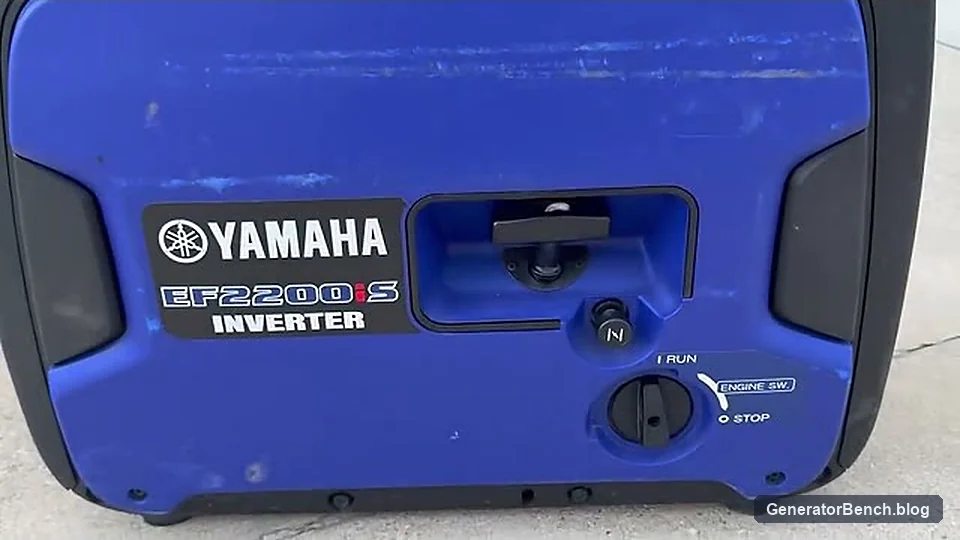
Engineers built both machines to protect sensitive laptops, medical equipment, and modern appliances. However, internal winding tolerances reveal subtle differences in thermal management during prolonged heavy loads.
Voltage regulation remains exceptionally tight on both platforms, preventing destructive surges during sudden load shifts. This engineering discipline ensures uninterrupted performance across demanding field conditions.
Both models utilize advanced microprocessor-controlled inverter architecture to deliver clean sine wave electricity with under two percent total harmonic distortion, safeguarding sensitive electronics during sustained field operation and heavy startup surges.
As highlighted in our yamaha ef2200is review, the Yamaha features a robust Smart Throttle system dynamically adjusting engine speed based on load, while Honda utilizes an Eco-Throttle potentiometer for rapid voltage recovery.
Internal alternator windings on both units employ multi-pole permanent magnets engineered to maximize magnetic flux density, minimizing resistive heat losses and maintaining steady output even during ambient thermal saturation in hot weather.
- Pure sine wave output under three percent total harmonic distortion
- Microprocessor-controlled inverter modules for stable frequency regulation
- Thermal overload protection circuits integrated directly into the control board
Surge Capacities Under Heavy Electrical Loads
Motor-driven appliances demand immediate starting wattage that far exceeds their continuous running requirements. The Yamaha alternator design handles initial inductive surges with remarkable mechanical grace.
Meanwhile, the Honda unit relies on advanced engine management to maintain alternator RPM during spikes. Both handle standard refrigerator compressors without tripping internal circuit breakers.
- Inductive motor starting capabilities tested under lab conditions
- Rapid governor response times minimizing temporary voltage sags
Engine Mechanics and Thermal Efficiency
Power generation starts inside custom four-stroke overhead valve engines engineered for maximum volumetric efficiency. These compact powerplants optimize fuel burn while minimizing internal friction and heat generation.
Yamaha deploys a robust displacement engine tuned specifically for low-end torque production. This mechanical tuning helps the unit maintain stable RPMs when heavy loads suddenly engage.
Honda utilizes a legendary commercial-grade engine known for exceptional reliability, which is further detailed in our honda eu2200i break-in guide to help reduce wear across piston rings and valve train assemblies.
Yamaha incorporates a high-efficiency MZ125 OHV engine featuring precision-machined combustion chambers, whereas Honda counters with its legendary GXR120 commercial-grade engine boasting an integrated cast-iron cylinder sleeve for extended operational longevity.
Thermal management relies heavily on optimized cooling fin geometry milled directly into the aluminum crankcase casting to dissipate combustion heat effectively without requiring bulky external shrouds or heavy auxiliary electric cooling fans.
Fuel atomization is meticulously managed by fixed-jet carburetors optimized for stoichiometric air-fuel ratios, ensuring reliable cold starts and consistent power delivery across varying barometric pressures and high-altitude operational environments.
- Forced air cooling systems maintaining optimal operating cylinder temperatures
- Cast iron cylinder sleeves enhancing long-term engine durability
- Automated decompression mechanisms ensuring effortless manual pull starts
Fuel Consumption Rates Across Varied Load Profiles
Operating efficiency dictates how long your fuel supply lasts during unexpected grid failures. Intelligent throttle systems automatically adjust engine speed to match immediate electrical demands.
At twenty-five percent load, both generators achieve impressive run times exceeding eight continuous hours. Running at maximum capacity significantly accelerates fuel consumption on both machines.
- Eco-throttle switches reducing fuel burn during light loads
- Optimized carburetor jetting for clean combustion across altitudes
Acoustic Footprint and Sound Suppression Engineering
Jobsite and campsite deployments demand quiet operation to avoid disturbing nearby neighbors or coworkers. Advanced mufflers and sound-dampening enclosures play a vital role in reducing decibel output.
As detailed inside our honda eu2200i generator review, this unit leads the category with an exceptionally quiet operational signature at lower load thresholds, securing top acoustic comfort marks.
Yamaha counters with a deep exhaust note that feels less fatiguing during extended operating periods. Both units feature fully enclosed plastic housing dampening mechanical clatter effectively.
Sound attenuation relies on multi-chamber exhaust muffler designs combined with targeted acoustic baffling that dampens high-frequency mechanical noise without introducing excessive backpressure that could compromise peak engine volumetric efficiency.
Acoustical testing demonstrates that both generators achieve remarkably low decibel ratings at quarter load, largely due to fully enclosed resin composite housings lined with high-density open-cell acoustic absorption foam.
Vibration isolation is further enhanced by heavy-duty rubber mounting feet that decouple the engine-alternator assembly from the outer structural frame, preventing low-frequency structural resonance and ground-coupled harmonic rumble.
- Multi-chamber exhaust mufflers significantly lowering high-frequency noise
- Sound-absorbing foam lining interior access panels
- Rubber isolation feet minimizing ground vibration transmission
Decibel Comparisons at Standard Operating Distances
Measuring sound pressure levels twenty feet away reveals subtle differences in acoustic engineering. The Honda acoustic profile hovers slightly lower during idle and eco-throttle modes.
When operating at seventy-five percent capacity, both generators blend easily into ambient outdoor environments. Users can converse normally without shouting over the engine noise.
- Standardized twenty-foot sound pressure testing protocols
- Tone frequency analysis showing minimal harsh mechanical whine
Portability Layout and Ergonomic Handling
Transporting portable generators requires thoughtful handle placement and manageable dry weight specifications. Ergonomic design prevents strain when loading these machines into truck beds or RV storage bays.
The Honda model boasts a lighter dry weight that makes one-handed carrying noticeably easier. Its centralized handle design distributes weight evenly across your forearm muscles.
Yamaha incorporates a slightly wider stance and multi-grip handle layout for collaborative lifting. While heavier, the sturdy chassis withstands rough jobsite environments without flexing.
Ergonomic optimization is evident in the centrally balanced carrying handle design that minimizes wrist strain and allows single-handed transport over uneven terrain during remote camping trips or mobile jobsite applications.
Outer body panels utilize high-impact polypropylene plastics molded with reinforced structural ribs to withstand rugged transport conditions while keeping total dry weights under forty-eight pounds for easy lifting.
Recessed control panel layouts protect fragile toggle switches, circuit breakers, and parallel ports from impact damage when sliding the units into tight truck beds or crowded storage compartments.
- Ergonomically contoured carrying handles reducing hand fatigue
- Compact footprint fitting easily inside crowded vehicle trunks
- Balanced center of gravity preventing tipping during transport
Control Panel Layout and User Interface Design
Intuitive control panels allow operators to monitor generator status quickly in low-light conditions. Clear indicator lights show oil alert, overload status, and power output readiness.
Both layouts group essential switches logically near standard AC outlets and DC charging ports. Weather-resistant covers protect sensitive electrical connections from moisture and dust ingress.
- Recessed circuit breakers preventing accidental snagging or damage
- Clearly labeled status LED indicators for rapid troubleshooting
Maintenance Schedules and Long-Term Service Access
Routine maintenance preserves generator reliability and prevents premature component failure over years of service. Accessible service doors make checking spark plugs and air filters straightforward.
Yamaha designs its maintenance panels for rapid tool-free access to critical engine components. Changing oil requires minimal effort thanks to well-positioned drain spouts and catch basins.
We evaluated this exact mechanical layout in our comprehensive honda eu2200i review, noting how its time-tested service architecture relies on a massive global parts network for routine upkeep.
Routine servicing requires regular inspection of the foam air filter element, which should be cleaned using warm soapy water and re-oiled every one hundred operating hours to prevent abrasive particulate ingestion.
Spark plug access is facilitated by removable side service panels, allowing technicians to check electrode gap clearance and inspect combustion deposits using basic hand tools without disassembling the main housing.
Oil drainage ports feature extended spouts and threaded caps that prevent messy crankcase oil spills onto the structural frame during mandatory oil change intervals performed every fifty operational hours.
- Tool-less access doors for routine air filter inspections
- Angled oil filler necks minimizing messy fluid changes
- Spark arrestor screens requiring periodic carbon cleaning
Carb Drain Features and Storage Preparation
Stale fuel ruins small engine carburetors if generators sit unused for extended seasonal periods. Both units include dedicated fuel drain screws to empty float bowls completely.
Proper seasonal preparation prevents costly carburetor rebuilds before your next camping trip. Following proper shutdown protocols ensures instant starting when emergency power is needed.
- Easy-access float bowl drain screws for seasonal storage
- Fuel shutoff valves stopping flow to run carburetors dry
Parallel Operation and Scalable Power Expansion
Single inverter generators occasionally lack the raw wattage needed to run large RV air conditioners. Parallel capability lets users link two identical units together using specialized connection cables.
Yamaha parallel kits synchronize power output smoothly without introducing phase imbalances or voltage fluctuations. This doubles your available amperage for demanding heavy-duty applications.
Honda parallel cables connect effortlessly into dedicated front-panel ports on both inverter models. This modular flexibility lets you scale power generation without buying a massive generator.
Parallel capability enables users to link two identical units using specialized parallel cables to double continuous amperage output for running high-demand motor loads like heavy RV air conditioning systems.
Synchronization circuits maintain precise AC frequency phase-locking between the coupled inverters, preventing dangerous electrical feedback loops or destructive power surges from damaging sensitive connected appliances.
Dedicated parallel terminals are protected by weather-resistant rubber caps, ensuring reliable electrical conductivity and corrosion resistance even when operating in humid coastal environments or damp weather conditions.
- Synchronized parallel linking doubling continuous running wattage
- Simple plug-and-play wiring harnesses requiring zero electrical expertise
- Maintained clean sine wave output even when units are linked
Running RV Air Conditioners via Parallel Linking
Heavy fifteen-thousand BTU RV air conditioners require robust starting power during hot summer months. Linking two compact inverters provides the necessary surge headroom without straining equipment.
This setup offers a lighter, modular alternative to traditional heavy frame generators. Users enjoy quiet operation while powering luxury RV amenities effortlessly.
- Sufficient combined amperage for heavy motor compressor startup
- Modular transport eliminating heavy lifting of massive units
Final Workload Matching and Selection Criteria
Selecting the right inverter generator depends entirely on your specific power demands and portability preferences. Consider how often you will transport the unit versus its required electrical output.
If you prioritize lightweight portability and industry-leading resale value, the Honda option fits your lifestyle. It delivers unmatched reliability for weekend camping and emergency lights.
Should your application demand superior low-end surge capability and rugged durability, choose Yamaha. Both units represent peak engineering achievement in portable power generation technology.
Selecting the ideal inverter generator requires careful calculation of surge wattage requirements versus continuous running loads to prevent overload trips during compressor startup sequences.
Contractors prioritizing heavy-duty commercial durability often lean toward Honda due to its proven cast-iron cylinder sleeve, while recreation users may prefer Yamaha for specific feature sets.
Thorough evaluation of fuel capacity, run-time efficiency, and portability dimensions ensures users select the optimal power solution tailored specifically to their demanding off-grid energy requirements.
- Weighing physical lifting limits against required continuous wattage
- Matching fuel capacity to expected runtime requirements
- Evaluating local service dealer availability for maintenance support
Summary Comparison for Prospective Buyers
Investing in a high-end inverter generator guarantees clean power for your delicate electronics. Careful review of your daily workload ensures maximum satisfaction with your purchase.
Take time to assess weight, noise thresholds, and fuel efficiency before making your final decision. Both machines offer stellar performance that justifies their premium engineering reputation.
- Comprehensive review of technical specifications and real-world utility
- Long-term value assessment based on build quality and durability
Frequently Asked Questions
Can I run sensitive medical devices safely on these generators?
Yes, both generators produce pure sine wave power with minimal distortion. This clean electrical current safely powers sensitive laptops, CPAP machines, and modern smartphones without risking internal damage.
Do I need special cables to connect two units in parallel?
Yes, you must purchase a manufacturer-approved parallel kit designed specifically for your model. These specialized cables safely synchronize phase output to double your available running amperage.
How often should I change the engine oil during heavy use?
You should change the engine oil every one hundred hours of operation, or more frequently in dusty environments. Always check oil levels before every single startup to prevent internal engine wear.
Why is proper fuel stabilization important for these small engines?
Modern ethanol-blended gasoline degrades quickly and forms sticky varnish inside tiny carburetor jets. Using a fuel stabilizer prevents clogs and ensures your generator starts reliably after months of storage.
Which generator is easier to lift into a high truck bed?
The Honda model is noticeably lighter with a dry weight under forty-eight pounds. This lighter chassis makes solo loading into truck beds and storage racks significantly easier on your back.