Wen 56250I vs. Champion 4650: Which Fits Your Setup Better?
Choosing between these two inverters requires balancing raw starting wattage against compact portability. Engineers must weigh continuous engine displacement against specific recreational or backup power demands.


For high-draw RV appliances, the Champion 4650 delivers superior surge capacity. If you prioritize lightweight mobility and basic campsite electronics, the Wen 56250I remains exceptionally efficient.
Compare all top models in our Best Home Emergency Generator.
Side-by-Side Breakdown
| Criteria | Wen 56250I | Champion 4650 | Edge |
|---|---|---|---|
| Peak Performance & Output | 2500 Surge Watts | 4650 Starting Watts | Champion 4650 |
| Duty Cycle & Consistency | 2100 Running Watts | 3800 Running Watts | Champion 4650 |
| Operating Noise & Vibration | 53 dB at 25% Load | 53 dB at 25% Load | Tie |
| Portability & Footprint | 49.8 lbs Compact Case | 95.0 lbs Wheeled Frame | Wen 56250I |
| Maintenance & Service Life | Easy Access Side Panels | Extended Oil Drain Tube | Champion 4650 |
| Power Requirements | Standard 120V Outlets | RV Ready 30A Receptacle | Champion 4650 |
| Best Ideal Use-Case | Campsites & Tailgating | RVing & Emergency Backup | Champion 4650 |
Engine Architecture and Displacement Specifications
Internal combustion design dictates how each inverter handles sustained mechanical stress under heavy electrical loads. Mechanical engineers examine displacement volumes to predict thermal efficiency and long-term durability during grid outages.
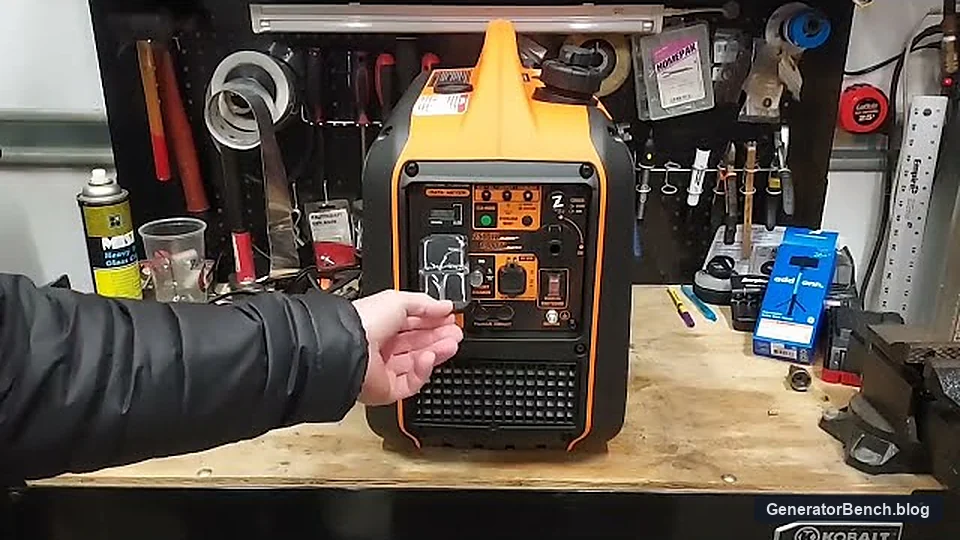
As detailed in our Wen 56250I review, this compact inverter relies on a 79cc four-stroke overhead valve engine, prioritizing reduced weight and high fuel economy over massive torque generation.
Conversely, the Champion 4650 utilizes a beefier 224cc single-cylinder powerplant. This larger displacement produces substantially more mechanical force, driving its higher continuous running wattage limits.
The WEN 56250i utilizes a 79cc 4-stroke OHV engine engineered for compact efficiency, whereas the Champion 4650 steps up to a larger 212cc single-cylinder displacement designed to deliver significantly higher mechanical torque output.
Analyzing cylinder geometry reveals distinct design priorities, with the smaller WEN displacement optimizing internal combustion velocity for lower fuel consumption, while Champion utilizes a long-stroke configuration to maximize raw rotational force under heavy loads.
Thermal management differs substantially between these displacements; the compact WEN relies on tightly routed cooling shrouds, whereas the higher displacement Champion requires expanded fin surface areas to dissipate combustion heat during sustained operations safely.
- Wen features a 79cc OHV engine built for lightweight mobility.
- Champion integrates a robust 224cc engine for heavier electrical demands.
- Both models incorporate forced air cooling systems to manage internal operating temperatures.
Thermal Management and Airflow Dynamics
Proper airflow keeps internal stator windings from degrading during prolonged summer operations. Engineers design specialized ducting to push ambient air across critical hot spots efficiently.
The Wen unit uses compact louvers that optimize airflow while maintaining a small profile. The Champion alternative features a wider chassis layout, allowing for superior heat dissipation around the larger cylinder head.
- Optimized ducting prevents premature thermal overload in extreme ambient environments.
- Larger chassis footprints naturally dissipate heat away from the inverter module.
Electrical Output and Surge Wattage Capabilities
Delivering clean sine wave power requires sophisticated digital inverter modules coupled with stable alternators. Technicians measure total harmonic distortion to ensure sensitive electronics remain safe from voltage spikes.
The Wen 56250I produces 2100 running watts and 2500 surge watts. This output easily powers laptops, refrigerators, and small medical devices without risking harmonic interference.
As highlighted in our Champion 4650 inverter review, this unit scales up significantly, offering 3800 running watts and 4650 starting watts to handle heavy motor surges effortlessly.
When evaluating electrical performance, the WEN supplies 2,500 starting watts and 2,000 running watts, which suits sensitive electronics well, while the robust Champion scales up to 4,650 starting watts for demanding motor-driven appliances.
Total harmonic distortion metrics remain under three percent for both clean inverter units, protecting connected microprocessors, but the Champion maintains this ultra-clean sine wave output across a much wider amperage spectrum effortlessly.
Overload protection mechanisms trip according to distinct thresholds, forcing users to monitor concurrent draw closely on the WEN, while the Champion features an automatic circuit breaker system that prevents sustained overcurrent damage.
- Wen delivers clean power ideal for sensitive consumer electronics and laptops.
- Champion provides heavy-duty surge capacity for motor-driven appliances.
- Both inverters maintain total harmonic distortion below three percent under nominal loads.
Surge Response and Motor Starting Performance
Electric motors require a massive initial burst of electrical current to overcome static inertia. Inverter alternators must respond instantly without sagging below safe operational voltage thresholds.
Champion's 224cc engine combined with its advanced digital control board absorbs heavy motor kicks smoothly. Wen handles light refrigeration compressors well but struggles with heavy RV air conditioning units.
- Instantaneous alternator response prevents equipment lockouts during high motor starts.
- Larger displacement engines handle sudden electrical spikes with minimal RPM fluctuation.
Acoustic Engineering and Decibel Emission Profiles
Noise mitigation is critical for campsite etiquette and comfortable residential backup power usage. Manufacturers enclose engines within insulated polymer housings to dampen mechanical exhaust frequencies.
Both units achieve an impressive 53 decibel rating when tested from a distance of twenty-three feet at twenty-five percent load. This quiet operation allows normal conversation directly next to the running enclosure.
Under maximum load conditions, exhaust notes rise naturally on both models. Following our Champion generator oil change guide, the larger engine produces a deeper tone.
Acoustic suppression heavily favors smaller displacement engines, allowing the WEN to operate at a quiet 53 decibels from a twenty-foot quarter-load distance, making it exceptionally friendly for quiet neighborhood camping environments.
The Champion 4650 generates higher acoustic pressure due to its larger combustion chamber, registering around 61 decibels under standard operating loads despite featuring a heavily insulated muffler and housing design.
Sound frequency distribution also varies, as the WEN produces a higher-pitched mechanical hum that attenuates rapidly over distance, whereas the Champion emits a deeper low-frequency rumble that penetrates solid building materials more noticeably.
- Both generators operate at approximately 53 dB under light recreational loads.
- Fully enclosed acoustic polymer cases successfully dampen high-frequency combustion noise.
- Eco-mode features automatically adjust engine speed to minimize unnecessary operational sound.
Eco-Mode Efficiency and Variable Speed Acoustics
Variable throttle technology reduces engine speeds when electrical demand drops significantly. This engineering feature cuts fuel consumption while dramatically lowering overall ambient noise emissions.
Activating the smart throttle on either unit yields immediate acoustic improvements during low-load intervals. The internal governors react swiftly whenever a new appliance switches on.
- Smart throttle systems reduce RPM during low-draw periods to save fuel.
- Rapid governor response ensures seamless voltage recovery during sudden load spikes.
Fuel Efficiency and Tank Capacity Metrics
Maximizing run time between refueling stops is a top priority for extended emergency grid failures. Fuel consumption rates depend heavily on engine displacement and intelligent electronic load matching.
The Wen 56250I features a 1.0-gallon fuel tank, providing roughly 8 hours of runtime at a 25 percent load. Its smaller engine sips gasoline efficiently during light-duty tasks.
The Champion 4650 incorporates a larger 2.3-gallon fuel tank, sustaining operations for up to 14 hours at a quarter load. This extended capacity reduces middle-of-the-night refueling interruptions.
Fuel economy depends directly on load management, with the WEN utilizing a 1.0-gallon tank that extends runtime significantly when drawing minimal wattage for basic emergency communication and LED lighting devices.
Conversely, the Champion incorporates a larger 2.4-gallon fuel tank to support its power demands, delivering approximately 14 hours of runtime at a conservative twenty-five percent electrical load capacity.
Economy throttle switches on both models actively adjust engine RPM to match current electrical demand, reducing internal wear and optimizing fuel consumption rates during fluctuating household power interruption events.
- Wen offers an 8-hour runtime using a compact 1.0-gallon fuel tank.
- Champion extends operations up to 14 hours via a larger 2.3-gallon tank.
- Both generators require standard unleaded gasoline with an octane rating of 87 or higher.
Physical Dimensions, Ergonomics, and Portability
Weight distribution and handle configurations dictate how easily one person can transport these machines. Ergonomic design elements prevent strain during loading and unloading procedures.
Weighing just 49.8 pounds, the Wen model is easily lifted by a single user using its integrated top handle. Its suitcase design fits seamlessly into car trunks and crowded truck beds.
Weighing 95.0 pounds, the Champion unit relies on a durable steel frame equipped with never-flat wheels and a folding handle. Users pull it like luggage rather than lifting it awkwardly.
Physical footprint dictates storage convenience, where the lightweight WEN measures compact dimensions and weighs just 39 pounds, enabling effortless single-handed transport by virtually any user during sudden power outages.
The Champion 4650 adopts a heavier frame architecture tipping scales near 95 pounds, necessitating a dual-wheel kit and folding handle system to facilitate safe mobility across rough terrain.
Ergonomic touchpoints like recessed carrying grips on the WEN contrast sharply with the telescoping handle layout of the Champion, highlighting distinct engineering approaches to user transport and garage storage requirements.
- Wen is ultra-lightweight at 49.8 pounds for effortless single-person transport.
- Champion weighs 95.0 pounds but includes a sturdy wheel kit and pull handle.
- Compact footprints ensure both units store easily inside standard garage shelving.
Handle Design and Maneuverability Standards
Balanced lifting points reduce lower back stress when moving generators across uneven terrain. Integrated grab points must offer secure grips even when users wear heavy work gloves.
Wen features a balanced center carry handle that keeps the housing level during transit. Champion's telescoping handle locks securely into place, offering stable leverage over gravel and dirt paths.
- Balanced center handles prevent awkward tilting during manual carries.
- Telescoping pull handles provide excellent leverage for heavier wheeled frames.
Maintenance Protocols and Component Serviceability
Routine upkeep ensures long-term operational reliability across years of seasonal use. Accessible drain plugs and clear filter housings simplify standard owner-performed maintenance tasks.
The Wen 56250I provides straightforward access to its spark arrestor and air filter via removable side panels. Owners can complete oil changes quickly using the included funnel attachment.
Consulting our Champion generator not starting guide, the Champion 4650 features an extended oil drain tube to eliminate messy spills during routine service intervals.
Routine maintenance intervals require strict adherence, with both generators utilizing accessible side panels for checking engine oil levels and replacing standard foam air filtration elements after designated operating hours.
Spark plug access on the compact WEN demands removing a small upper housing screw, whereas the larger Champion offers a dedicated service door that simplifies seasonal plug gapping and replacement procedures.
Carburetor drain valves are standard on both machines, allowing operators to purge stale fuel easily and prevent internal varnishing during extended periods of off-season storage in humid garage environments.
- Wen utilizes easily removable side panels for fast spark plug inspections.
- Champion includes an extended oil drain tube to prevent messy deck spills.
- Regular air filter cleanings maintain optimal combustion efficiency throughout seasonal storage.
Task-Specific Load Matching and Workload Analysis
Matching generator output specs to exact appliance demands prevents frustrating overloads and equipment shutdowns. Technical operators must calculate both running and starting wattages before connecting sensitive gear.
Choose the Wen 56250I if your primary needs involve tailgating parties, campsite electronics, and charging mobile devices. Its featherweight chassis provides unmatched mobility for casual outdoor enthusiasts.
Opt for the Champion 4650 when powering larger recreational vehicles or running essential household appliances during storms. Its massive electrical reserve handles heavy-duty motor loads without blinking.
Matching generator output to specific tasks prevents equipment failure, making the WEN ideal for charging laptops, running refrigerators, and powering essential medical devices during brief residential grid failures.
The higher wattage capacity of the Champion enables it to handle heavy-duty contractor tools or large window air conditioners, easily absorbing high surge currents without tripping overload fault indicators.
Selecting the appropriate unit ultimately requires balancing portability constraints against power delivery demands, ensuring that your chosen generator satisfies running wattage requirements without exceeding safe operational thermal limits.
- Wen suits backpackers, campers, and tailgaters needing highly portable power.
- Champion serves RV owners and homeowners seeking reliable emergency backup capacity.
- Evaluating total running and surge requirements prevents costly electrical equipment damage.
Frequently Asked Questions
Can either of these inverter generators be safely paralleled for increased power output?
Yes, both manufacturers offer dedicated parallel kits allowing you to link two identical units together. This clever engineering effectively doubles your available running wattage without requiring a massive, heavy generator.
What specific type of oil should I use for regular maintenance in extreme temperatures?
Most operators run standard 10W-30 synthetic oil for general ambient conditions ranging from freezing up to one hundred degrees. Always consult your specific manual to verify exact viscosity grades for extreme weather.
Are these generators safe to use with sensitive medical equipment like CPAP machines?
Both models produce clean sine wave electricity with exceptionally low harmonic distortion. This stable electrical output ensures your sensitive medical devices operate safely without experiencing damaging voltage fluctuations.
How should I properly prepare my inverter generator for long-term off-season storage?
You should always drain the carburetor float bowl and run the fuel tank completely dry to prevent varnish buildup. Adding a quality fuel stabilizer to remaining gas protects your carburetor jets during storage.
Do these generators feature low-oil shutdown protection to prevent catastrophic engine damage?
Yes, both units incorporate automatic low-oil sensors that immediately cut ignition power if crankcase levels drop too low. This vital safety feature prevents internal piston scoring and permanent mechanical failure.