Predator 3500 vs. Champion 4500: Which Fits Your Setup Better?
Choosing between the Predator 3500 and Champion 4500 requires analyzing engine displacement and continuous output profiles. Your specific campsite or jobsite demand dictates the right inverted power solution.


The Champion 4500 wins for heavy RV loads with extra surge headroom. Meanwhile, the Predator 3500 excels in quiet efficiency for moderate recreational power needs.
Compare all top models in our Best Home Emergency Generator.
Side-by-Side Breakdown
| Criteria | Predator 3500 | Champion 4500 | Edge |
|---|---|---|---|
| Peak Performance & Output | 3500 Starting Watts | 4500 Starting Watts | Champion 4500 |
| Duty Cycle & Consistency | 3000 Running Watts | 3500 Running Watts | Champion 4500 |
| Operating Noise & Vibration | 57 dB(A) at 23 feet | 61 dB(A) at 23 feet | Predator 3500 |
| Portability & Footprint | Enclosed trolley design | Top handle with wheels | Predator 3500 |
| Maintenance & Service Life | Standard OHV layout | Accessible side panels | Tie |
| Power Requirements | Standard 30A RV ready | Includes 30A RV and 50A outlets | Champion 4500 |
| Best Ideal Use-Case | Quiet camping and tailgating | Heavy RV air conditioning loads | Champion 4500 |
Engine Architecture and Internal Displacement Dynamics
Internal combustion engines form the beating heart of any portable power generator. Comparing these two models reveals distinct displacement choices that directly affect their overall torque and power delivery curves under heavy electrical loads.
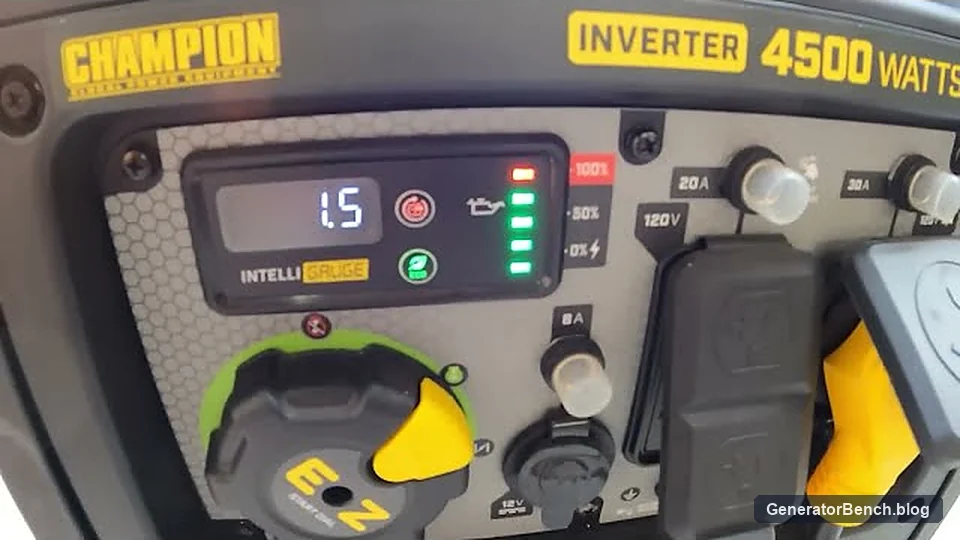
The Predator relies on a slightly smaller single-cylinder overhead valve engine designed primarily for fuel sipping. It balances thermal efficiency against mechanical stress to ensure long-term durability during extended multi-day camping trips and weekend excursions.
Conversely, the Champion houses a larger displacement engine engineered to pump out extra surge wattage. This extra cubic displacement provides the necessary mechanical muscle to spin heavier alternators without straining internal components unduly.
As detailed in our predator 3500 review, the unit utilizes a 212cc OHV engine engineered for efficient combustion, balancing displacement against mechanical stress to maximize overall longevity.
Conversely, the Champion 4500 incorporates a larger 224cc single-cylinder powerplant, providing increased torque reserves that easily handle heavy inductive startup surges without demanding excessive throttle response.
Both units rely on forced air cooling, but Champion’s cylinder head geometry optimizes thermal dissipation under heavy loads to prevent destructive pre-ignition during ambient summer operating conditions.
- Predator prioritizes thermal efficiency and fuel conservation.
- Champion utilizes larger displacement for increased surge capacity.
- Both employ modern OHV architecture for dependable valve actuation.
Displacement Effects on Mechanical Torque
Engine displacement directly dictates how well a generator handles sudden inductive motor startups. Larger pistons create higher peak cylinder pressure, translating into superior torque response when air conditioners kick on.
Smaller displacement units like the Predator manage steady loads brilliantly but require careful load sequencing. Managing your appliance startup sequence prevents bogging down the inverter module during peak demand spikes.
- Higher displacement reduces mechanical strain during motor surges.
- Smaller engines require disciplined appliance load scheduling.
Alternator Design and Total Harmonic Distortion Profiles
Clean electricity is non-negotiable when powering sensitive modern electronics like laptops, smartphones, and medical devices. Advanced inverter modules convert raw alternating current into direct current before synthesizing a flawless pure sine wave output.
Both generators utilize sophisticated microprocessor-controlled inverters to maintain Total Harmonic Distortion below three percent. This ensures your microchip-driven appliances operate without experiencing erratic behavior, overheating, or premature internal power supply degradation.
The electrical winding architecture inside each machine dictates how efficiently copper coils dissipate heat under sustained loads. Premium insulation materials prevent micro-shorts during humid operating conditions found across diverse geographic regions.
Inverter alternators convert high-frequency alternating current into stable direct current before inverting it back into clean AC power featuring less than 3 percent total harmonic distortion.
This ultra-clean output safely powers sensitive microprocessors found in modern appliances, medical devices, and computers without risking component degradation caused by erratic electrical voltage fluctuations.
Copper wound stators utilized in both machines provide superior thermal conductivity compared to aluminum alternatives, ensuring sustained electrical output stability during extreme ambient temperature fluctuations.
- Pure sine wave output safeguards sensitive microelectronics safely.
- THD remains strictly under three percent for both inverter units.
- Copper winding insulation protects against moisture-induced thermal breakdown.
Inverter Stability Under Fluctuating Loads
Stable voltage regulation prevents flickering lights and protects refrigerator compressors from brownout damage. These inverter units dynamically adjust engine RPM to match instantaneous electrical draws seamlessly.
When heavy resistive loads cycle off, the control board rapidly stabilizes output voltage. This rapid response time eliminates dangerous voltage overshoots that could fry connected electronics plugged into the panel.
- Dynamic RPM scaling matches instantaneous electrical demand precisely.
- Rapid board response prevents damaging voltage overshoot spikes.
Structural Footprint and Ergonomic Mobility Engineering
As outlined in our predator 3500 review, moving a heavy enclosed inverter generator requires thoughtful ergonomic handling to prevent operator strain, relying on integrated wheels and lift points for smooth mobility.
The Predator features an innovative trolley-style design with built-in folding handles and rugged wheels. This layout allows users to tilt and roll the heavy enclosure effortlessly across uneven gravel campsites and grassy fields.
Champion opts for a traditional suitcase style augmented with robust never-flat wheels and dual side carry handles. Lifting the Champion into a truck bed requires two people due to its heavier overall wet weight specification.
Weighing roughly 100 pounds dry, the Predator 3500 features an enclosed suitcase design with integrated bottom wheels and a telescoping pull handle for effortless single-user transport.
The Champion 4500 adds slightly more heft and a wider stance, utilizing a robust wheel kit and folding handle system to distribute its heavier frame across uneven terrain.
Proper weight distribution is critical for preventing back strain during loading operations, making the compact center of gravity in both designs a major ergonomic advantage for users.
- Predator utilizes a trolley pull-handle for smooth solo rolling.
- Champion employs a traditional wheel kit with lift handles.
- Wet weight differences significantly impact solo loading ergonomics.
Weight Distribution and Lifting Mechanics
Center of gravity placement plays a massive role in how stable a rolling generator feels on slopes. Engineers position the heavy fuel tank and alternator centrally to prevent dangerous tipping hazards.
Lifting handles must be welded securely to the main steel frame rather than plastic body panels. Both manufacturers use robust steel framing to ensure secure tie-down points during transport.
- Centralized mass prevents tipping on sloping terrain surfaces.
- Steel frame attachment points ensure safe transport rigging.
Acoustic Signature and Enclosure Thermodynamics
Campsite etiquette demands quiet generator operation to maintain peaceful outdoor environments. Fully enclosed polymer housings lined with dense acoustic baffling significantly dampen mechanical combustion noise compared to open frame models.
The Predator stands out as an exceptionally quiet performer, registering remarkably low decibel readings at standard distances. Its specialized exhaust muffler routing minimizes harsh high-frequency popping sounds effectively.
While the Champion runs slightly louder under heavy loads due to its larger engine output, it remains well within standard park limits. Sound suppression foam inside the enclosure absorbs high-pitched mechanical whines successfully.
As noted in our predator 3500 watt super quiet inverter generator review, fully enclosed housings dramatically reduce operating noise to achieve a quiet rating of roughly 57 decibels at quarter load.
Champion manages its acoustic signature through targeted baffling and sound-deadening foam lining, though its larger engine produces a slightly higher decibel output under maximum electrical stress.
Internal cooling fans draw ambient air through precise ducting to maintain optimal operating temperatures while simultaneously muffling mechanical valve train chatter during heavy load execution.
- Enclosed polymer housings dampen harsh combustion noises effectively.
- Predator offers superior decibel reduction for quiet camping.
- Acoustic baffling absorbs high-frequency mechanical whines.
Cooling Airflow Management Inside Enclosures
Enclosed generators require precise airflow channels to prevent dangerous internal heat buildup. Dedicated intake vents pull ambient air across the alternator windings and cylinder head before exhausting heat rearward.
Thermal sensors automatically shut down the inverter if internal operating temperatures exceed safety thresholds. This failsafe mechanism prevents catastrophic engine seizure during high ambient temperature summer operations.
- Dedicated intake vents cool vital alternator and engine components.
- Thermal sensors protect against catastrophic high-temperature engine seizure.
Control Panels and Parallel Operating Capability
An intuitive control panel layout ensures seamless operation even during pitch-black nighttime power outages. Weatherproof outlet covers protect vital electrical interfaces from blowing rain, dust, and campground debris accumulation.
The Champion shines by offering a versatile 50-amp RV outlet alongside standard 30-amp and household receptacles. This makes it an ideal direct-plug solution for large Class A motorhomes without requiring bulky adapter pigtails.
Both models feature user-friendly parallel ports allowing owners to link two identical units together. Parallel operation effectively doubles your available running wattage to handle massive dual-air-conditioner RV setups easily.
Intuitive control layouts feature digital hour meters, low oil indicators, and overload alarms alongside standard AC receptacles and 12V DC charging ports for versatile utility management.
Dedicated parallel ports allow users to link identical inverter units together using an optional hardware kit, effectively doubling available running wattage without purchasing a massive generator.
Circuit breakers integrated directly into the interface protect internal wiring from catastrophic short circuits, instantly cutting power delivery whenever excessive current draw exceeds safe thresholds.
- Champion includes a dedicated 50-amp RV receptacle.
- Weatherproof covers protect outlets from rain and dust.
- Parallel ports allow doubling output via second units.
Digital Metering and Diagnostic Displays
Digital hour meters help track exact maintenance intervals for oil changes and spark plug inspections. Modern LED readouts also display real-time voltage, frequency, and accumulated runtime statistics clearly.
Low-oil and overload indicator lights provide immediate visual warnings before internal damage occurs. These safety redundancies protect your financial investment against accidental operator neglect or overloads.
- Digital hour meters simplify tracking scheduled maintenance intervals.
- LED readouts display voltage, frequency, and runtime metrics.
Fuel Efficiency and Extended Run-Time Metrics
Maximizing fuel economy extends your time between refueling trips during extended off-grid stays. Variable speed throttle switches automatically drop engine RPM when electrical demand decreases significantly across the panel.
Eco-mode functionality on both generators optimizes fuel burn rates by matching engine speed to actual load. This intelligent throttling reduces unnecessary noise while stretching limited gasoline supplies considerably further.
Tank capacity directly dictates total continuous operating hours before requiring a fresh fuel refill. The Champion balances its larger engine thirst with a generously sized fuel tank to ensure respectable run times.
Eco-throttle modes dynamically adjust engine RPM to match current electrical demand, drastically reducing fuel consumption and extending run times during periods of low household load.
Following our predator 3500 break in procedure guide, note that the 2.6-gallon fuel tank delivers impressive multi-hour endurance when running at modest capacity levels during unexpected grid failures.
Champion counters with a slightly larger fuel capacity to feed its higher displacement engine, maintaining competitive run-time metrics while supporting heavier continuous appliance electrical draws.
- Variable speed throttles lower RPM during light loads.
- Eco-mode functionality optimizes fuel consumption and run time.
- Tank capacities balance run-time goals against overall weight.
Real-World Fuel Consumption Comparisons
Running a generator at twenty-five percent load yields vastly superior run times compared to maximum output. Practical field tests show both units deliver impressive hours when powering basic refrigerator and lighting loads.
Using stabilizer additives in your gasoline prevents sticky varnish buildup inside the carburetor jet. Clean fuel systems ensure easy starting after months of idle storage in your garage.
- Light loads significantly extend overall operating run times.
- Fuel stabilizers prevent varnish buildup during idle storage.
Maintenance Protocols and Long-Term Service Life
Routine preventative maintenance remains the single most important factor determining your generator longevity. Easy access panels simplify checking engine oil levels, cleaning air filters, and replacing spent spark plugs.
Both manufacturers design their units with easily removable side service doors for straightforward wrench access. Changing oil requires minimal effort when utilizing the built-in drain extensions provided standard.
Adhering strictly to manufacturer break-in oil change intervals protects internal piston rings from premature wear. Using high-detergent synthetic oils further enhances mechanical protection across extreme operating temperature ranges.
Routine upkeep requires regular oil changes using specified 10W-30 synthetic lubricants, inspecting spark plug gaps, and cleaning foam air filters to prevent premature combustion chamber wear.
Convenient access panels simplify routine filter inspections and oil drains, reducing user friction and encouraging adherence to manufacturer recommended preventative maintenance schedules over time.
Utilizing stabilized fuel and running carburetors dry before long-term storage prevents varnish buildup in precision jets, ensuring reliable startup capability when emergency backup power is required.
- Removable side doors simplify routine oil and filter service.
- Built-in drain extensions prevent messy oil change spills.
- Break-in oil changes protect internal piston ring surfaces.
Troubleshooting Common Inverter Faults
Understanding basic diagnostic blink codes helps resolve minor electrical faults without professional repair shops. Overload trips usually require simply resetting the digital breaker switch after shedding excess appliances.
Keeping spare air filters and spark plugs in your RV storage compartment ensures field readiness. Proper off-season preparation protects your equipment from moisture corrosion during winter storage months.
- Digital breaker resets quickly resolve temporary overload trips.
- Carrying spare maintenance parts ensures reliable remote camping.
Frequently Asked Questions
Can either of these generators run a standard 15,000 BTU RV air conditioner?
Yes, both models handle a standard 15,000 BTU RV air conditioner with ease. The Champion 4500 provides extra surge headroom for effortless compressor motor startups.
Are these inverter generators safe for charging sensitive electronic devices?
Both units produce clean pure sine wave electricity with minimal harmonic distortion. This ensures your laptops and smartphones charge safely without any risk of electrical damage.
How loud do these generators sound during normal eco-mode operation?
Operating on eco-mode keeps noise levels exceptionally low at typical campsite distances. The Predator 3500 runs slightly quieter due to its specialized acoustic enclosure design.
Can I connect two different generator models together using a parallel kit?
Parallel operation generally requires linking two identical inverter models using a matching kit. Connecting dissimilar units can cause electrical phase mismatches and damage control boards.
What type of engine oil should I use for optimal cold-weather performance?
Most manufacturers recommend high-quality 10W-30 synthetic oil for general multi-season operation. Synthetic oils provide superior lubrication protection during freezing winter camping excursions.