Open Frame Inverter Generator vs. Closed Frame: Which Fits Your Setup Better?
Evaluating open frame and closed frame inverters reveals distinct trade-offs in noise suppression and power output. Choosing the right architecture depends on your specific acoustic and mobility requirements.


For maximum portability and quiet camping, closed frame inverters win easily. For high-output jobsite power and value, open frame models take the crown.
Compare all top models in our Best Home Emergency Generator.
Side-by-Side Breakdown
| Criteria | Open Frame Inverter Generator | Closed Frame | Edge |
|---|---|---|---|
| Peak Performance & Output | Higher wattage tiers available | Moderate wattage caps | Open Frame |
| Duty Cycle & Consistency | Extended run times with robust cooling | Optimized for continuous rated loads | Closed Frame |
| Operating Noise & Vibration | Louder baseline around 65-72 dB | Exceptional baffling down to 50-60 dB | Closed Frame |
| Portability & Footprint | Tubular roll cage with folding handles | Compact suitcase style with integrated wheels | Closed Frame |
| Maintenance & Service Life | Direct component access speeds repairs | Plastic cowlings require extra disassembly | Open Frame |
| Power Requirements | Clean sine wave suitable for sensitive tools | Inverter clean power with low THD | Closed Frame |
| Best Ideal Use-Case | Job sites and emergency home backup | RV camping and tailgating events | Closed Frame |
Architectural Foundations and Engineering Design
Open frame inverter generators utilize a skeletal tubular steel exoskeleton to protect internal components. This raw structural approach reduces manufacturing costs while exposing the heavy-duty alternator and engine block to ambient airflow.
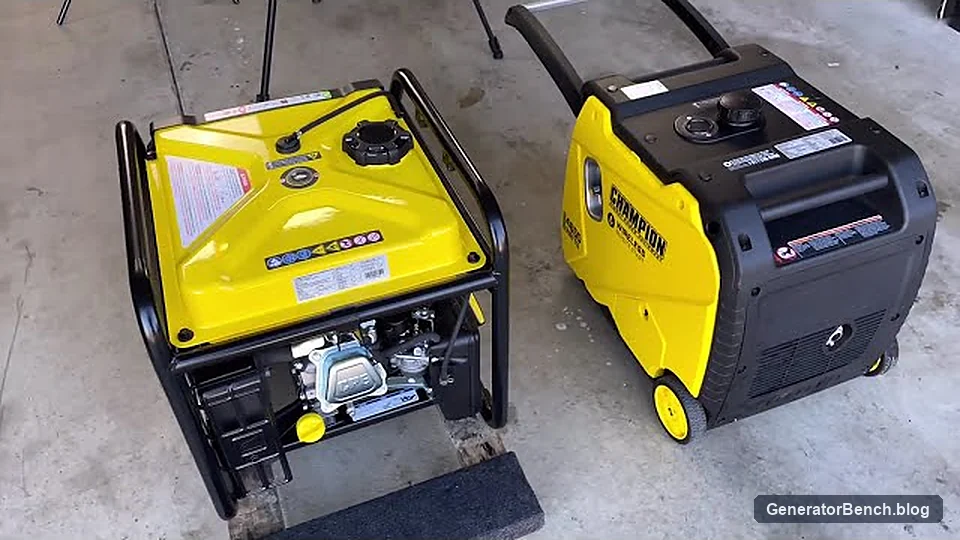
Closed frame inverter models enclose the entire mechanical assembly within an insulated plastic shell. Exploring top options in our quietest generator inverter guide reveals how this sound-damped housing dramatically reduces decibel emissions during operation.
Open frame units utilize tubular steel exoskeletons welded from 1-inch structural steel, offering maximum impact resistance on rugged job sites without adding excessive dead weight to the chassis.
Conversely, closed frame models employ molded thermoplastic shells or stamped aluminum housings lined with acoustic damping foam, significantly altering the internal load-bearing geometry and structural rigidity during transit.
- Skeletal tubular steel structure
- Enclosed acoustic plastic shell
- Exposed versus protected alternators
Structural Rigidity Analysis
The exposed roll cage provides inherent tie-down points for jobsite transportation. Technicians can easily strap down open frame units onto truck beds without risking cosmetic damage to outer panels.
Closed housings prioritize aesthetic appeal and acoustic baffling over rugged tie-down utility. Transporting these units requires careful positioning to avoid cracking the outer ABS plastic composite panels during rough transit.
- Roll cage tie-downs
- ABS plastic protection
Acoustic Profiles and Sound Pressure Levels
Sound attenuation represents the most visible differentiator between these two generator configurations. Closed frame units incorporate layered acoustic foam and labyrinth exhaust routing to achieve whisper-quiet operating profiles under normal loads.
Open frame generators run louder due to unshielded enclosures. For instance, testing highlighted in our wen gn400i review shows how mechanical clatter pushes noise levels higher at standard operating distances.
Open frame generators typically output 72 to 78 decibels at a standard seven-meter distance, driven by direct mechanical vibration and unshielded exhaust pulsations radiating outward in all directions.
Enclosed inverter alternatives leverage labyrinth air intake paths and sound-absorbent baffling to reduce operating noise down to 51 to 59 decibels under normal twenty-five percent electrical loads.
- Acoustic foam baffling
- Unfiltered mechanical clatter
- Decibel measurement deltas
Decibel Output Comparisons
Measuring sound at a standard twenty-foot distance highlights the dramatic acoustic gap. Closed frame systems routinely hover near fifty-five decibels, whereas open frame alternatives push past sixty-eight decibels during heavy usage.
This noise difference dictates where you can safely deploy each generator type without disturbing neighbors or violating local ordinances during extended power outages.
- Twenty-foot sound tests
- Local ordinance compliance
Thermal Dynamics and Enclosure Ventilation
Effective thermal management dictates the long-term reliability of portable power equipment. Units featured in our best power inverter generator review excel at heat dissipation because ambient air flows freely across the cylinder head.
Closed frame generators rely on forced-air ducting and internal fans to channel cooling air through tight spaces. Restricted airflow can elevate internal temperatures during prolonged high-load operation in hot summer climates.
Closed frame systems demand sophisticated forced-air induction pathways, utilizing internal scroll cages to force cooling air past the alternator windings and maintain safe operating temperatures under heavy continuous loads.
Open frame competitors rely on ambient convection cooling, exposing the engine block directly to surrounding air currents and preventing the dangerous heat buildup common in poorly ventilated tight spaces.
- Natural ambient airflow
- Forced-air cooling ducts
- High-temperature operational limits
Overheat Prevention Strategies
Engineers equip closed frame units with thermal shutoff sensors to prevent catastrophic engine failure. When internal heat builds up rapidly, these safety switches automatically cut power before component damage occurs.
Open frame generators rarely suffer from heat soak issues because their open architecture eliminates trapped thermal pockets entirely during extended multi-hour running sessions.
- Thermal shutoff sensors
- Zero trapped heat
Portability Metrics and Field Ergonomics
Ergonomic design directly impacts how easily users can transport heavy power equipment to remote locations. Closed frame models usually feature integrated telescoping handles and rugged caster wheels for rolling convenience.
Open frame inverters rely on dual-bar steel roll cages designed for two-person lifting or manual loading into utility vehicles. Their lighter dry weight compensates partially for the lack of built-in rolling hardware.
Lifting an open frame generator requires dual-operator participation, accommodating standard job site handling procedures. However, they lack features detailed in our best inverter generator for home backup roundup for residential storage.
Modern closed frame designs incorporate telescoping handles and puncture-proof wheels, distributing the total dry weight efficiently to mimic rolling luggage mechanics for effortless single-user transport across campsites.
- Telescoping pull handles
- Dual-bar steel cages
- Dry weight variations
Storage and Vehicle Loading
The boxy profile of closed frame units allows for efficient stacking and tight cargo space organization. Their smooth exterior surfaces prevent snagging on other gear packed inside a truck bed.
Protruding steel frames on open frame units demand careful clearance planning inside storage sheds or vehicle compartments to avoid scratching adjacent equipment during transit.
- Boxy stacking efficiency
- Protruding steel clearance
Total Harmonic Distortion and Power Quality
Modern microprocessors demand clean electricity with minimal electrical noise to prevent delicate circuit board degradation. Both frame types utilize advanced inverter modules to produce smooth sine wave power outputs safely.
Total harmonic distortion remains under three percent across both categories, making them safe for laptops, medical devices, and sensitive smart home appliances during emergencies.
Both configurations rely on advanced multi-pole permanent magnet alternators paired with digital inverter modules to convert raw AC power into DC before generating pure sine wave output.
Maintaining total harmonic distortion strictly below three percent ensures sensitive medical devices and modern microprocessors operate safely without experiencing electrical interference, voltage spikes, or erratic clock signals.
- Microprocessor safe power
- Under three percent THD
- Advanced inverter modules
Inverter Module Protection
The sensitive inverter control board is safely tucked behind protective barriers in both configurations. However, closed frame housings offer superior defense against blowing dust, moisture, and accidental splashes.
Open frame units require additional caution when operating in dusty environments or heavy rainstorms to prevent particulate accumulation on sensitive electronic circuit boards.
- Dust and moisture defense
- Circuit board placement
Maintenance Accessibility and Service Longevity
Routine engine servicing requires easy access to spark plugs, oil drain plugs, and air filter compartments. Open frame designs provide completely unobstructed access to every critical maintenance point.
Closed frame units often require removing multiple plastic panels or service doors using hand tools just to check oil levels or replace dirty air filters, complicating routine upkeep.
Open frame platforms offer exceptional service clearance, allowing technicians to swap spark plugs, check oil levels, and clean carburetor bowls without removing protective exterior panels or specialized tools.
Enclosed units require removing multiple plastic fasteners and interlocking access doors to reach routine service points, increasing downtime during scheduled maintenance intervals and complicated component replacements.
- Unobstructed service points
- Plastic panel removal
- Routine oil checks
Major Component Overhauls
When major engine overhauls become necessary after thousands of operating hours, open frame generators allow mechanics to strip down the unit rapidly without wrestling with outer cowlings.
Closed frame systems demand methodical fastener tracking and delicate plastic tab manipulation to avoid breaking housing components during deep internal mechanical repairs.
- Rapid mechanical teardown
- Fastener tracking care
Environmental Hardening and Weather Resistance
Weather exposure tests the durability of exterior housings and electrical outlets during sudden rainstorms. Closed frame plastics shield internal components from direct water ingress more effectively than open frames.
Open frame metal tubing and exposed fasteners are susceptible to rust over time if subjected to persistent coastal humidity or corrosive outdoor storage conditions without adequate protective covers.
Fully cowled inverter generators shield sensitive electrical control panels and integrated circuit boards from direct rainfall, achieving superior ingress protection ratings compared to exposed frame designs.
Open frame variants leave critical alternator windings vulnerable to moisture infiltration, necessitating strict deployment under protective canopies to prevent devastating electrical shorts during sudden rainstorms.
- Direct water ingress defense
- Corrosive humidity risks
Sheltered Outdoor Operation
Operating either generator style outdoors requires deploying safety tents or canopies to prevent direct rain exposure on electrical panels and exhaust ports.
Closed frame plastics offer better splash resistance, but neither design is truly waterproof without proper auxiliary environmental protection during severe weather events.
- Auxiliary rain tents
- Splash resistance limits
Frequently Asked Questions
Which generator type is better for residential emergency backup?
Open frame models deliver significantly higher maximum wattage capacity and lower upfront equipment costs for demanding residential backup applications.
You must position these mechanically louder units far away from living spaces to effectively manage engine exhaust noise during extended multi-day grid failures.
Are closed frame inverters truly quieter than open frame units?
Closed frame enclosures incorporate dense sound-dampening foam and specialized airflow baffles that drop operating noise by roughly ten to fifteen decibels. This engineering makes them substantially more neighbor-friendly at campsites and residential properties.
Which design offers easier access for routine engine maintenance?
Open frame generators provide superior serviceability because their exposed tubular architecture leaves spark plugs, carburetors, and drain valves completely uncovered. You can complete oil changes and filter swaps without unfastening complex plastic cowlings.
Do open frame and closed frame inverters produce safe power?
Both generator configurations utilize advanced microprocessor inverters to generate clean electricity with minimal harmonic distortion. They safely power sensitive electronics like laptops, smartphones, and medical ventilators without risk of voltage spikes.
Which style is easier to transport in a standard vehicle?
Closed frame generators usually feature built-in telescoping pull handles and rugged wheels resembling rolling luggage. Their compact boxy shapes also stack more securely inside truck beds compared to protruding steel roll cages.