Mobile Generator vs. Towable Generator: Which Fits Your Setup Better?
Choosing between a compact mobile unit and a heavy-duty towable system requires balancing strict site mobility with continuous high-output power demands. This guide details core mechanical and operational differences.


For intermittent residential backup or small job sites, Mobile Generators offer ideal versatility. When facing continuous heavy industrial workloads, Towable Generators provide superior diesel capacity and extended runtime.
Compare all top models in our Best Home Emergency Generator.
Side-by-Side Breakdown
| Criteria | Mobile Generator | Towable Generator | Edge |
|---|---|---|---|
| Peak Performance & Output | 2kW to 15kW typical range | 20kW to 500kW+ industrial capacity | Towable Generator |
| Duty Cycle & Consistency | Designed for intermittent or prime use | Engineered for continuous 24/7 prime operations | Towable Generator |
| Operating Noise & Vibration | Enclosed inverter models run very quietly | Sound-attenuated skid housings require distance | Mobile Generator |
| Portability & Footprint | Hand-truck or wheel-kit transportable | Requires dedicated hitch vehicle and trailer registration | Mobile Generator |
| Maintenance & Service Life | Standard small engine service intervals | Heavy-duty commercial diesel filtration systems | Towable Generator |
| Power Requirements | Standard 120V/240V multi-pin receptacles | Hardwired cam-locks and robust distribution panels | Towable Generator |
| Best Ideal Use-Case | Residential backup, tailgating, small contractors | Large construction sites, events, emergency response | Split by Application |
Core Engineering Architecture and Power Delivery
Engineering a reliable power source starts with understanding core alternator designs and prime movers. Mobile units typically feature lightweight gasoline or dual-fuel internal combustion engines paired with high-efficiency inverter modules.
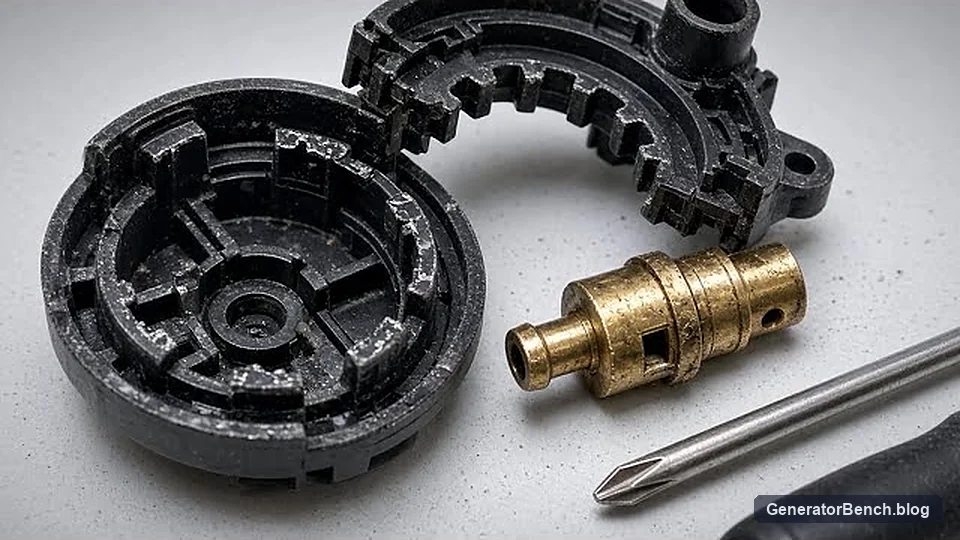
Conversely, industrial towable systems rely on heavy-duty diesel engines. These robust powerplants feature liquid-cooling jackets and massive displacement cylinders built to handle punishing mechanical loads for thousands of hours.
Mobile inverter generators utilize advanced alternators paired with clean power inverters. Choosing the best generator for mobile detailing ensures clean, safe electricity for sensitive commercial electronics.
Conversely, towable industrial generators rely on heavy-duty brush-less synchronous alternators. These robust units deliver massive starting surge capacity required for large inductive motors operating on continuous heavy industrial duty cycles.
- Mobile units use high-rpm gasoline or dual-fuel configurations.
- Towables integrate low-rpm heavy-duty commercial diesel engines.
- Alternator windings dictate clean THD performance under variable loads.
Inverter Topology Versus Synchronous Alternators
Modern mobile generators often utilize advanced inverter topology to condition raw AC power into a pristine DC intermediate stage. This ensures stable sine waves safe for sensitive microprocessors.
Industrial towable systems frequently deploy large synchronous alternators directly coupled to the flywheel. These units deliver massive starting surge currents required for heavy industrial machinery and large pumps.
- Inverters guarantee clean harmonic distortion under three percent.
- Synchronous alternators excel at handling motor starting surges.
Mobility, Footprint, and Transportation Logistics
Evaluating transport requirements dictates how quickly backup systems deploy. Choosing the best generator for a mobile home ensures reliable temporary power using integrated wheel kits and folding frames.
Towable generators integrate permanent trailer chassis, heavy-duty axle assemblies, and road-ready lighting packages. Transporting them demands a properly equipped towing vehicle with adequate payload ratings and hitch capacity.
Mobile units feature integrated wheel kits and folding pull handles. Their compact physical footprint allows single-operator loading into standard pickup truck beds without requiring heavy rigging equipment or specialized trailers.
Towable generators incorporate DOT-compliant road trailers equipped with heavy-duty leaf springs, mechanical surge brakes, and standard pintle hitches. Their highway transport footprint demands strict adherence to GVWR weight ratings and towing vehicle capacity limits.
- Mobile units fit easily into standard truck beds or sheds.
- Towables require Department of Transportation compliance and trailer registration.
- Ground clearance and leveling jacks are crucial for towable placement.
Site Placement and Terrain Navigation
Navigating rough terrain on remote job sites exposes distinct mechanical advantages. Compact mobile units can navigate muddy trenches or narrow doorways using rugged pneumatic tires.
Towable trailers require clear access lanes and strategic turning radii. Positioning a heavy trailer on soft earth often demands auxiliary timber blocking or metal stabilization plates.
- Mobile frames fit into tight, confined urban work zones easily.
- Towable footprints demand wide access roads and flat staging areas.
Fuel Efficiency, Capacity, and Runtime Metrics
Managing fuel consumption directly impacts operational expenses during extended outages. Upgrading to the best mobile generator provides efficient gasoline or propane operation alongside manageable fuel capacities.
Towable systems feature massive onboard sub-base fuel tanks engineered for multi-day operations. These large diesel reservoirs reduce labor costs associated with frequent refueling visits during critical outages.
Mobile generators leverage electronic fuel injection coupled with variable engine speed control. This dynamic throttling drastically improves part-load fuel economy and extends operational runtime during extended power outages.
Towable diesel generators utilize high-capacity structural fuel tanks built directly into the steel skid base. While less efficient at minor loads, they sustain multi-day continuous runtime under heavy industrial baseloads.
- Gasoline mobile models require daily monitoring during continuous running.
- Diesel towable tanks often provide twenty-four to seventy-two hours of runtime.
- Dual-fuel mobile variants add valuable fuel source flexibility.
Fuel Quality and Storage Stability
Gasoline stored in mobile tanks degrades quickly, requiring chemical stabilizers to prevent varnish buildup in carburetors. Proper fuel management prevents costly injector and fuel pump failures over time.
Diesel fuel utilized in towable systems remains stable longer but requires stringent water separation filters. Cold weather anti-gelling additives become essential when operating towables in freezing sub-zero environments.
- Gasoline demands regular stabilizer additions for seasonal storage.
- Diesel fuel systems need functional primary water-separating fuel filters.
Acoustic Emissions and Sound Attenuation Standards
Controlling noise pollution is vital for urban job sites and tight residential areas. Selecting the best welder generator for mobile welding helps maintain low decibel output during field tasks.
Towable generators utilize heavy sound-attenuated steel enclosures lined with high-density acoustic foam. Despite this insulation, their larger displacement diesel engines still generate noticeable low-frequency rumble.
Mobile inverter models employ enclosed acoustic housing lined with high-density sound-deadening foam. These engineering measures typically achieve sound pressure levels between 52 and 65 decibels at normal operational distances.
Towable generators utilize heavy gauge steel weather enclosures with specialized critical-grade exhaust mufflers. Despite these sound suppression methods, large industrial engines generally operate around 70 to 80 decibels at full load.
- Enclosed mobile units allow close proximity to living spaces.
- Towable systems require strategic distance from event stages or offices.
- Baffled exhaust systems help mitigate harsh high-frequency noise.
Decibel Testing Protocols and Distance Factors
Measuring sound compliance involves testing decibel output at standard distances like twenty-three feet. Mobile units easily pass strict municipal daytime noise ordinances when running in eco-mode.
Towable units require careful positioning relative to property lines to comply with local noise laws. Utilizing directional exhaust piping helps redirect sound waves away from sensitive areas.
- Standardized testing occurs at specific radial distances outdoors.
- Directional exhaust orientation reduces perceived neighborhood noise.
Maintenance Schedules and Long-Term Durability
Maximizing equipment lifespan depends on adhering to strict preventive maintenance protocols. Mobile generators require routine oil changes, spark plug replacements, and air filter cleanings every one hundred hours.
Towable diesel generators feature extended service intervals ranging from two hundred and fifty to five hundred hours. Their commercial-grade components support exceptional operational lifespans exceeding ten thousand hours.
Mobile units require frequent oil changes every one hundred operational hours due to smaller crankcase capacities. Regular spark plug inspections and clean air filter maintenance are vital for extended engine longevity.
Towable commercial generators feature extended service intervals reaching up to five hundred hours for synthetic oil replacements. Their industrial-grade liquid-cooled diesel engines demand strict monitoring of coolant condition and belt tension.
- Mobile small engines demand frequent spark and oil checks.
- Towables require professional heavy-duty oil and filter changes.
- Routine battery maintenance prevents critical starter failure.
Preventive Care for Harsh Environments
Operating in dusty or corrosive coastal environments accelerates wear on cooling fins and electrical contacts. Regular cleaning prevents thermal throttling and premature alternator failure.
Towable control panels need weatherproof gasket inspections to keep moisture away from sensitive digital monitoring screens. Routine coolant flushes protect heavy block integrity against rust.
- Coastal salt air demands protective anti-corrosion spray coatings.
- Digital control panel seals protect sensitive monitoring electronics.
Load Management and Output Connection Panels
Connecting electrical loads safely requires versatile and rugged output panel configurations. Mobile units rely on standard twist-lock receptacles, standard household outlets, and simple manual transfer switches.
Towable generators feature comprehensive distribution panels equipped with industrial cam-locks, hardwire terminal blocks, and individual circuit breakers for complex multi-phase electrical loads.
Mobile units typically provide standard 120V household receptacles along with a single 240V twist-lock outlet. Integrated circuit breakers protect individual circuits against overloads while supporting basic jobsite power distribution.
Towable generators feature comprehensive cam-lock connection panels and robust terminal lugs. These professional panels allow seamless integration with transfer switches and complex multi-cable setups designed for heavy commercial distribution.
- Mobile panels suit standard residential manual transfer switches.
- Towables provide robust cam-lock connections for heavy temporary power.
- Multi-voltage selectors allow quick switching between phases.
Phase Balancing and Voltage Regulation
Balancing electrical phases prevents overheating and protects alternators from premature winding failure. Three-phase towable units require careful load distribution across all available hot legs.
Mobile single-phase generators simplify wiring but lack the capacity to run heavy three-phase industrial motors found in commercial manufacturing and large-scale pumping setups.
- Three-phase systems demand careful load balancing across phases.
- Single-phase mobile units offer simplified plug-and-play operation.
Safety Compliance, Emissions, and Environmental Standards
Meeting strict environmental regulations ensures safe operation across diverse geographic jurisdictions. Mobile gasoline generators must comply with modern EPA and CARB evaporative emission standards.
Towable diesel generators face rigorous Tier 4 Final emissions regulations requiring diesel exhaust fluid injection and sophisticated particulate filter regeneration cycles.
Mobile gasoline generators must meet stringent EPA and CARB small off-road engine emission regulations. Integrated carbon monoxide shut-off sensors provide mandatory protection against accidental exhaust poisoning in semi-enclosed spaces.
Towable diesel generators comply with Tier 4 Final federal emissions standards using diesel exhaust fluid injection and particulate filters. Secondary spill containment basins protect sensitive ground environments from accidental fluid leaks.
- CARB compliance is mandatory for mobile units sold in California.
- Towable diesel models utilize advanced exhaust after-treatment systems.
- Proper grounding rods prevent hazardous electrical shock risks.
Exhaust Management and Carbon Monoxide Safety
Mitigating carbon monoxide poisoning risks remains paramount during emergency backup deployments. Mobile generators must operate outdoors far away from open windows and doors.
Towable units incorporate exhaust stacks that project fumes safely above ground level. Their secure containment housings reduce accidental contact with scorching hot exhaust manifolds.
- Carbon monoxide sensors provide vital automated shutdown protection.
- Elevated towable exhaust stacks disperse fumes safely away.
Frequently Asked Questions
Can a mobile generator run an entire household during a power outage?
A medium-sized mobile generator can power essential home appliances like refrigerators, lights, and sump pumps when managed properly. Strategic load management prevents circuit overloads during extended utility failures.
What driver's license is required to tow a towable generator?
Most standard driver's licenses permit towing medium-sized towable generators safely behind properly rated pickup trucks. Vehicle weight ratings must always exceed the combined trailer and fuel load.
How often should I perform maintenance on a towable diesel generator?
Commercial diesel towable generators typically require comprehensive oil and filter servicing every two hundred and fifty hours. Regular fluid analysis ensures internal components remain free of premature wear.
Are mobile generators safe to operate in wet weather conditions?
Operating mobile generators in rain requires specialized running tents or protective enclosures to prevent electrical shorts. Ground fault circuit interrupters protect users against dangerous moisture-related shocks.
Why do towable generators use diesel fuel instead of gasoline?
Diesel fuel offers superior energy density, enhanced safety during transport, and exceptional engine durability under heavy loads. Commercial diesel engines easily support continuous multi-day prime power requirements.