Emergency Generator vs. Backup Generator: Which Fits Your Setup Better?
Navigating unexpected power loss requires understanding distinct power systems. This technical review contrasts emergency and backup generators to optimize your facility's safety.

Backup generators suit continuous facility protection with automated transfer readiness, while emergency generators excel at rapid deployment during acute crisis scenarios. Choose based on your specific uptime needs.
Compare all top models in our Best Home Emergency Generator.
Side-by-Side Breakdown
| Criteria | Emergency Generator | Backup Generator | Edge |
|---|---|---|---|
| Peak Performance & Output | 5kW - 15kW portable/inverter | 20kW - 150kW+ stationary | Backup Generator |
| Duty Cycle & Consistency | Intermittent short-term runs | Continuous prime or standby duty | Backup Generator |
| Operating Noise & Vibration | 65 - 75 dB(A) uninsulated | 55 - 65 dB(A) acoustic enclosure | Backup Generator |
| Portability & Footprint | Wheel kits & frame handles | Concrete pad permanent install | Emergency Generator |
| Maintenance & Service Life | Frequent oil changes & carb checks | Bi-annual professional servicing | Backup Generator |
| Power Requirements | Manual cord hookups & manual transfer | Automatic Transfer Switch (ATS) | Backup Generator |
| Best Ideal Use-Case | Job sites & temporary storm relief | Whole-home & critical facility uptime | Backup Generator |
Evaluating Core Architecture and Engineering Specifications
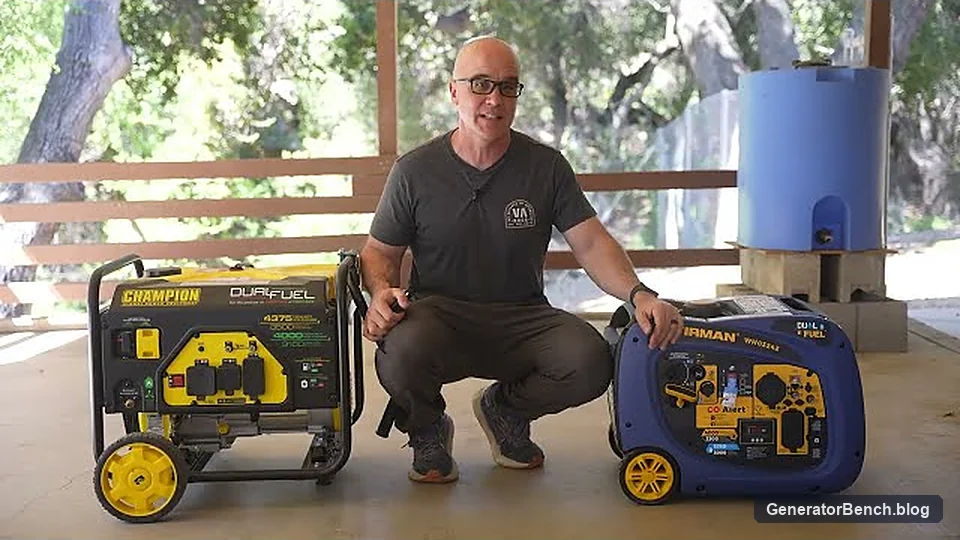
Emergency generators typically utilize high-RPM internal combustion engines designed for portable or semi-fixed chassis configurations. Their electrical alternators prioritize compact sizing over sustained thermal endurance.
Backup generators feature low-RPM industrial engines coupled with heavy-duty cast-iron stators. These stationary systems integrate robust cooling loops engineered for extended runtime during extended utility outages.
Portable emergency units utilize high-RPM brushless alternators paired with air-cooled single-cylinder engines. In contrast, permanent standby systems integrate liquid-cooled blocks running at steady 1800 RPM speeds for longevity.
Voltage regulation in standby units relies on digital AVRs maintaining sub-1% harmonic distortion. Portable alternatives often yield higher THD metrics, posing risks to sensitive microprocessor loads during extended grid outages.
- High-RPM portable alternator designs
- Stationary liquid-cooled industrial blocks
- Thermal management capacity differences
Alternator Winding and Voltage Regulation
Selecting the best emergency backup generator ensures stable voltage regulation for sensitive electronics. These systems utilize advanced automatic voltage regulators to prevent damaging power spikes during outages.
- Capacitor vs AVR regulation
- Harmonic distortion benchmarks
Assessing Duty Cycles and Real-World Power Demands
Emergency units operate under strict runtime limitations, rarely exceeding forty-eight hours without complete shutdown and cool-down cycles. Pushing past these thresholds risks catastrophic thermal overload in alternator windings.
Choosing the best backup generator for house applications ensures continuous standby demands are met through automated load management. These systems regulate multi-zone electrical draws effortlessly without manual intervention.
Emergency portables are engineered for intermittent duty, typically capping continuous operation at 500 runtime hours annually. Standby models support continuous multi-day loads, featuring robust thermal management designed for severe weather events.
Calculating surge capacity requires analyzing motor starting watts for heavy inductive loads like central air compressors. Permanent backup systems easily handle locked rotor amps without dropping line voltage below operational thresholds.
- Runtime hour limits
- Automated load management
- Thermal threshold margins
Peak Surge Capacity and Motor Starting
Heavy inductive loads require substantial startup wattage. Backup systems easily handle large HVAC compressor surges, whereas emergency units require careful load sequencing to prevent motor stalling.
- Inductive load handling
- Compressor surge management
Operational Footprint, Portability, and Installation Realities
Selecting the best home emergency generator involves rolling wheeled frames to safe outdoor locations away from windows. Users manually deploy extension cords or connect via manual transfer switches.
Backup systems require permanent concrete pads, professional gas line plumbing, and electrical trenching. This installation process demands municipal permits but eliminates manual setup during hazardous weather events.
Portable generators demand manual setup, requiring strict adherence to NFPA 37 clearances away from windows and doors. Permanent standby generators require concrete pad pouring, trenching gas lines, and professional electrical permitting.
Space constraints dictate placement options, with portables storing easily in compact sheds when dry. Fixed installations demand permanent outdoor real estate while maintaining mandatory property-line setback distances established by local building codes.
- Wheeled frame deployment
- Permanent concrete pads
- Manual versus automated hookups
Site Preparation and Clearance Requirements
Carbon monoxide safety dictates strict clearance zones for all internal combustion engines. Portable emergency models require constant repositioning, whereas backup units enjoy fixed safety perimeters.
- Exhaust safety zones
- Clearance code compliance
Acoustic Performance, Emissions, and Environmental Standards
Unenclosed portable emergency engines generate significant noise, often registering above seventy decibels at twenty feet. This loudness disrupts residential neighborhoods during extended nighttime grid failures.
Backup generators utilize advanced acoustic shielding and weather-resistant steel enclosures. These sound-attenuated housings drop operating volumes dramatically, ensuring compliance with strict municipal noise ordinances.
Noise levels differ drastically, as enclosed standby models operate near 60 decibels at normal distances. Standard open-frame portable units frequently exceed 70 decibels, causing severe neighborhood disruptions during extended power failures.
Modern exhaust compliance mandates strict EPA and CARB tier certifications for small engines. Permanent backup systems incorporate sophisticated catalytic converters to minimize carbon monoxide output during prolonged emergency operational cycles.
- Unenclosed decibel outputs
- Acoustic enclosure dampening
- Municipal noise compliance
Exhaust Emission Controls and Tier Ratings
Environmental regulations dictate strict emission standards for stationary power plants. Backup units incorporate advanced catalytic converters, while portable emergency generators meet basic EPA spark-ignited standards.
- EPA spark-ignited standards
- Catalytic converter integration
Maintenance Protocols, Durability, and Long-Term Reliability
Maintaining an emergency generator requires frequent oil checks, fuel stabilization, and manual pull-cord or electric-start testing. Neglecting these routine chores leads to carburetor gumming and failure when needed most.
Backup generators feature self-diagnostic control panels that perform weekly exercise cycles automatically. Professional technicians handle bi-annual service intervals, ensuring peak operational readiness without homeowner hassle.
Routine servicing for portables involves frequent oil changes every 100 operating hours using standard mineral lubricants. Standby units utilize larger oil capacities, extending maintenance intervals to 200 hours or annual service cycles.
Long-term mechanical durability relies heavily on automatic weekly exercise modes featured on standby generators. These self-diagnostic tests prevent component binding and keep battery systems fully charged without manual user intervention.
- Weekly self-exercise cycles
- Carburetor maintenance needs
- Professional service intervals
Component Wear and Engine Longevity
High-speed portable engines experience rapid internal component wear over hundreds of operating hours. Low-speed industrial backup engines last for decades due to lower piston speeds and superior lubrication.
- Piston speed comparison
- Expected service lifespan
Fuel Integration, Consumption Rates, and Storage Logistics
Emergency units rely primarily on gasoline or propane canisters, demanding heavy physical effort during extended crises. Fuel degradation inside portable tanks necessitates regular chemical treatment and stabilizer additives.
Backup generators connect directly to municipal natural gas lines or large buried propane tanks. This continuous fuel supply eliminates storage headaches and manual refueling during severe winter storms.
Portable units rely on gasoline jugs or external propane tanks, requiring careful management during multi-day fuel shortages. Standby systems connect directly to natural gas lines or large stationary propane reservoirs for endless autonomy.
Fuel consumption scaling dictates operational costs during severe grid failures. Gasoline degrades rapidly in carburetors, whereas vapor fuels prevent varnish buildup and avoid the hazardous chore of handling liquid fuel canisters.
- Gasoline canister handling
- Natural gas pipeline connection
- Fuel stability requirements
Consumption Efficiency Under Partial Loads
Running an oversized generator at low loads causes unburned fuel accumulation, damaging exhaust systems. Selecting the correct generator size ensures optimal fuel efficiency and cleaner combustion cycles.
- Wet stacking prevention
- Load-to-fuel ratio optimization
Selecting the Optimal System for Your Specific Workload
Choose an emergency generator if you need affordable, occasional job-site power or temporary storm relief. These flexible units fit tight budgets and easily stow inside standard vehicle trunks.
Finding the best generator for home backup power helps when managing critical medical equipment or whole-home safety. Their automated reliability guarantees uninterrupted power regardless of weather severity.
Choosing the right architecture depends on climate risks, budget parameters, and medical dependency needs within the home. Homeowners in disaster-prone regions frequently prioritize automatic transfer switches for seamless power restoration during storms.
Budget-conscious users often select versatile portables combined with manual interlock kits to manage essential circuits affordably. Evaluating your specific power profile ensures safe, reliable operation throughout any unexpected utility interruption.
- Job-site flexibility
- Critical facility uptime
- Budget versus automation
Total Cost of Ownership Considerations
Initial purchase costs heavily favor portable emergency units over permanently installed backup systems. However, factoring in installation complexity and long-term utility value reveals a nuanced financial calculation.
- Initial acquisition costs
- Long-term investment value
Frequently Asked Questions
What is the primary operational difference between emergency and backup generators?
Emergency generators are portable, manual units designed specifically for short-term temporary relief during unexpected utility outages. In contrast, permanent backup systems are stationary, fully automated machines providing continuous whole-facility protection during extended grid failures.
Automated transfer capability and continuous industrial duty ratings completely separate these distinct power classes.
Can an emergency generator power my entire home automatically?
Standard emergency generators lack the massive wattage output and automated transfer switches required to safely power an entire residential home. Homeowners must manually plug in specific heavy-duty appliances using specialized cords.
Manual cord management and manual switching are always required for portable units.
How often do permanent backup generators require professional maintenance?
Permanent backup generators typically require professional servicing twice a year to ensure peak operational reliability during severe weather events. Certified technicians carefully inspect fluid levels, battery health, and run comprehensive diagnostic tests. Bi-annual professional maintenance successfully prevents unexpected mechanical failures.
Which generator type offers better long-term durability and engine life span?
Stationary backup generators feature low-RPM industrial engines engineered specifically to last for multiple decades under heavy operating loads. Portable emergency units run at significantly higher RPMs and wear out much faster.
Industrial engine construction grants permanent backup systems vastly superior operational longevity.
Are emergency generators safe to run close to residential windows?
Emergency generators produce lethal carbon monoxide gas and must never be operated near residential windows, doors, or attached garages. They require careful outdoor placement far downwind from living spaces.
Proper exhaust clearance completely prevents fatal carbon monoxide poisoning during every single operational use.