Ecoflow Delta Pro vs. Bluetti Ac300: Which Fits Your Setup Better?
Evaluating two heavy-duty power stations reveals distinct engineering philosophies. Choosing between integrated mobility and modular flexibility dictates your final choice.


The EcoFlow Delta Pro suits users requiring rapid mobile deployment with integrated wheels. Conversely, the Bluetti AC300 wins for stationary modular scalability and custom capacity configurations.
Compare all top models in our Best Home Emergency Generator.
Side-by-Side Breakdown
| Criteria | Ecoflow Delta Pro | Bluetti Ac300 | Edge |
|---|---|---|---|
| Peak Performance & Output | 7200W Surge / 3600W Continuous | 6000W Surge / 3000W Continuous | EcoFlow Delta Pro |
| Duty Cycle & Consistency | Exceptional high-draw thermal management | Stable dual-core inverter output | Tie |
| Operating Noise & Vibration | Low-decibel variable fan profile | Quiet modular cooling architecture | EcoFlow Delta Pro |
| Portability & Footprint | Integrated wheels and telescoping handle | Modular stackable battery components | EcoFlow Delta Pro |
| Maintenance & Service Life | 3500+ cycles to 80% capacity | 3500+ cycles to 80% capacity | Tie |
| Power Requirements | 1800W AC max input charge | 3000W max combined AC input | Bluetti Ac300 |
| Best Ideal Use-Case | Rapid mobile emergency deployment | Stationary home backup expansion | Split Choice |
Architectural Design and Modular Scalability
The EcoFlow Delta Pro features an all-in-one chassis design integrating the battery and inverter into a single heavy housing. This construction simplifies transport via a built-in telescoping handle.
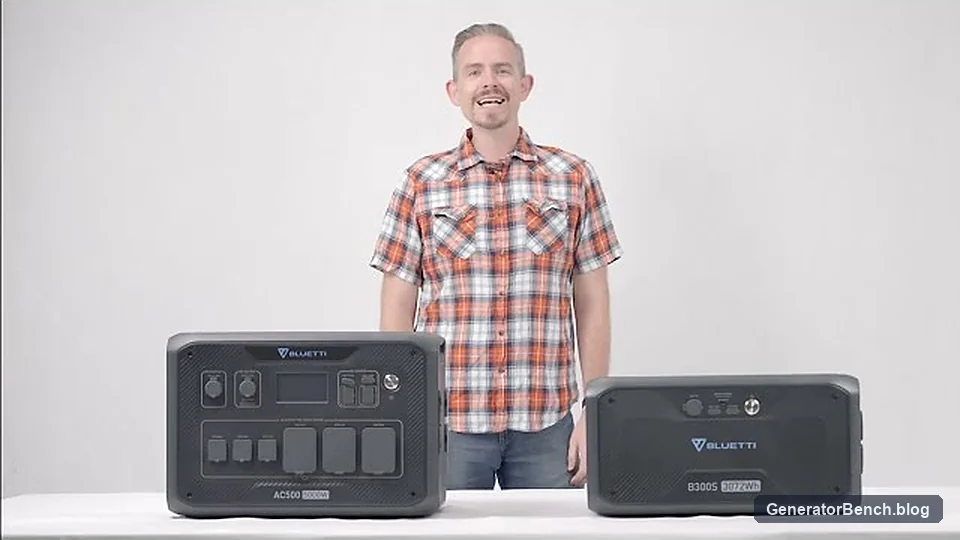
Meanwhile, the Bluetti AC300 utilizes a modular approach separating the inverter base unit from the external B300 battery packs. This split design reduces individual component lifting weight significantly.
Our detailed ecoflow delta pro portable power station review highlights its all-in-one chassis that integrates the inverter and battery internally, contrasting sharply with the modular Bluetti AC300 architecture.
Scaling capacity requires connecting proprietary smart extra batteries via heavy-gauge cables. Engineers must evaluate thermal dissipation limits and physical footprint constraints when deploying these large backup systems in residential or mobile environments.
- Integrated mono-unit chassis design
- External battery expansion modules
- Telescoping handle versus modular stacks
Modular versus Integrated Layouts
Selecting between modular separation and integrated convenience depends entirely on your installation space. Stationary home backup setups benefit from stackable modular batteries that fit tight utility closets.
Mobile applications prefer single-unit designs that eliminate messy DC connection cables during transit. Rolling the heavy chassis across rough terrain beats carrying separate heavy battery modules.
- Space efficiency in utility closets
- Cable management during transport
Inverter Performance and Continuous Load Handling
Both power stations deliver massive continuous output to run high-draw household appliances simultaneously. Clean sine wave output protects sensitive electronics from harmonic distortion and voltage fluctuations.
As noted in our ecoflow delta pro 3600 review, the unit pushes high starting surges effortlessly, while the AC300 matches heavy inductive loads through advanced dual-core inverter architecture.
Delivering stable AC power under heavy inductive loads demands robust pure sine wave inverters. The Delta Pro outputs 3,600W continuous power, whereas the AC300 scales up to 3,000W continuous output from its single inverter core.
Surge capacities dictate how well units handle compressor motor startup currents. Technicians should monitor harmonic distortion levels to ensure sensitive electronics remain protected against voltage sags during high-draw motor activations in the field.
- Pure sine wave architecture
- Inductive load management
- Surge capacity benchmarks
High-Draw Appliance Execution
Running heavy motorized equipment like sump pumps requires robust surge wattage thresholds. Both units handle these brief spikes without tripping internal overload breakers or shutting down unexpectedly.
Thermal throttling controls prevent overheating during extended heavy-load operations in warm weather conditions. Internal fans ramp up progressively to maintain optimal semiconductor junction temperatures.
- Motorized surge handling
- Thermal management systems
Battery Chemistry, Longevity, and Safety Standards
Lithium iron phosphate chemistry powers both generators, ensuring exceptional cycle life and thermal stability. LiFePO4 cells endure thousands of charge cycles before dropping below eighty percent capacity.
Advanced battery management systems monitor cell voltage and temperature constantly to prevent catastrophic thermal runaway. These rigorous safety protocols protect users during high-amp charging and discharging cycles.
Both systems utilize Lithium Iron Phosphate chemistry, offering exceptional cycle stability. The EcoFlow unit achieves 3,500 cycles to 80% capacity, matching the Bluetti system which also guarantees 3,500 cycles using premium LiFePO4 cells.
Advanced battery management systems constantly monitor cell voltage and temperature anomalies. These internal safety protocols prevent thermal runaway, ensuring compliance with strict UL and CE regulatory standards for residential emergency backup installations.
- LiFePO4 cell longevity
- Advanced BMS monitoring
- Thermal runaway protection
Long-Term Degradation Metrics
Calendar aging and daily cycling affect long-term capacity retention across both competing power stations. Proper ambient temperature storage ensures maximum operational lifespan over ten years of service.
Routine firmware updates optimize charging algorithms to reduce microscopic cathode degradation over extended periods. Maintaining correct storage charge levels preserves internal chemical stability during off-season storage.
- Capacity retention curves
- Firmware charging optimization
Charging Ecosystems and Input Flexibility
Rapid recharging capabilities distinguish these models from traditional gas generators on the market today. Utilizing standard wall outlets replenishes massive battery reserves in just a couple of hours.
Solar input arrays connect easily using high-voltage MPPT charge controllers built directly into each unit. High voltage solar strings maximize renewable energy harvesting efficiency during emergency grid outages.
Pairing your system with the best solar panels for ecoflow delta pro enables up to 1,600W solar input, while the AC300 supports a massive 2,400W maximum solar input configuration.
Combining AC grid power with photovoltaic arrays significantly reduces total replenishment downtime. Operators must verify open-circuit voltage limits before connecting third-party solar panels to prevent damaging internal MPPT charge controllers.
- Fast AC grid charging
- High-voltage MPPT controllers
- Dual solar-grid inputs
Solar Integration and Field Recharging
Field recharging relies heavily on robust solar panel compatibility and wide voltage operating windows. Connecting portable panels requires careful attention to maximum open-circuit voltage ratings to prevent damage.
Dual charging modes combine grid electricity and solar panels to slash total replenishment times dramatically. This hybrid approach proves invaluable when preparing for fast-approaching severe weather events.
- Open-circuit voltage limits
- Hybrid charging speeds
Ergonomics, Weight Distribution, and Field Portability
Similar to findings in our ecoflow delta pro max review, the Delta Pro integrates robust wheels and a suitcase handle for effortless solo rolling transport across rough terrain.
The AC300 inverter weighs considerably less by itself, but adding heavy B300 battery modules requires two-person lifting teamwork. Permanent garage installations avoid these transit ergonomic challenges entirely.
Field deployment requires careful consideration of physical weight and transportation hardware. The Delta Pro features a telescopic trolley handle, making single-person transport manageable despite tipping scales at approximately 99 pounds.
Conversely, the AC300 separates the power head from the battery, reducing individual component weight to enhance two-person lifting safety during complex field installations or remote jobsite deployments requiring rugged mobility.
- Built-in rolling wheels
- Two-person modular lifting
- Suitcase handle ergonomics
Transportation Challenges in Grid Failures
Transporting backup equipment during chaotic emergency scenarios tests physical stamina and gear design. Integrated rolling solutions excel on paved driveways, while modular units require careful vehicle loading.
Securing heavy units inside transport vehicles demands sturdy tie-down points to prevent shifting during transit. Proper weight anchoring protects internal electronic connections from destructive vibration damage.
- Vehicle tie-down points
- Terrain adaptability
Software Integration and Remote Diagnostics
Comprehensive mobile applications provide real-time monitoring of input watts, output loads, and battery percentages. Wi-Fi and Bluetooth connectivity allow users to adjust settings from anywhere in the home.
Diagnostic error codes display instantly on device screens and app interfaces for rapid troubleshooting assistance. Firmware updates install seamlessly over the air to enhance system performance and security features.
Modern energy storage relies on companion smartphone applications for real-time data monitoring. Both ecosystems provide comprehensive Wi-Fi and Bluetooth connectivity, allowing technicians to track power draw and adjust charging rates remotely.
Firmware updates delivered through the cloud optimize charging efficiency and resolve telemetry bugs. Fleet managers depend on these digital diagnostic tools to maintain optimal battery health across distributed emergency backup assets.
- Real-time mobile apps
- Over-the-air firmware updates
- Diagnostic error tracking
Smart Home Integration Protocols
Connecting power stations to home automation ecosystems expands emergency preparedness capabilities significantly. Automated transfer switches coordinate power distribution smoothly without manual intervention during sudden outages.
Custom charging schedules reduce electricity bills by drawing grid power exclusively during off-peak hours. These programmable profiles maximize cost efficiency for daily household energy management strategies.
- Home automation syncing
- Off-peak charging schedules
Real-World Application and Power Reliability
Real-world testing demonstrates reliable performance across various residential and recreational use case scenarios. Sustained power output keeps essential refrigerators, medical devices, and communication gear running smoothly.
Choosing the right model depends on balancing your need for mobile convenience versus modular scalability. Evaluating your specific power demands ensures uninterrupted operation during prolonged emergency grid failures.
Evaluating real-world reliability requires testing performance under sustained thermal loads and intermittent outages. These systems must deliver seamless uninterruptible power supply switching, protecting sensitive medical or computing equipment from unexpected grid failures.
Professional contractors and homeowners alike benefit from dependable off-grid electrification. Proper capacity planning ensures that critical household appliances run efficiently without exceeding the maximum surge thresholds of the selected inverter architecture.
- Residential backup reliability
- Medical device support
- Recreational versatility
Emergency Readiness Best Practices
Maintaining emergency readiness involves periodic battery cycling and keeping firmware completely up to date. Storing units in climate-controlled environments prevents premature battery degradation and electronic component failure.
Testing connected appliances regularly verifies that surge limits and automatic transfer protocols function correctly. Preparation minimizes panic when severe weather knocks out local electrical grid infrastructure.
- Periodic battery cycling
- Climate-controlled storage
Frequently Asked Questions
Can both generators power a standard residential refrigerator?
Yes, both units easily power standard residential refrigerators for multiple days during extended emergency grid outages. Pure sine wave output ensures compressor motors run efficiently without experiencing any electrical damage or performance loss.
How do their charging speeds compare using standard wall outlets?
The EcoFlow Delta Pro charges exceptionally fast directly from standard AC wall outlets without needing bulky adapters. The Bluetti AC300 also supports rapid wall charging when utilizing multiple input sources simultaneously.
Are these power stations safe to run inside an enclosed living space?
Yes, both systems produce zero toxic emissions or dangerous carbon monoxide fumes during operation. This clean chemistry allows safe indoor deployment in bedrooms, basements, or offices without ventilation concerns.
What is the expected lifespan of the internal battery chemistry?
Both generators utilize advanced lithium iron phosphate cells rated for over three thousand cycles. LiFePO4 chemistry guarantees dependable service for a decade under normal daily use conditions.
Can I expand the storage capacity of these power stations later?
The Bluetti AC300 uses an entirely modular expansion design supporting multiple external B300 battery packs. The EcoFlow Delta Pro connects dedicated extra batteries directly via proprietary high-current cabling ports.