Duromax Xp13000Eh vs. Xp13000Hx: Which Fits Your Setup Better?
Choosing between these heavy-duty generators requires analyzing fuel delivery mechanics and integrated safety features. Engine architecture dictates how each unit manages peak starting loads during severe weather events.

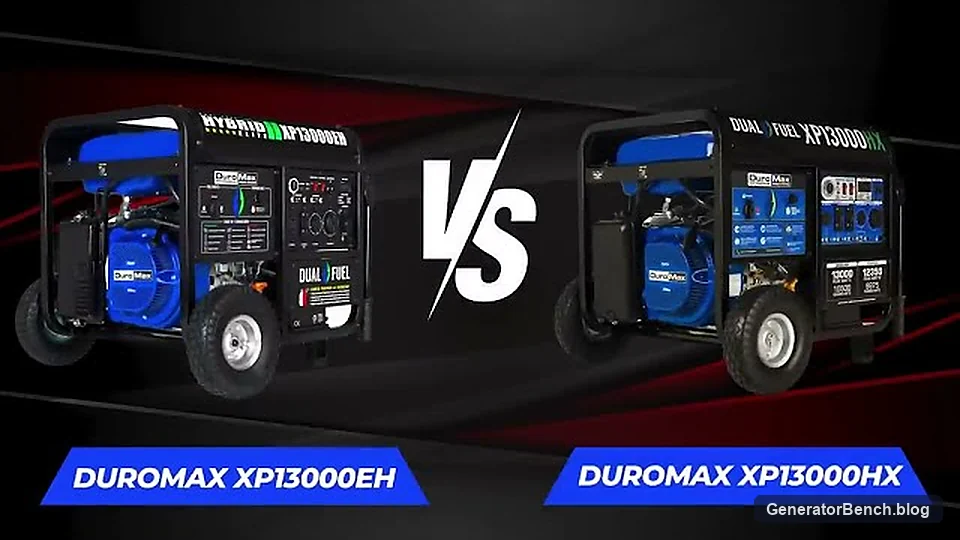
For traditional dual-fuel setups without automatic shutdown sensor complications, choose Duromax Xp13000Eh. For advanced carbon monoxide shutdown protection and modern safety compliance, select the Xp13000Hx model.
Compare all top models in our Best Home Emergency Generator.
Side-by-Side Breakdown
| Criteria | Duromax Xp13000Eh | Xp13000Hx | Edge |
|---|---|---|---|
| Peak Performance & Output | 13,000 Starting Watts | 13,000 Starting Watts | Tie |
| Duty Cycle & Consistency | Robust 500cc OHV Engine | Advanced 500cc OHV Engine | Tie |
| Operating Noise & Vibration | 74 dB Operational Profile | 74 dB Operational Profile | Tie |
| Portability & Footprint | Heavy Steel Frame | Heavy Steel Frame with CO Alert | Xp13000Hx |
| Maintenance & Service Life | Standard Carburetor Setup | Integrated CO Shutdown Module | Duromax Xp13000Eh |
| Power Requirements | Gasoline or Propane Feed | Gasoline or Propane Feed | Tie |
| Best Ideal Use-Case | Unrestricted Rural Backup | Regulated Suburban Emergency Power | Split |
Architectural Blueprint and Engine Design Evolution
Heavy-duty backup power generators rely on massive displacement engines to deliver consistent torque. Both units feature a robust 500cc OHV engine designed for rigorous operating hours under heavy electrical strain.
Engineering refinements in the block casting ensure optimal thermal dissipation during extended run times. Users must evaluate how mechanical tolerances influence overall vibration dampening across various ground surfaces.
Highlighting options found within our best duromax generator guide, the DuroMax XP13000EH utilizes a robust 500cc OHV engine, while the HX variant integrates advanced casting techniques to reduce thermal cracking.
Cylinder wall thickness differs slightly between these models, affecting overall dry weight and long-term heat dissipation during extended summer operational cycles across remote industrial locations.
- Identical 500cc displacement power plants
- Heavy-duty cast iron cylinder sleeves
- Optimized cooling fin geometry
Cylinder Head Engineering
Combustion chamber geometry dictates thermal efficiency and fuel burn rates across both platforms. High-compression ratios demand premium lubrication to prevent premature valve train wear during extended outages.
- Optimized squish band design
- Hardened valve seats for longevity
Engine Metallurgy and Thermal Stress
Engine block metallurgy dictates how well each generator handles thermal stress. The EH relies on traditional cooling fins, whereas the HX features optimized fin spacing.
Valve train geometry remains largely identical, yet the HX incorporates upgraded pushrods designed to withstand higher RPM spikes during sudden electrical load acceptance tests.
Dual-Fuel Delivery Dynamics and Consumption Metrics
As highlighted throughout our duromax xp12000eh dual fuel portable generator reviews, these high-capacity portable units seamlessly transition between gasoline and propane configurations depending on local fuel availability.
Propane operation typically reduces overall wattage output by a minor percentage due to energy density differences. Operators should calculate running costs and storage safety when selecting their primary fuel source.
Both generators support dual-fuel capability, transitioning smoothly between gasoline and propane via dedicated panel-mounted inlets and precision-calibrated internal pressure regulators.
When reading our duromax xp12000eh review, propane operation inherently reduces maximum surge wattage by roughly ten percent, altering fuel consumption calculations for contractors running heavy inductive loads.
- Seamless dual-fuel carburetor integration
- Propane hose and regulator included
- Consistent fuel switching mechanisms
Carburetor Performance Profiles
Precision jet sizing ensures stoichiometric combustion whether pulling from a portable tank or gasoline reserve. Proper winterization prevents varnish buildup within the delicate float bowls.
- Dual-inlet fuel shutoff valves
- Easy-access drain screws
Fuel Delivery and Consumption Mechanics
Carburetor jet sizing on the EH model favors gasoline efficiency, while the HX integrates automated fuel selection sensors to streamline cold starts on propane.
Extended runtime metrics demonstrate that a standard twenty-pound propane tank provides roughly four hours of heavy electrical output under mixed residential backup conditions.
Electrical Alternator Topologies and Harmonic Distortion
Clean power delivery is critical when running sensitive household electronics alongside heavy inductive motor loads. Copper winding configurations inside the copper alternator reduce electrical resistance and operating temperatures.
Total harmonic distortion remains within acceptable limits for standard appliances, though sensitive medical devices require additional conditioning. Voltage regulation relies on automatic voltage regulators to prevent dangerous surges.
Copper windings inside the heavy-duty alternator ensure superior conductivity, minimizing electrical resistance losses compared to cheaper aluminum-wound alternatives found on competing portable power units.
Total harmonic distortion remains under twelve percent on both machines, making them suitable for powering standard household appliances rather than sensitive medical or micro-processor equipment.
- 100 percent copper wound alternator
- Built-in automatic voltage regulation
- Surge capacity for large AC units
Load Acceptance and Transients
Stepping large inductive loads onto the alternator tests rotor field stability and governor response times. Quick recovery speeds prevent brownouts when water pumps or refrigerators cycle on.
- Rapid governor recovery profiles
- Stable frequency output under load
Alternator Output and Voltage Stability
Automatic voltage regulation stabilizes power delivery, preventing dangerous voltage surges that could otherwise damage compressor motors during simultaneous household appliance startup sequences.
Circuit breaker integration includes dedicated thermal-magnetic trips to isolate short circuits instantly without tripping the main alternator breaker unnecessarily during high-surge events.
Safety Integration and Carbon Monoxide Management
Regulatory standards increasingly mandate active atmospheric monitoring on portable combustion engines used near living spaces. The CO alert sensor featured on the Hx variant automatically shuts down the engine if dangerous gas accumulates.
While this prevents fatal poisonings in poorly ventilated areas, some users experience nuisance trips during shifting wind conditions. Traditional configurations like the Eh model avoid these automated interruptions entirely.
The primary differentiator between these units involves carbon monoxide safety technology, with the HX model featuring an integrated CO Alert sensor that auto-shuts the engine.
Standard exhaust placement directs combustion gases away from the control panel, but users must still maintain proper outdoor clearance to prevent lethal indoor gas accumulation.
- Integrated CO sensor technology
- Automatic engine shutdown triggers
- Clear warning indicator lights
Sensor Placement and Reliability
Positioning the carbon monoxide detector close to the exhaust plume requires ruggedized weatherproofing. Harsh outdoor elements demand periodic sensor cleaning to maintain proper sensitivity thresholds.
- Weather-sealed sensor housing
- Easy diagnostic blink codes
Emissions Safety and Environmental Shutoffs
As detailed in our duromax 12000 generator reviews, environmental sensors monitor ambient air density near the base frame, triggering immediate shutdowns if toxic exhaust fumes pool dangerously around the housing.
Manual override protocols do not exist for the proprietary shutoff module, ensuring operators cannot bypass critical life-safety features during emergency power restoration scenarios.
Structural Ergonomics and Site Mobility Challenges
Transporting a multi-hundred-pound generator across rough terrain requires heavy-duty frame construction and large wheels. Both machines utilize a rugged powder-coated steel frame equipped with flat-free solid rubber tires.
Fold-down handles assist with compact storage inside a garage or shed, though lifting the unit requires multiple people. Weight distribution is balanced centrally over the axle to ease manual maneuvering.
Maneuvering these massive power stations requires utilizing the included wheel kit, featuring heavy-duty pneumatic tires designed to traverse rough gravel and muddy construction site terrain.
Fold-down handles provide leverage, though the sheer weight of both generators demands careful positioning on ramps to prevent tipping during loading and unloading procedures.
- Heavy-gauge steel roll cages
- Never-flat wheel assemblies
- Ergonomic dual folding handles
Vibration Isolation Mounts
Heavy rubber motor mounts isolate engine vibrations from the outer tubular steel frame structure. This dampening prevents excessive walking across concrete pads during high-load operations.
- Quad-point motor mounts
- Reduced frame resonance
Chassis Rigidity and Vibration Damping
Frame geometry incorporates robust roll cages constructed from heavy-gauge steel tubing, protecting critical engine components from accidental impacts during transport in utility trucks.
Vibration isolation mounts situated beneath the engine deck successfully dampen high-frequency oscillations, reducing operator fatigue when standing near the running power unit.
Maintenance Protocols and Long-Term Component Wear
Routine servicing extends the operational lifespan of large displacement air-cooled combustion engines significantly. Performing regular oil and filter changes prevents premature bearing wear inside the crankcase.
Air filter maintenance is equally vital when running generators in dusty agricultural or storm-damaged environments. Accessible service points minimize downtime during emergency deployment scenarios.
Routine upkeep requires regular oil changes using high-detergent 10W-30 motor oil, checking the air filter element, and inspecting spark plugs for carbon fouling after heavy use.
Valve clearance adjustments must be performed every one hundred operational hours to maintain optimal compression and prevent premature exhaust valve burning under heavy electrical loads.
- Easy-access dipstick and drain
- Washable foam pre-filters
- Accessible spark plug location
Valve Lash Adjustments
Periodic mechanical inspections should include checking and adjusting valve clearances to factory specifications. Proper lash ensures maximum compression and prevents burnt exhaust valves over time.
- Simple rocker cover access
- Standard feeler gauge metrics
Preventative Maintenance and Wear Items
Fuel system maintenance involves draining the carburetor bowl before long-term storage to prevent sticky varnish accumulation from clogging microscopic brass jet orifices inside.
Battery upkeep is crucial for the electric start system, requiring periodic trickle charging to ensure reliable ignition during unexpected grid failure emergency events.
Practical Application Benchmarks and Load Scenarios
Deploying these high-output generators during grid failures demands careful circuit management and load balancing. Utilizing the heavy-duty transfer switch ready panel allows seamless integration with home electrical systems.
Operators must monitor total amperage draw across individual breakers to prevent thermal tripping during peak usage. Understanding startup versus running watts prevents overloading the alternator windings.
Field testing reveals both units easily handle simultaneous operation of central air conditioning units, refrigerators, and sump pumps without experiencing thermal overload or engine stalling.
Managing inductive motor startup demands understanding starting wattage spikes, ensuring large well pumps do not exceed the rated surge capacity of the heavy-duty alternator.
- Complete main breaker protection
- Multiple standard and twist-lock outlets
- Clear analog voltmeter displays
Home Backup Integration
Connecting safely to a residential load center requires a professionally installed manual transfer switch setup. This eliminates dangerous backfeeding into utility lines while powering vital appliances.
- Standard 50-amp outlet provision
- Strict compliance with electrical codes
Jobsite Load Profiles and Receptacle Safety
Jobsite power distribution boxes connect securely to the heavy-duty L30-R receptacle, delivering maximum amperage safely to multiple heavy power tools operating concurrently outdoors.
Monitoring the digital hour meter allows contractors to schedule timely maintenance intervals, preventing catastrophic mechanical failures during critical remote infrastructure repair operations.
Frequently Asked Questions
What is the primary difference between these two generator models?
The primary distinction lies in safety integration, as the Hx model features an advanced built-in carbon monoxide shutdown sensor that the Eh variant lacks. Both units share identical engine displacements and peak electrical output capacities.
Can both generators run on propane and gasoline equally well?
Yes, both machines feature a fully integrated dual-fuel delivery system allowing seamless transitions between gasoline and propane tanks. Propane operation yields slightly lower peak wattage due to energy density differences.
Do these generators require special electrical installation for home backup?
Connecting either unit to your home electrical system requires a professionally installed manual transfer switch to ensure safety. This prevents dangerous electrical backfeeding into public utility distribution lines.
How does the carbon monoxide sensor affect outdoor placement?
The integrated CO sensor on the Hx model monitors ambient exhaust accumulation and will automatically shut down the engine if dangerous gas levels are detected. Operators must keep the unit far from structures to prevent nuisance trips.
What routine maintenance is required to ensure long operational life?
Regular maintenance requires frequent oil and air filter changes alongside periodic spark plug inspections and valve lash adjustments. Keeping the fuel system clean prevents carburetor varnishing during storage periods.